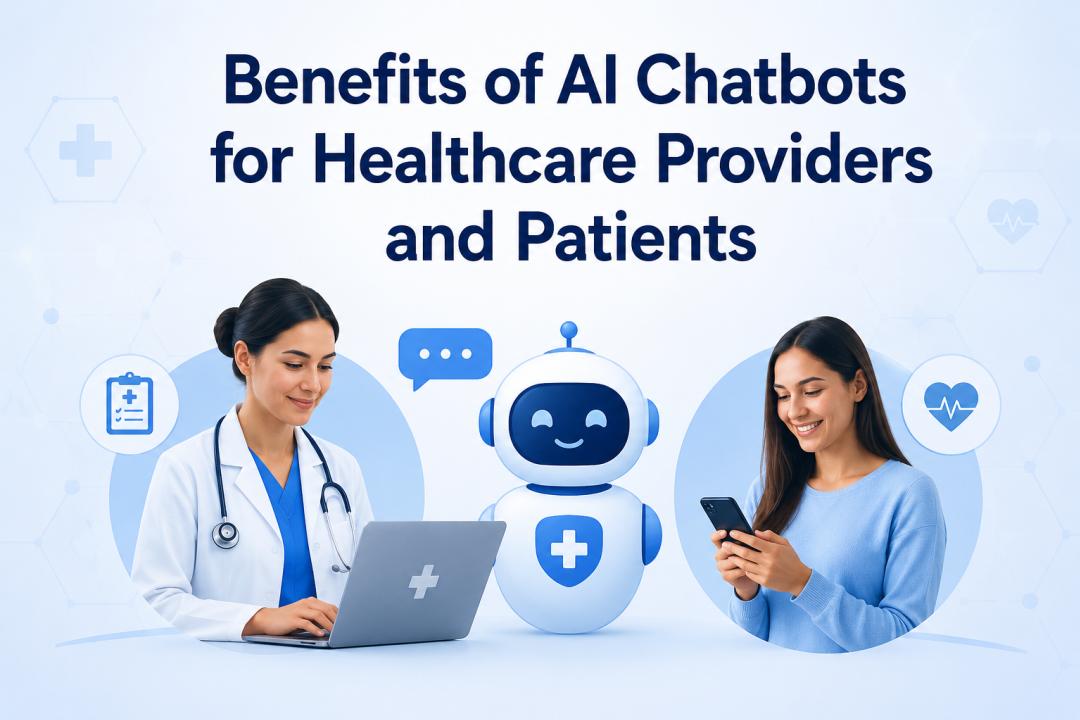
The healthcare industry is rapidly evolving with the adoption of advanced digital technologies, and Artificial Intelligence (AI) is playing a major role in this transformation. Among the most impactful innovations are AI-powered chatbots, which are helping healthcare providers improve operational efficiency while enhancing patient experiences.
From virtual health assistants and appointment scheduling to symptom checking and patient engagement, AI chatbots are becoming an essential part of modern healthcare systems in 2026.
Healthcare organizations, hospitals, clinics, and telemedicine providers are increasingly integrating AI chatbot solutions to automate workflows, reduce administrative burden, and deliver faster healthcare support.
In this article, we will explore the major benefits of AI chatbots for healthcare providers and patients, along with their use cases, challenges, and future potential.
Benefits of AI Chatbots for Healthcare Providers
1. Reduced Administrative Workload
Healthcare app development service providers often spend significant time managing repetitive administrative tasks such as:
- Appointment scheduling
- Patient registration
- Follow-up reminders
- Billing inquiries
AI chatbots automate these tasks, reducing staff workload and improving operational efficiency.
This allows healthcare professionals to focus more on patient care.
2. 24/7 Patient Support
AI chatbots can provide healthcare assistance around the clock without human intervention.
Patients can:
- Ask questions
- Book appointments
- Receive healthcare guidance
- Access medical information anytime
This improves healthcare accessibility and patient satisfaction.
3. Faster Appointment Scheduling
AI chatbots simplify appointment management by enabling:
- Instant scheduling
- Automated reminders
- Rescheduling assistance
- Doctor availability updates
This reduces appointment delays and minimizes missed consultations.
4. Improved Patient Engagement
AI chatbots maintain continuous communication with patients through:
- Personalized reminders
- Follow-up messages
- Wellness tips
- Health alerts
Continuous interaction encourages patients to stay actively involved in their healthcare journey.
5. Cost Reduction for Healthcare Organizations
By automating repetitive processes, AI chatbots help reduce:
- Staffing costs
- Administrative expenses
- Call center workload
- Operational inefficiencies
Healthcare providers can optimize resources while improving service quality.
6. Better Data Collection and Insights
AI chatbots can collect valuable patient information such as:
- Symptoms
- Medical history
- Feedback
- Health concerns
This data helps healthcare providers:
- Improve patient care
- Analyze healthcare trends
- Enhance decision-making
AI-driven analytics can also support preventive healthcare strategies.
7. Support for Telemedicine Services
AI chatbots are widely integrated into telemedicine platforms.
They help with:
- Virtual consultation scheduling
- Patient triage
- Pre-consultation questionnaires
- Remote care support
This improves telehealth workflow management and patient experience.
8. Scalability for Healthcare Businesses
Healthcare organizations serving large patient volumes can use AI chatbots to manage multiple interactions simultaneously.
Unlike human support teams, chatbots can:
- Handle thousands of queries at once
- Reduce waiting times
- Improve response speed
This makes healthcare services more scalable and efficient.
Benefits of AI Chatbots for Patients
1. Instant Healthcare Assistance
Patients can receive immediate responses to basic healthcare questions without waiting for human assistance.
AI chatbots in healthcare industry can provide:
- Symptom guidance
- Medication information
- Appointment details
- Health recommendations
This improves convenience and healthcare accessibility.
2. Personalized Healthcare Experience
AI chatbots analyze patient data to deliver personalized support such as:
- Customized health recommendations
- Medication reminders
- Fitness suggestions
- Preventive care tips
Personalization improves patient engagement and satisfaction.
3. Better Medication Adherence
AI-powered reminders help patients:
- Take medications on time
- Follow treatment plans
- Schedule follow-ups
This improves treatment adherence and health outcomes.
4. Improved Access to Healthcare Services
Patients in remote or underserved regions can use AI chatbots to access:
- Medical guidance
- Telemedicine services
- Healthcare information
This helps bridge healthcare accessibility gaps.
5. Reduced Waiting Time
AI chatbots provide faster responses compared to traditional customer support systems.
Patients can:
- Quickly resolve queries
- Book appointments instantly
- Receive immediate assistance
This enhances the overall patient experience.
6. Mental Health Support
AI chatbots are increasingly being used in mental health applications.
They can provide:
- Emotional wellness support
- Mood tracking
- Stress management guidance
- Meditation recommendations
AI chatbots encourage consistent mental health engagement.
7. Multilingual Support
AI healthcare chatbots can communicate in multiple languages, making healthcare services more accessible for diverse patient groups.
This improves communication and patient inclusivity.
8. Continuous Health Monitoring
AI chatbots integrated with wearable devices can monitor:
- Heart rate
- Blood pressure
- Sleep quality
- Activity levels
Patients receive real-time health insights and alerts.
Future Trends of AI Chatbots in Healthcare
The future of AI chatbots in healthcare includes:
- Generative AI healthcare assistants
- Voice-enabled healthcare chatbots
- AI-powered predictive healthcare
- Personalized virtual healthcare support
- Integration with wearable ecosystems
AI chatbots are expected to become more intelligent, human-like, and proactive in patient care management.
Conclusion
AI chatbots are transforming the healthcare industry by improving communication, automation, patient engagement, and healthcare accessibility. They provide significant benefits for both healthcare providers and patients through faster support, personalized care, operational efficiency, and smarter healthcare experiences.
From appointment scheduling and telemedicine support to mental wellness and remote monitoring, AI chatbots are becoming a core component of digital healthcare systems in 2026 and beyond.
As AI technology continues to evolve, organizations that invest in intelligent healthcare IT solutions will be better positioned to deliver scalable, efficient, and patient-centric healthcare services.