Additive manufacturing stopped being a novelty a while ago. Aerospace teams print lightweight brackets, hospitals print surgical planning models, and automotive plants use it for rapid prototyping, and each of those buyers arrived from a completely different part of the org chart to get there.
That's the problem with treating "3D printing" as one market. A materials engineer evaluating new resin for an industrial printer and a biomedical engineer sourcing a printer for prosthetics both technically buy 3D printing products, but they don't read the same case studies, don't sit in the same trade show sessions, and definitely don't respond to the same pitch.
Technology specialization adds another layer most lists ignore entirely. FDM, SLA, SLS, DMLS, and binder jetting are different enough that a vendor selling metal powder for DMLS has almost nothing to say to someone running a desktop FDM setup, yet plenty of contact databases lump all of them under one generic "3D printing" tag.
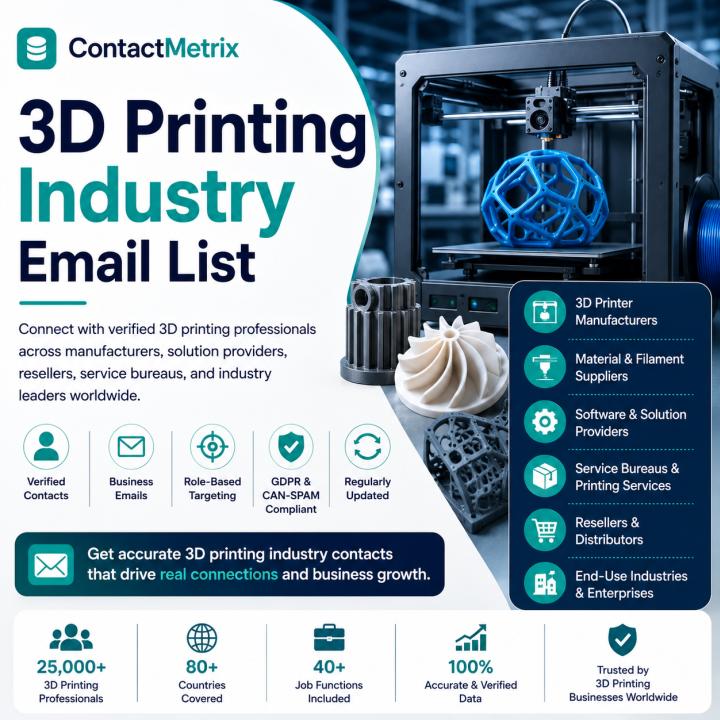
ContactMetrix's 3D Printing Industry Email List is segmented specifically to avoid that, breaking contacts down by sub-sector (printer manufacturers, material suppliers, software providers, healthcare, aerospace, automotive, consumer, industrial) and by technology specialization where available, so a pitch for aerospace-grade titanium powder doesn't land on a hobbyist filament buyer's desk.
The buyer roles vary as much as the technology. R&D directors evaluate new materials, procurement heads sign off on hardware, CAD designers assess software, and clinical applications leads make the call on medical printing. Reaching the wrong one of those, even inside the right company, wastes the outreach entirely.
None of this replaces a strong product, but it does mean the pitch reaches someone actually positioned to act on it, whether that's a manufacturing engineer sourcing prototyping equipment or a program manager evaluating additive manufacturing for a supply chain. ContactMetrix keeps the list useful past the first send too, refreshing records every 30 to 45 days and replacing bounces at no cost, which matters in a field where roles and companies are still being created as fast as the technology itself.