If you are evaluating AI agent development for your business, the first question is usually: how much will it cost? In 2026, the answer depends less on simply building an AI interface and more on what you expect the agent to understand, decide, execute, integrate, and monitor. A basic single-purpose agent may require a relatively modest investment, while enterprise AI agents connected to business systems can require significantly more engineering and infrastructure.
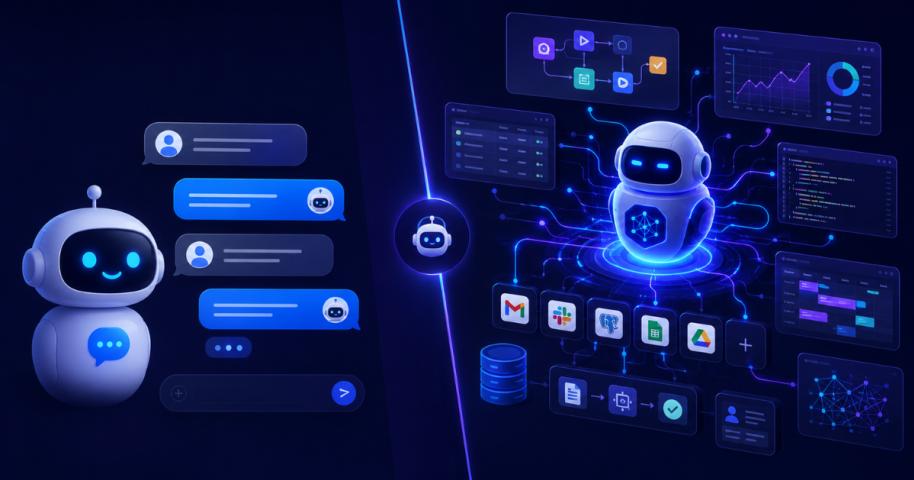
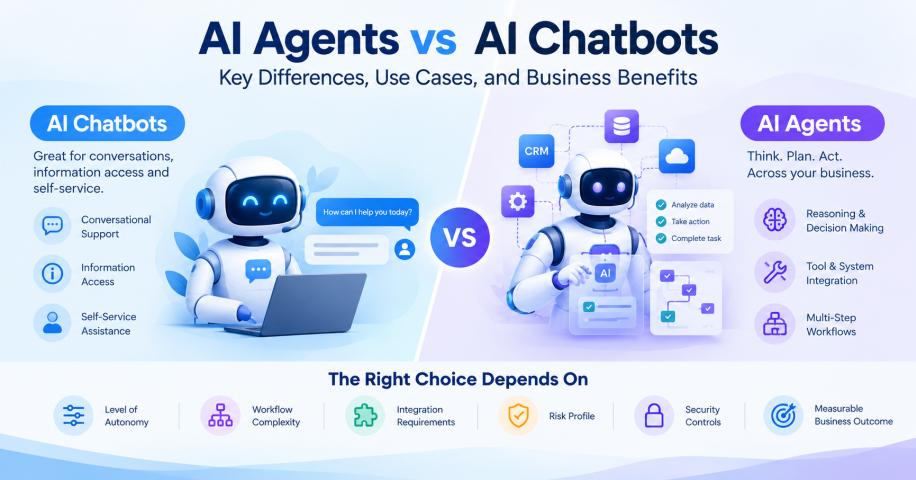
The global shift toward agentic AI is also changing how businesses approach automation. Modern AI agents can plan tasks, use tools, interact with enterprise data, and execute multi-step workflows rather than simply generate responses.
How Much Does Custom AI Agent Development Cost in 2026?
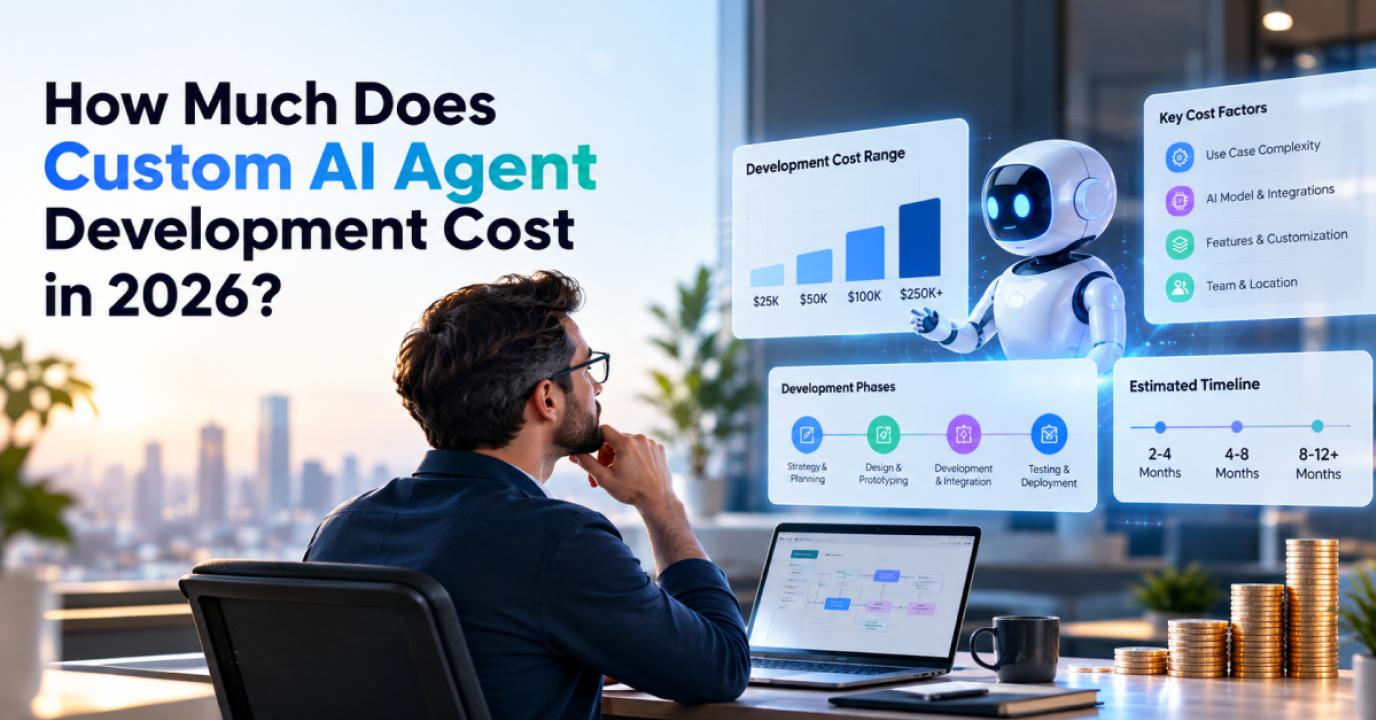
As a practical planning range, custom AI agent development can cost anywhere from $20,000 to $250,000+, depending on the complexity and production requirements.
A typical project may fall into these broad ranges:
Basic AI agent: 20,000–40,000
Intermediate AI agent: 40,000–100,000
Advanced or multi-agent system: 100,000–250,000+
Enterprise-scale AI platform: $250,000+ depending on integrations, security, infrastructure, and scale
These figures should not be treated as fixed quotes. The actual cost depends on the agent's capabilities, integrations, data requirements, model strategy, security controls, and expected usage.
For example, an internal agent that answers questions from a small knowledge base is fundamentally different from an enterprise agent that can access CRM records, update databases, call APIs, execute workflows, escalate decisions to employees, and maintain audit trails.
What Determines AI Agent Development Cost?
The biggest cost drivers usually come from the following areas.
1. Agent Complexity and Autonomy
The more independently an agent can reason and act, the more engineering it typically requires.
A simple agent might receive a request, retrieve relevant information, and generate a response. A more advanced agent may need to:
Break a business objective into multiple tasks
Select appropriate tools
Call external APIs
Retrieve information from multiple data sources
Validate its own outputs
Handle exceptions
Request human approval
Maintain memory across interactions
Multi-step reasoning can also increase operating costs because agents may perform multiple model calls during a single task. AWS specifically recommends bounded reasoning cycles, termination conditions, and consumption limits to prevent unpredictable agent execution costs.
2. Number of Integrations
Integrations can have a major impact on development effort.
An AI agent connected to one application is easier to build than one that interacts with multiple enterprise systems such as:
CRM platforms
ERP systems
Databases
Payment systems
Communication platforms
Internal APIs
SaaS applications
Document repositories
Each integration requires authentication, permissions, data mapping, error handling, testing, and monitoring.
This is particularly important for Enterprise AI Agents, where the agent must operate within existing business processes rather than function as an isolated application.
3. AI Models and Infrastructure
The selected foundation model also affects both development and ongoing operating costs.
Businesses may use one model for every task, or implement a model-routing strategy where simpler requests use smaller, lower-cost models while complex reasoning is handled by more capable models.
AWS recommends evaluating model selection, hosting, inference, and resource consumption as part of the overall cost model rather than treating infrastructure as an afterthought.
The architecture may also include:
LLM APIs
Vector databases
Cloud infrastructure
Agent orchestration
Memory systems
Retrieval systems
Monitoring
Security and access controls
These components contribute to the total cost of ownership after development.
Development Cost vs. Ongoing AI Agent Costs
One of the most common mistakes businesses make is looking only at the initial development budget.
Custom AI agent development cost is only one part of the financial equation. You also need to consider ongoing operational expenses.
These can include:
Model and Token Usage
Every agent interaction can consume input and output tokens. Complex workflows may require multiple model calls, increasing usage.
Recent research on agentic workloads also highlights how token consumption can vary substantially between tasks and even between executions of the same task.
Cloud Infrastructure
You may need infrastructure for application servers, databases, vector search, monitoring, security, and other supporting services.
Maintenance and Optimization
AI systems require continuous improvement. Your team may need to optimize prompts, retrieval, model selection, workflows, memory, and evaluation processes as usage grows.
Monitoring and Governance
Production agents require observability and controls to track performance, errors, costs, permissions, and potentially sensitive actions. Enterprise architectures increasingly treat security, governance, and observability as core components rather than optional additions.
How Much Does AI Agent Development Cost by Use Case?
The business use case can provide a better starting point for estimating your budget.
Customer Support Agents
A customer support agent can answer questions, retrieve account information, classify requests, and escalate complex cases.
If your requirements are limited to knowledge retrieval and conversational support, development can remain relatively contained. More advanced systems that access customer accounts, process transactions, or coordinate multiple workflows require additional engineering.
If your primary requirement is conversational customer support rather than autonomous workflow execution, AI Chatbot Development Services may also be a relevant implementation path.
Sales and Lead Qualification Agents
Sales agents can qualify leads, research prospects, update CRM records, schedule meetings, and trigger follow-up workflows.
Costs increase as the agent gains access to more systems and takes more autonomous actions.
Internal Knowledge Agents
An internal knowledge agent can connect employees with company documents, policies, databases, and business knowledge.
The primary development considerations include data ingestion, retrieval quality, permissions, access control, and response accuracy.
Workflow Automation Agents
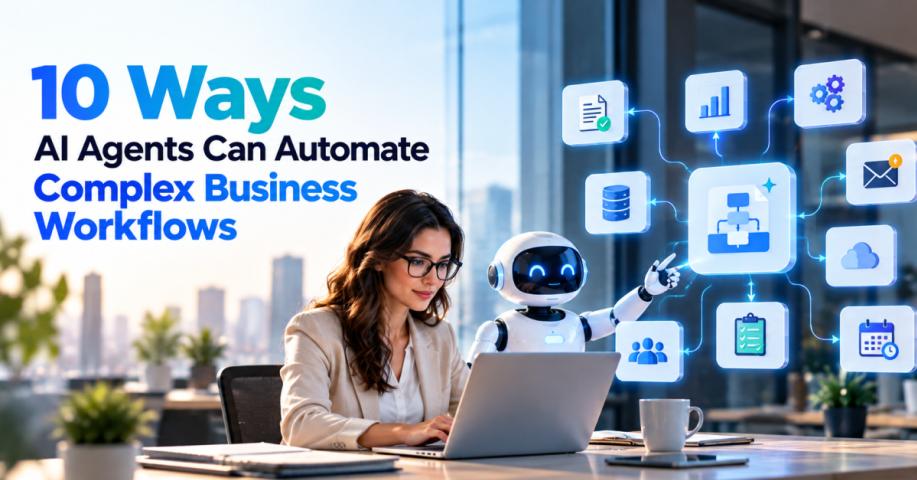
AI agents can also automate processes involving multiple applications and business rules.
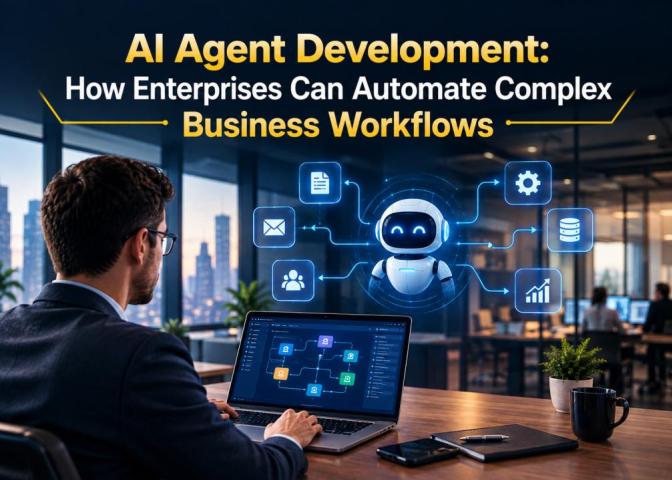
For example, an agent could receive a purchase request, validate information, retrieve approval rules, communicate with stakeholders, update an ERP system, and generate an audit record.
This type of AI workflow automation generally requires more engineering than a simple conversational agent because the system must safely execute actions across multiple stages.