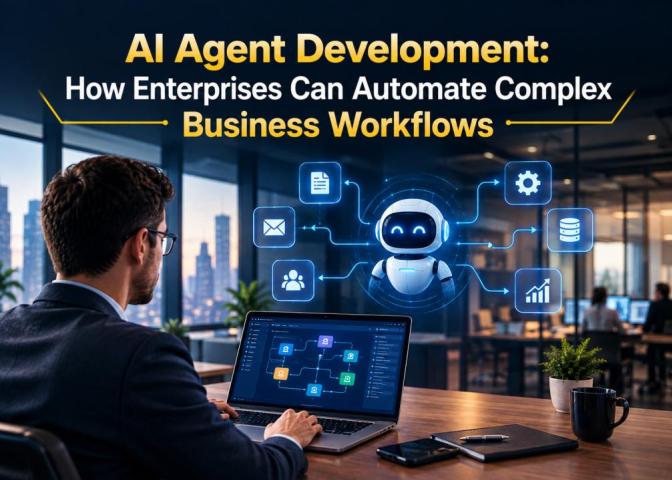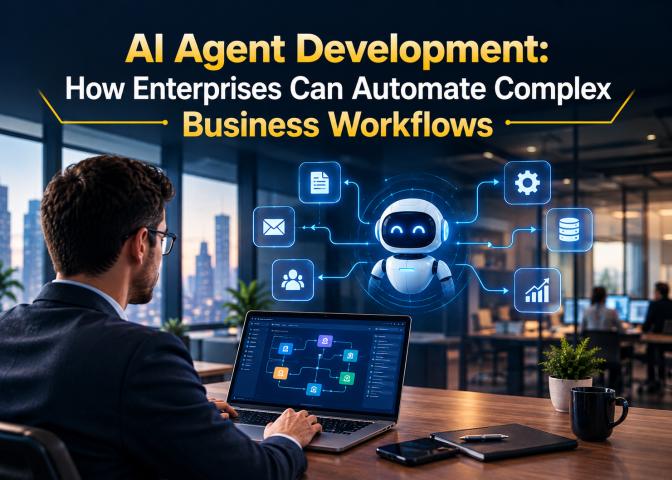
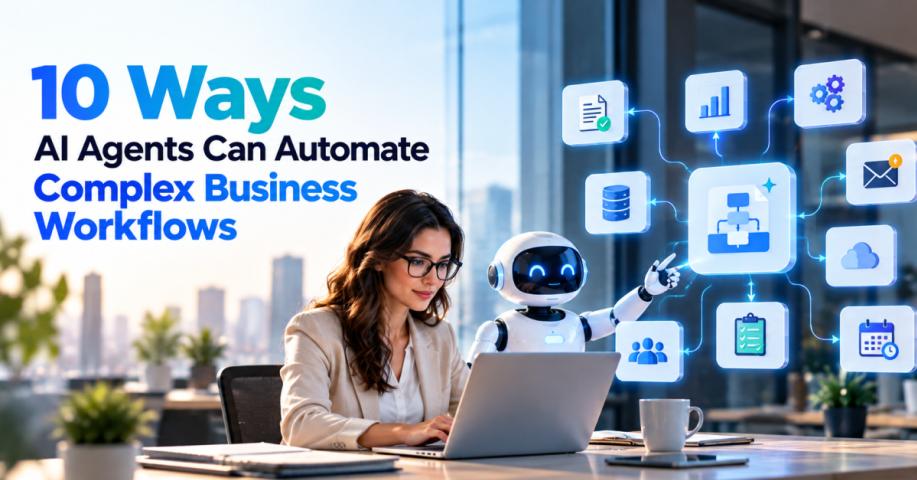
Businesses have automated many repetitive tasks, but complex workflows still depend on people to interpret information, make decisions, coordinate systems, and handle exceptions. AI agents are changing this model by combining reasoning, planning, tool use, and action across multiple business systems. With the right architecture, AI Agent Development can help organizations automate workflows that previously required constant human coordination while keeping people involved where judgment and accountability matter.
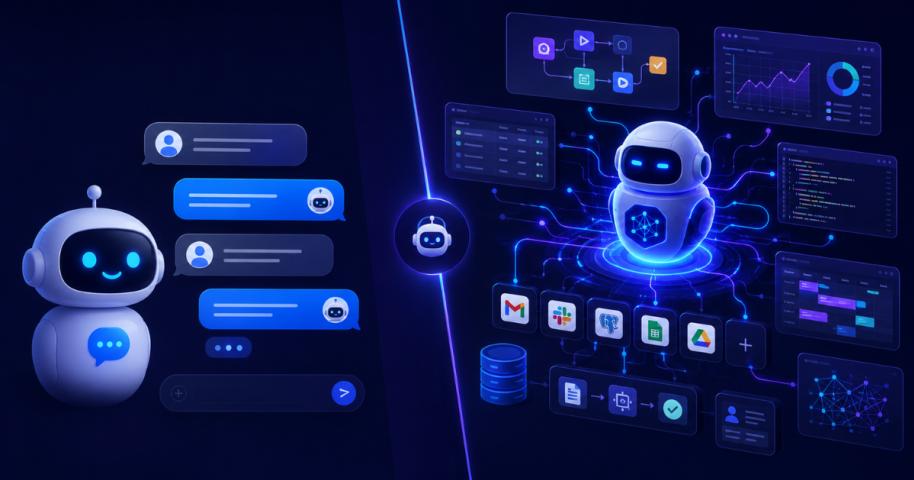
Unlike traditional automation, which typically follows predefined rules, agentic systems can interpret changing inputs, determine the next step, use connected tools, and respond to exceptions. This makes them particularly useful for workflows involving unstructured data, multiple applications, conditional decisions, and frequent handoffs.
What Makes AI Agents Different From Traditional Automation?
Traditional business automation works well when a process is predictable. A workflow can trigger an action, move data from one system to another, and complete a predefined sequence.
Complex workflows are different.
They may require an employee to review an email, understand a document, compare information from several systems, decide what should happen next, and escalate an unusual case. AI agents can support this type of process by interpreting context and taking multiple actions through connected tools.
This is where AI workflow automation becomes more powerful. Instead of automating one isolated task, an agent can participate across an entire workflow.
The goal is not to remove humans from every process. It is to automate execution where appropriate and give employees better visibility and control over decisions that require human judgment.
1. Automate Lead Qualification and Routing
Sales teams often spend significant time reviewing inbound leads, enriching prospect information, checking qualification criteria, and assigning leads to the right representatives.
An AI agent can collect information from forms, CRM records, websites, and other approved data sources. It can evaluate predefined qualification criteria, identify relevant signals, summarize the prospect, and route the lead to the appropriate salesperson.
The agent can also trigger follow-up actions when a lead meets specific conditions.
This creates a more connected workflow instead of forcing sales teams to manually move information between multiple systems.
2. Automate Customer Support Resolution
Customer support involves more than answering questions. Agents may need to understand customer history, identify the issue, retrieve information, check account status, and perform actions across support and business systems.
AI agents can coordinate these steps.
For example, an agent can interpret a customer request, retrieve relevant account information, search an approved knowledge base, determine whether the issue can be resolved automatically, and update the support ticket.
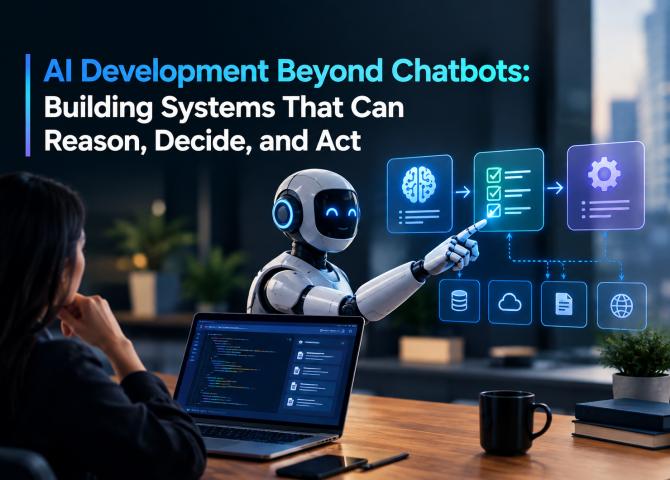
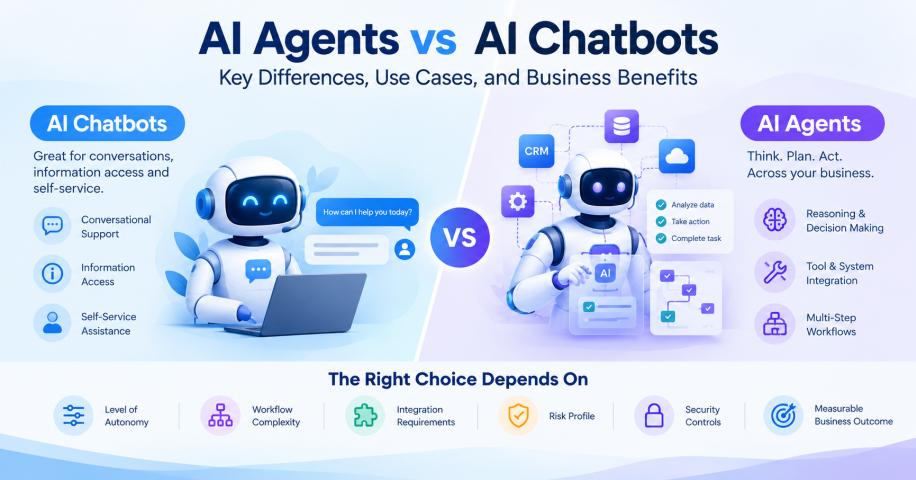
For customer-facing use cases, AI chatbot development can provide the conversational layer while AI agents handle the underlying actions and workflow execution.
This distinction allows businesses to move beyond simple question-and-answer chatbots toward systems capable of completing tasks.
3. Streamline Invoice and Accounts Payable Processing
Finance workflows often involve invoices arriving in different formats, extracting information, matching invoices with purchase orders, checking approval rules, and routing exceptions.
AI agents can help coordinate these activities.
An agent can extract relevant information from an invoice, compare it against available records, identify discrepancies, and route the invoice according to business rules. When an exception occurs, it can provide the relevant context to a finance employee instead of requiring them to investigate the entire transaction manually.
This combination of document understanding, decision support, and workflow execution makes intelligent automation useful for finance operations.
4. Automate Employee Onboarding
Employee onboarding typically requires coordination between HR, IT, finance, managers, and employees.
A single new hire may need accounts, permissions, equipment, training resources, documentation, and access to multiple business applications.
An AI agent can coordinate these tasks based on the employee's role and onboarding requirements.
For example, once HR confirms a new employee, the agent can initiate approved onboarding workflows, request required information, notify responsible teams, track completion, and flag missing steps.
Instead of employees manually monitoring multiple requests, the agent acts as an orchestration layer across the process.
5. Improve IT Service Management
IT teams handle large volumes of requests involving password resets, software access, device issues, system incidents, and internal support.
Many requests can follow standard procedures, while others require investigation.
AI agents can classify incoming tickets, gather relevant information, search approved documentation, perform authorized actions, and update ticket records. More complex cases can be escalated with a summary of the investigation already completed.
This approach can reduce repetitive work while allowing IT professionals to focus on incidents that require deeper technical expertise.
6. Automate Procurement Workflows
Procurement involves multiple steps, including identifying requirements, evaluating suppliers, checking policies, reviewing documents, and coordinating approvals.
AI agents can help connect these activities into a single workflow.
An agent could interpret a purchase request, check approved supplier information, compare relevant documents, verify policy requirements, and route the request for approval.
Where the workflow involves contractual or financial decisions, human approval can remain a required checkpoint.
This creates a practical model for Business Process Automation where agents handle information gathering and execution while people retain control over sensitive decisions.
7. Accelerate Document Review and Compliance Checks
Businesses process contracts, policies, applications, reports, invoices, and regulatory documents every day.
Manual review becomes difficult when document volumes increase or information is spread across multiple sources.
AI agents can identify relevant documents, extract important information, compare content against defined requirements, and flag potential issues for review.
For example, an agent could examine a contract against an organization's approved requirements and generate a structured summary of areas that need attention.
The agent does not need to make the final legal or compliance decision. Instead, it can reduce the amount of manual analysis required before a qualified professional reviews the case.
8. Automate Order Management and Exception Handling
Order processing can become complicated when inventory, pricing, customer information, shipping, and payment systems operate separately.
An AI agent can monitor incoming orders, validate information, identify missing data, communicate with connected systems, and trigger the appropriate next step.
The real value appears when something goes wrong.
If an order contains an unusual condition, the agent can investigate the available information, identify the reason for the exception, and route the case to the appropriate team with the relevant context.
This makes automation more adaptable than workflows that simply stop whenever an unexpected condition appears.
9. Coordinate Marketing Operations
Marketing workflows often involve research, content preparation, campaign coordination, audience segmentation, reporting, and follow-up activities.
AI agents can coordinate selected parts of this process.
For example, an agent can collect campaign data, summarize performance, identify predefined trends, prepare reports, and trigger approved follow-up tasks.
Multiple specialized agents can also work together under an orchestration layer. One agent may handle research, another may prepare a summary, and another may update an approved system.
The important consideration is governance. Marketing automation should define what agents can access, what actions they can perform, and which activities require human approval.
10. Automate Cross-Department Workflows
The most complex business processes rarely belong to a single department.
Consider a customer requesting a product change. The request may involve sales, finance, operations, customer support, engineering, and management.
A traditional automation system may struggle because each department operates different systems and rules.
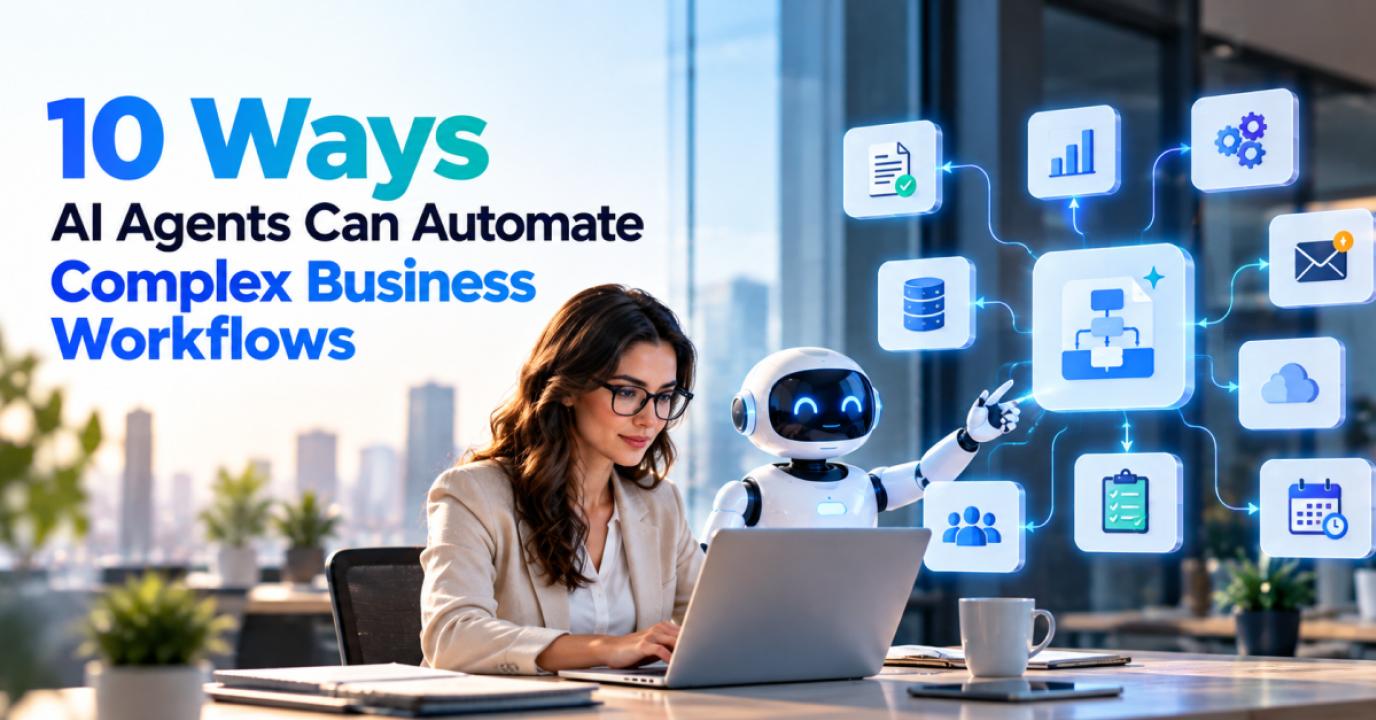
AI agents can act as workflow coordinators across these environments. They can collect information, communicate with connected applications, track process status, identify dependencies, and hand work to the appropriate team.
This is where agentic systems can move from task automation toward end-to-end workflow orchestration. Current enterprise approaches increasingly combine flexible AI agents with structured workflows so that reasoning and adaptability are balanced with consistency and control.
How to Implement AI Agent Automation Effectively
Adding an AI agent to an existing workflow does not automatically make the process better. The workflow itself needs to be assessed first.
Start by identifying processes with:
High volumes of repetitive work
Multiple systems or applications
Unstructured information
Frequent decision points
Repetitive employee handoffs
Clearly defined escalation paths
Measurable operational outcomes
Next, define the agent's boundaries.
Specify which systems it can access, which actions it can perform, which decisions require approval, and what should happen when confidence is low or information is incomplete.
Organizations should also establish monitoring, logging, access controls, evaluation processes, and clear human escalation paths. Current enterprise implementations increasingly emphasize governance, visibility, and controlled execution as agents gain access to business systems.
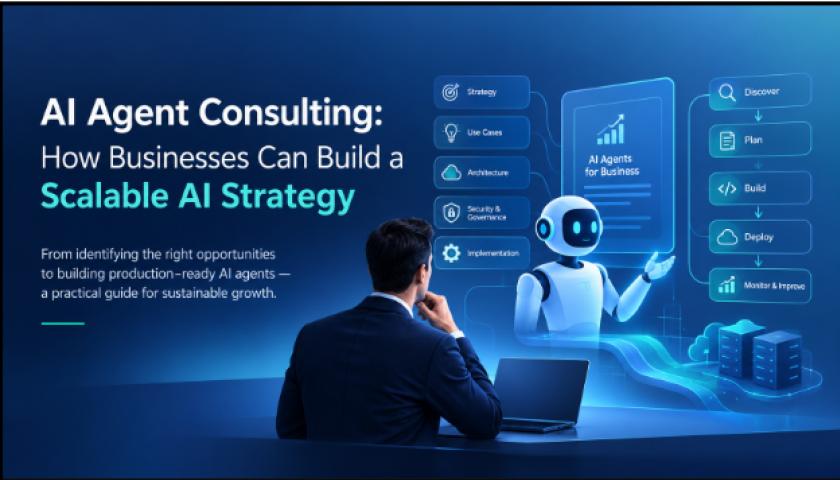
For businesses planning a broader transformation, AI strategy consulting services can help connect individual automation opportunities with larger business objectives, technology requirements, governance considerations, and implementation priorities.
AI Workflow Automation Is Moving Beyond Simple Task Automation
The next stage of automation is not simply about making individual tasks faster. It is about connecting decisions, systems, data, and actions into intelligent workflows.
AI agents can interpret context, plan multi-step activities, use enterprise tools, and adapt when conditions change. That makes them particularly relevant for business processes that were previously difficult to automate using rigid rules alone.
However, successful Intelligent Automation depends on more than deploying an AI model. Businesses need reliable data, well-defined workflows, secure integrations, appropriate permissions, monitoring, and human oversight.
When these foundations are in place, AI Agent Development can become a practical way to automate complex workflows while keeping business teams in control.
Final Thoughts
AI agents are changing how organizations approach automation. Instead of automating only predictable tasks, businesses can now explore workflows involving reasoning, unstructured information, multiple applications, and conditional decisions.
From lead qualification and customer support to finance, procurement, IT, compliance, and cross-department operations, the opportunities are broad.
The most effective approach is to start with a workflow where automation can create measurable value, define clear boundaries, connect the necessary systems, and introduce human oversight where decisions require accountability.
With the right foundation, AI Agent Automation can turn fragmented business processes into connected, adaptive workflows that support faster execution and more scalable operations.