You have a noise problem. You look at the options. Traditional isolation materials. Mineral wool. Foam. Basic barriers. They work. Sort of. But they force a compromise. You pick a material that handles high sounds. The low rumble stays. You pick one that handles bass. The voices echo. You cannot win both.
That is the limit of single-density thinking. One material. One job. One frequency range.
Multi-density acoustic sheet material breaks that limit. It layers different densities into one sheet. Each layer targets a different part of the sound spectrum. The result is coverage that traditional isolation cannot match.
Here is why it wins.
The Single-density Problem
Start with the flaw in traditional materials.
A single-density absorber has one personality. It is soft or hard. Porous or dense. It catches some sounds and lets others pass. Mineral wool at low density absorbs mid and high frequencies well. Voices. Clatter. Music. But bass waves are long. They need mass to stop them. A light wool layer does not have it.
A dense barrier blocks sound transfer. It stops noise passing through. But it reflects sound back into the room. The echo stays. The room feels loud. So traditional isolation forces a choice. Treat the echo. Or treat the transfer. Rarely both.
That is the gap. Multi-density fills it.
The Layered Logic
Here is how multi-density works.
Think of a sandwich. Different layers. Different jobs.
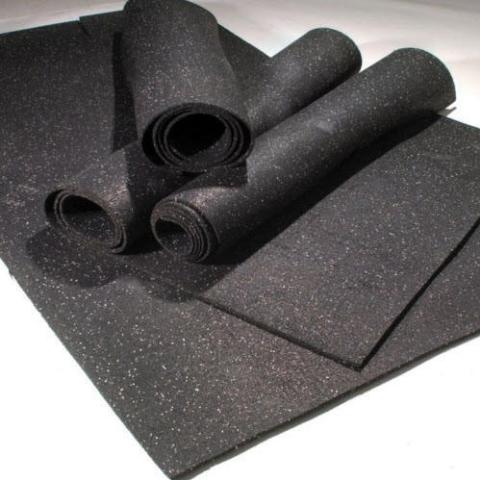
A low-density layer sits on the face. It is open. Porous. Sound waves enter easily. This layer catches the mid and high frequencies. The voices. The clatter. The sharp sounds that make a room feel harsh.
A high-density layer sits behind or beside it. It is denser. Heavier. It handles the lower frequencies. The rumble. The thump. The sounds that travel through walls.
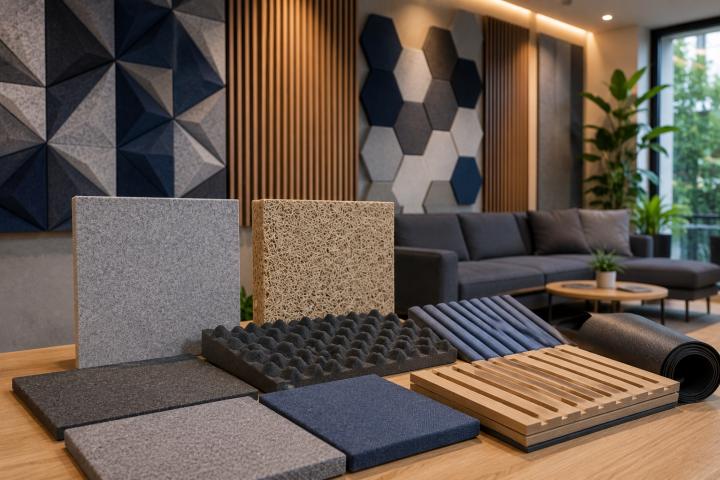
Some designs add more layers. A gradient. Density increases from face to core. Each step catches a different band. The result is broad absorption. Not just one slice of the spectrum. The whole range.
One patent describes this clearly. A light density layer for lower frequencies. A heavy density layer for mid frequencies. Combined, the structure absorbs across a wide range. The sound absorption coefficient stays above 0.75 across 80 to 6000 cycles per second .
That is the point. One sheet. Multiple jobs.
The Physics
Why does layering work? It comes down to impedance.
Sound moves through air easily. It hits a solid surface and bounces. That is reflection. The material's impedance does not match the air. A porous, low-density layer has impedance closer to air. Sound enters instead of bouncing. That is absorption. However, low-density materials struggle with long waves. Bass passes through. It needs a denser medium to slow it down.
A high-density layer provides that. It adds mass. It resists the wave. It traps the energy. So you need both. A soft face to let sound in. A dense core to stop the low end. Multi-density sheets deliver that in one product. Traditional single-density cannot.
What the Research Shows
The numbers back this up.
A study on natural fiber panels found that density and thickness both matter. But density has a more consistent effect across frequencies . That means a single density is a compromise. A layered density is a solution.
Patent literature describes multi-density panels with density ratios from 2:1 up to 32:1 between layers. The preferred range is 4:1 to 15:1. This ratio provides good acoustical and thermal insulation without making the panel hard to process .
Another design uses a gradient. Density increases from the outer surface toward the inner core. The outer layer is several times thicker than the inner layer. The inner layer is several times denser. That structure absorbs across a wide bandwidth .
So the science is not new. It has been refined for decades. The best panels use it.
Read to know more about acoustic sheet material here: How Acoustic Sheet Material Influences Human Behavior in Interior Spaces
The Practical Wins
What does this mean for your project?
One product. Full coverage: You do not need separate absorbers and barriers. One multi-density sheet handles both echo and transfer. Fewer products. Fewer layers. Simpler install.
Thinner profile: Traditional isolation often means thick wool plus a heavy barrier. Multi-density combines them. The sheet stays slim. You save space. You save headroom.
Easier to specify: One product number. One performance spec. No guessing which layer goes where. The manufacturer did the engineering.
Consistent results: Single-density materials vary in performance depending on how they are mounted. Multi-density is more forgiving. The layers work together. The result is predictable.
So the practical case is strong. Less complexity. Better results.
Where it Fits
Multi-density acoustic sheet material works in many spaces.
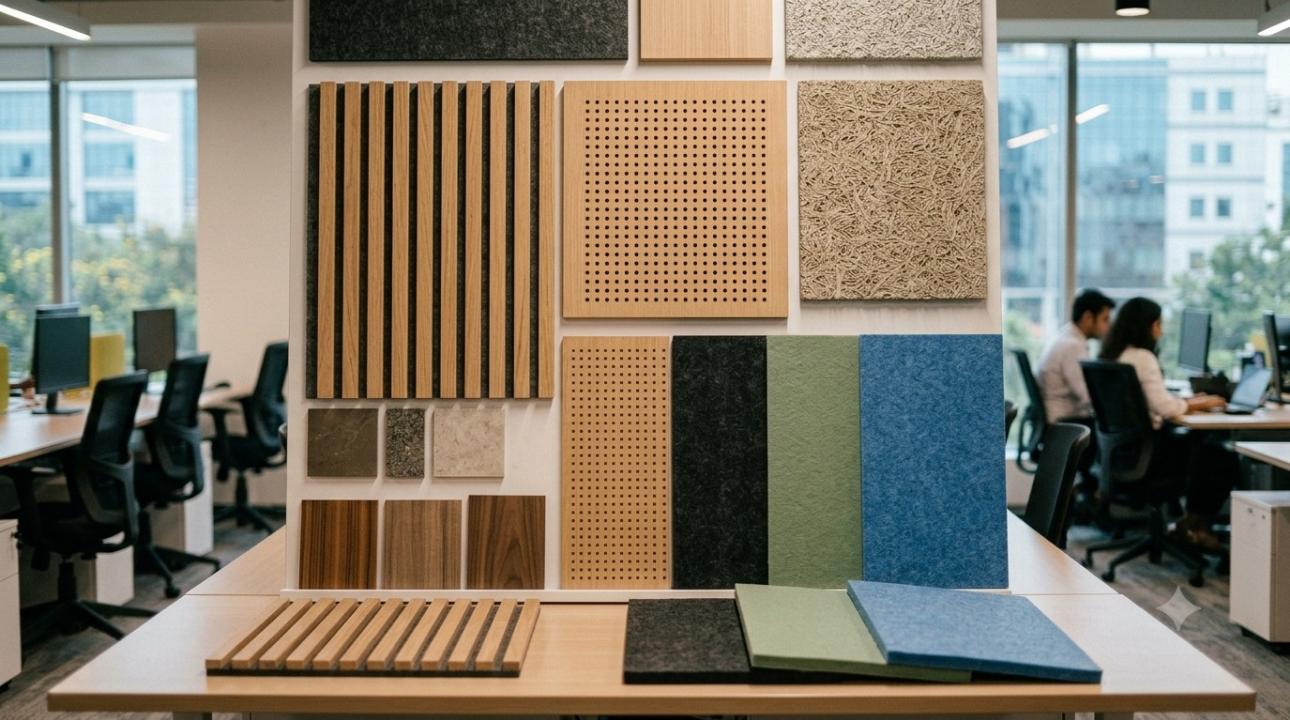
Offices: Open plans echo. Speech carries. A multi-density sheet on the walls absorbs the voice range and the low hum of HVAC. The room feels calm.
Home theaters: You want immersion. Echo ruins it. Bass leaks out. Multi-density absorbs the reflections and contains the low end. The experience tightens.
Studios: Recording needs clean sound. No flutter. No boom. Multi-density gives broad control. The mic hears what it should.
Clinics: Privacy matters. Noise stresses patients. Multi-density reduces transfer between rooms. It absorbs echo inside. Both problems solved.
Homes: A shared wall with a neighbor. A media room above a bedroom. Multi-density blocks the transfer and calms the room.
So the applications are broad. The material is versatile.
The Limits to Know
Let us be honest. Multi-density is not magic.
It costs more than basic foam. The engineering is real. The layers are real. You pay for both.
It is not a substitute for full soundproofing. If you need total isolation, you need mass and decoupling. Multi-density helps. It does not replace a proper acoustic build.
And it still needs correct mounting. An air gap helps. Sealing edges matters. The sheet is one part of the system.
So use it well. Do not expect it to fix a bad room alone.
Final Word
Traditional isolation forces a choice. High sounds or low. Echo or transfer. One job at a time. Multi-density acoustic sheet material refuses that choice. It layers the solution. It covers the spectrum. It does more with less. So look beyond the single layer. Look at the structure. Look at the densities.
The right sheet does not just absorb sound. It manages it. Your ears will thank you. Your client will thank you. The room will feel the difference.
Ready to Move beyond Single Density?
The right sheet makes the difference.
Tranquil Global supplies acoustic sheet material with multi-density performance. We share the data. We help you choose.
Contact Tranquil Global today. Hear the full spectrum.
FAQs
Is multi-density better than thick mineral wool?
For broad frequency control, yes. Wool handles mid and high. Multi-density adds low-end absorption and blocking.
Does it replace soundproofing?
No. It improves absorption and reduces transfer. Full isolation needs mass and decoupling.
Is it harder to install?
No. It installs like any sheet material. The layers are bonded at the factory.