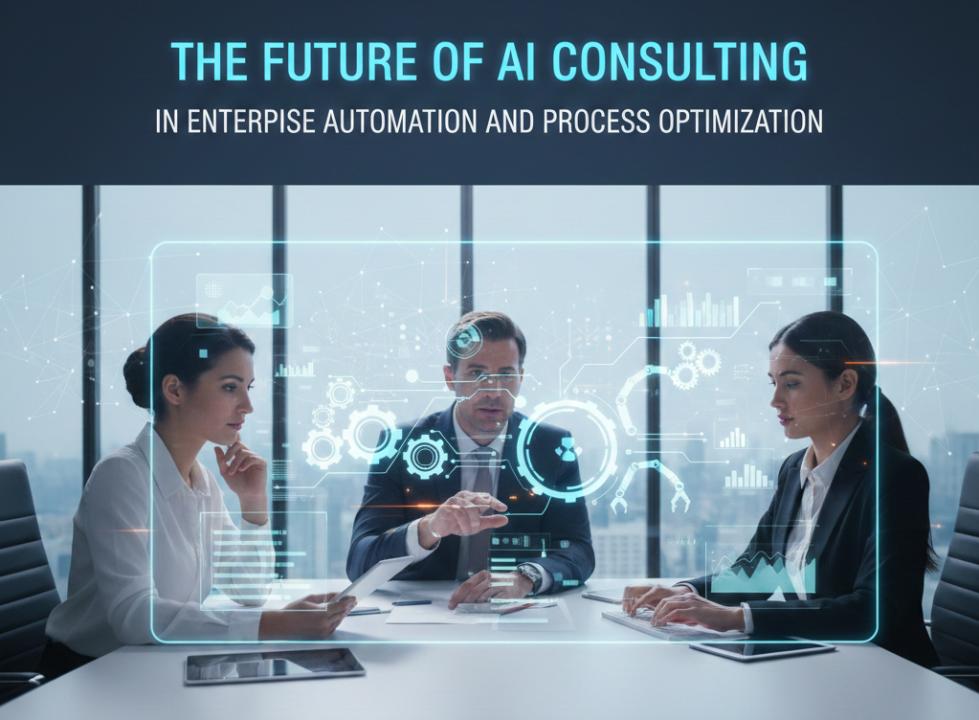
Enterprise leaders today face a clear reality. Automation is no longer a competitive advantage. It is a baseline requirement for survival. Yet most large organizations and high-growth startups still struggle to move beyond isolated automation initiatives. Legacy systems, fragmented data environments, and unclear AI strategies slow progress. This is where an experienced AI Consulting Company becomes essential, helping organizations turn experimentation into scalable operational impact.
AI consulting is evolving rapidly. It is no longer limited to advising on technical feasibility. Modern AI Consulting Services now guide enterprises through data readiness, workflow redesign, AI model governance, system integration, and long-term performance measurement. As automation demands increase across finance, supply chain, customer experience, HR, and operations, consulting firms specializing in Custom AI and machine learning consulting services are shaping how enterprises modernize at scale.
This article explores where AI consulting is heading and what enterprise decision-makers should expect over the next phase of automation and process optimization.
Why enterprise automation needs specialized AI consulting
Many organizations begin automation with rule-based tools or robotic process automation platforms. These approaches improve efficiency for repetitive tasks, but they reach limits quickly. True enterprise automation requires systems that interpret data, adapt to changing inputs, and learn from outcomes. This is where AI models become necessary.
However, deploying AI at an enterprise level is complex. Challenges include:
- Data scattered across multiple business units
- Inconsistent data governance practices
- Integration constraints with legacy infrastructure
- Security and compliance requirements
- Unclear accountability for AI outcomes
AI Consulting Services bridge these gaps by aligning technology, operations, and leadership strategy. Consultants assess readiness, define automation roadmaps, identify high-ROI use cases, and oversee deployment. The result is automation that fits existing business realities rather than forcing disruptive system replacements.
According to external industry research, over 60 percent of large organizations cite lack of internal AI expertise as the main barrier to scaling automation. This trend is driving growing demand for specialized AI Development Services and consulting partnerships.
The shift from experimentation to enterprise-wide AI programs
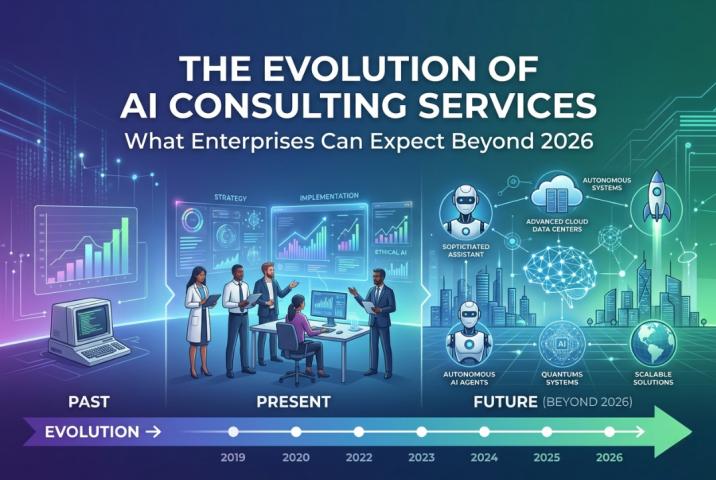
In the past, enterprises ran AI pilot projects inside innovation labs. Many pilots produced promising results but failed to scale. Today, AI consulting focuses on moving beyond pilots and embedding intelligence into core business processes.
The future AI Consulting Company will offer structured transformation models that cover:
- Enterprise data strategy and architecture
- AI solution selection and customization
- Model deployment pipelines
- Ongoing monitoring and retraining frameworks
- Business outcome measurement
This shift is important because enterprise automation success depends less on building advanced models and more on managing AI as a long-term operational capability.
Custom AI and machine learning consulting services now emphasize repeatable deployment patterns. These include standardized integration methods, model governance policies, and cross-department collaboration frameworks. Enterprises adopting this approach reduce deployment risks and gain predictable performance improvements.
Intelligent process optimization beyond basic automation
The next phase of enterprise automation goes beyond task automation. It focuses on intelligent process optimization where AI systems analyze workflows, detect inefficiencies, and recommend improvements in real time.
Examples include:
- Predictive demand planning in supply chains
- Automated credit risk assessment in financial services
- Dynamic pricing optimization in retail
- Intelligent ticket routing in customer support
- Workforce scheduling optimization in operations
These use cases require deep alignment between AI models and business logic. AI Consulting Services help define success metrics, data requirements, integration pathways, and risk controls. This ensures optimization initiatives deliver measurable ROI rather than isolated technical achievements.
External industry benchmark reports that enterprises using AI for process optimization achieve operating cost reductions of 15 to 25 percent on average. Such outcomes explain why automation budgets continue to rise across global enterprises.
Integration with existing enterprise ecosystems
One of the most critical roles of an AI Consulting Company is ensuring AI systems work inside existing enterprise environments. Most organizations rely on ERP, CRM, HRM, and proprietary operational platforms that cannot be replaced overnight.
AI Development Services now focus heavily on:
- API-based integration strategies
- Middleware orchestration layers
- Secure data pipelines
- Role-based access control
- Compliance alignment with industry regulations
This integration-first mindset prevents disruption while allowing gradual modernization. Consulting teams also help enterprises prioritize which processes should be AI-enabled first based on revenue impact, risk reduction, or customer experience improvement.
Governance, compliance, and responsible AI operations
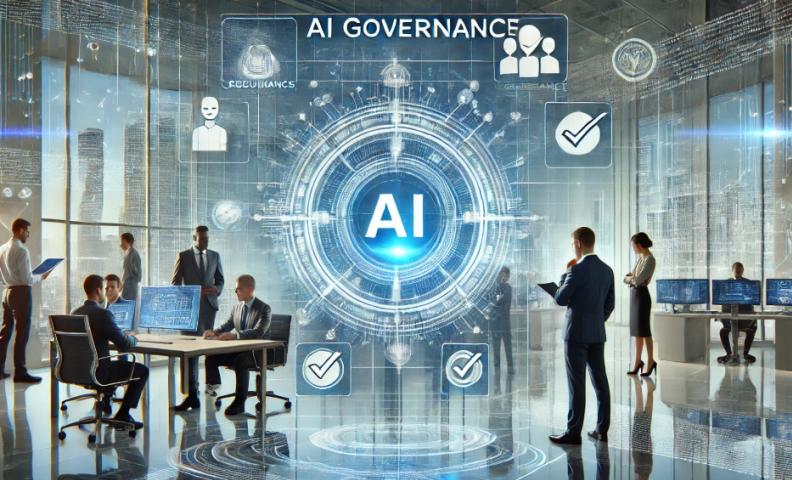
As AI systems influence enterprise decisions, governance becomes non-negotiable. Regulatory bodies worldwide are introducing AI compliance frameworks, data privacy rules, and transparency obligations. Enterprises must ensure their automation strategies meet these expectations.
Future-focused AI Consulting Services now include:
- AI risk assessments
- Model explainability frameworks
- Bias detection protocols
- Audit-ready documentation
- Continuous compliance monitoring
This governance layer protects organizations from reputational and regulatory risks. It also builds trust among stakeholders who rely on AI-driven decisions.
Data strategy as the foundation of automation success
AI automation cannot succeed without structured data ecosystems. Many enterprises underestimate the work required to clean, organize, and unify data sources before AI deployment.
Custom AI and machine learning consulting services increasingly begin with data strategy consulting. This includes:
- Enterprise data maturity assessments
- Data warehouse and lake design
- Master data management planning
- Data lineage and quality controls
Strong data foundations accelerate AI deployment while improving accuracy and stability. Consulting teams guide enterprises through this preparation phase so automation initiatives do not stall mid-deployment.
ROI measurement and performance accountability
Enterprise leaders need more than technical progress reports. They need financial justification. Modern AI Consulting Services emphasize ROI tracking frameworks that connect AI initiatives directly to business outcomes.
Performance metrics often include:
- Reduction in process cycle times
- Lower manual labor costs
- Fewer operational errors
- Higher customer satisfaction scores
- Increased revenue per transaction
By implementing continuous performance dashboards, consulting partners ensure AI investments remain transparent and accountable. This builds executive confidence and supports further automation expansion.
The rise of long-term AI partnership models
The future AI Consulting Company will not operate as a short-term advisor. Instead, long-term partnership models are becoming the norm. Enterprises increasingly seek consulting teams that remain involved across strategy, development, deployment, and continuous optimization.
AI Development Services now often include:
- Dedicated AI operations support teams
- Model retraining and tuning services
- Automation roadmap updates
- Technology stack modernization guidance
This partnership approach ensures enterprises stay current as AI technologies evolve, preventing technical stagnation and maintaining competitive advantage.
What enterprise decision-makers should prioritize now
To prepare for the future of AI consulting and automation, enterprise leaders should focus on:
- Defining clear automation goals aligned with business strategy
- Investing in enterprise-wide data readiness
- Selecting AI Consulting Services with proven enterprise integration experience
- Establishing AI governance and compliance structures early
- Measuring ROI from the first deployment cycle
Organizations that take these steps build sustainable automation capabilities rather than short-term innovation showcases.
Looking ahead
Enterprise automation is entering a mature phase where intelligence, integration, governance, and accountability matter more than experimentation. AI Consulting Services will continue to evolve from advisory roles into strategic transformation partners. The enterprises that succeed will be those that approach AI as a business capability rather than a technology project.
With the right AI Consulting Company, supported by robust AI Development Services and Custom AI and machine learning consulting services, organizations can build automation systems that scale, adapt, and deliver lasting business impact.