Introduction
Business growth plateaus happen to most organizations at some point. You've optimized your current processes, expanded your market reach, and improved your operations, but growth continues to slow. Your team works harder but produces diminishing returns. At this critical juncture, many companies realize their existing systems and approaches can only take them so far.
When growth stalls, the solution rarely involves doing more of what you're already doing. Instead, you need fundamentally different capabilities. This is where an agentic AI development company becomes valuable. Rather than incremental improvements to existing workflows, agentic AI introduces autonomous intelligent systems that handle complexity your current team manages manually. These systems process work faster, handle exceptions that usually require human judgment, and free your people to focus on activities that drive growth.
This guide explores how agentic AI development services unlock growth opportunities that seemed out of reach. You'll discover how autonomous agents solve the capacity constraints that limit scaling, how they reduce operational costs, and how they enable your organization to compete effectively even as markets become more complex.
Why Traditional Growth Strategies Fall Short
The Scaling Problem Every Growing Company Faces
Growth usually follows a predictable pattern: success attracts new customers, but serving more customers requires proportionally more staff. This relationship works fine at smaller scales. But as you grow, hiring people becomes increasingly expensive. Salary costs, benefits, training, and management overhead accumulate quickly. At some point, hiring additional staff to handle incremental growth no longer makes financial sense.
This is the scaling wall that stops many companies. Growth has been profitable and relatively easy so far, but now each additional customer requires hiring additional employees. Your margins compress. Your cost to acquire each new customer increases relative to the revenue they generate. Growth becomes slower and less profitable, even as your team works harder than ever.
Traditional solutions to this problem have real limitations. Outsourcing reduces some costs but creates quality control and communication challenges. Process automation helps, but most automation tools handle only straightforward, repetitive work. The complex decisions and exception handling that consume most of your team's time remain stubbornly manual. You're caught between expensive in-house teams and inadequate automation.
Why Automation Tools Stop Working at Scale
Many companies deploy workflow automation, robotic process automation, or business process management tools expecting them to solve scaling challenges. These solutions work well for defined, repetitive tasks. They excel at moving documents between systems, sending notifications, or updating records based on simple rules. But they hit walls when tasks require judgment, exception handling, or understanding context.
Real business work is messier than automation tools assume. A customer inquiry might need different handling depending on their history, current circumstances, and what they're asking. An order might require adjustments based on inventory availability, production capacity, and delivery constraints. A quality issue might need different investigation approaches depending on when and where it appeared. These situations require reasoning, not just rule execution.
When automation tools encounter situations outside their simple rules, they typically stop and wait for human intervention. This creates queues of exceptions that require manual handling. Your team still spends time on these complex cases, so the automation doesn't actually reduce the workload. You've spent money on tools that only solve the easy part of your problem.
The Competitive Pressure to Move Faster
Your competitors aren't standing still while you struggle with growth. If they solve the scaling problem before you do, they'll grab market share, attract top talent, and build capabilities that become increasingly hard to overcome. Speed of execution has become a competitive advantage in most markets. Companies that can respond quickly to customer needs, adapt to changing conditions, and scale their operations smoothly pull ahead of slower competitors.
When growth stalls, speed suffers. Your team is fully occupied with current work, so they can't take on new initiatives quickly. New product features take months to launch instead of weeks. Responding to market changes happens slowly. New markets take longer to enter. Your organization becomes less agile and more vulnerable to competitive threats.
Breaking free from these constraints requires capabilities that go beyond traditional automation. You need systems that can handle the complex reasoning and decision-making that currently requires your best people. You need to free up your team so they can focus on strategic activities that drive growth rather than managing operational details.
How Agentic AI Unlocks Growth Potential
Understanding Autonomous Agent Systems
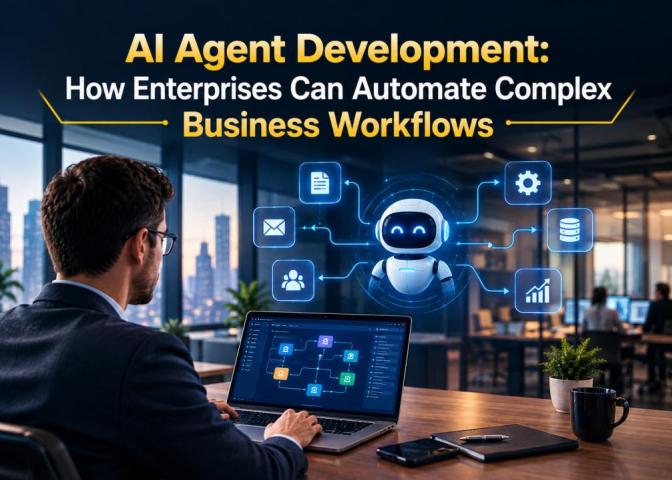
Agentic AI development company builds systems based on autonomous agents—AI systems capable of perceiving situations, reasoning about appropriate responses, taking actions, and learning from outcomes. These agents operate with genuine decision-making authority within defined boundaries. They don't just execute simple rules; they reason through problems and select appropriate solutions.
An autonomous agent working in customer service might be able to understand a customer's request, look up their account history, check current inventory, consult company policies, and either resolve the issue directly or escalate appropriately. The agent reasons about what approach makes sense rather than just following a decision tree. When situations arise that are slightly different from previous ones, the agent can adapt its approach rather than being stuck waiting for a human to decide.
This capability transforms automation from "execute simple rules" to "make informed decisions." The difference is profound. Simple automation only works for straightforward situations. Agents handle ambiguity, complexity, and novel situations because they reason through problems rather than just applying predetermined responses.
Addressing Capacity Without Hiring
The appeal of agentic AI for growth-focused organizations is clear: it increases operational capacity without proportional increases in headcount. When agents handle work that currently requires multiple people, your company can serve more customers, process more transactions, and maintain quality without hiring. Your revenue grows while your cost structure remains relatively stable. Margins improve significantly.
This matters enormously for growth economics. Early-stage companies often trade profitability for growth because hiring allows them to serve more customers. As they mature, they need profitability to survive. Agentic AI allows companies to have both: growth driven by expanded capacity while margins improve because capacity increases don't require proportional cost increases.
The capacity increase goes beyond just volume. Agents can work continuously without fatigue, can handle multiple tasks in parallel, and don't need breaks, vacations, or management overhead. A single well-designed agent system might replace the work of several full-time employees. For work that's currently bottlenecking your growth, agentic AI provides the capacity breakthrough you need.
Handling Complexity That Slows Growth
As companies grow, operational complexity increases. More customers means more diverse customer needs and use cases. More products means more complexity in manufacturing, inventory, and fulfillment. More markets means navigating different regulations and local requirements. More staff means managing more interpersonal dynamics and coordinating more moving pieces.
This complexity is often what actually limits growth, not the number of people on your team. Your team spends so much time managing edge cases, coordinating across departments, and handling exceptions that they can't focus on activities that would accelerate growth. Critical decisions take longer because people need to gather information from multiple sources and resolve conflicts across departments.
Agents excel at handling this kind of complexity. They can monitor multiple data streams, understand how different parts of your operation interact, and make decisions that account for multiple constraints and competing priorities. They can operate continuously without the attention fatigue that affects humans. As your business gets more complex, properly designed agents become more valuable because they're freed from the human limitations that make complex systems slow.
Creating Better Customer Experiences at Scale
Growth without degrading customer experience is the holy grail of scaling. Yet this is exactly what happens to many companies. As they grow, customer service becomes slower, more impersonal, and more frustrating. The experience that attracted customers in the first place gets lost.
Agents can help solve this paradox. They can provide personalized service at scale because they can access and process individual customer information instantly. They can make decisions rapidly because they don't need to wait in queues or be scheduled with other tasks. They can handle variations in customer situations because they reason through problems rather than following rigid scripts. They can learn from customer feedback and improve their responses over time.
When customers interact with agents that understand their specific situations and can make decisions quickly, the experience feels personal even at large scale. The company maintains the service quality that attracted customers while handling vastly increased volume. This is the competitive advantage that agentic AI provides: superior customer experience that doesn't deteriorate as you grow.
The Business Impact of Agentic AI Implementation
Revenue Growth Through New Capabilities
Agentic AI removes constraints that previously limited what your business could offer. If capacity constraints meant you couldn't take on new customers, agents expand that capacity. If complexity constraints meant you couldn't enter new markets, agents reduce that complexity burden. If speed constraints meant you were slower than competitors, agents accelerate decision-making and execution.
These capability improvements translate directly to revenue opportunities. You can pursue customers you previously couldn't serve. You can enter markets that were previously too complex. You can offer services that required more specialized staff than you could afford. You can expand into adjacent products or services that your current team couldn't support.
The revenue impact compounds over time. Initial implementations might target high-volume, lower-complexity work. As the organization gains confidence and agents improve through experience, implementations expand. Eventually, agents handle significant portions of operational work, freeing people to focus entirely on growth and strategy. Companies that successfully implement agentic AI often find they can grow faster with fewer people than competitors still managing work manually.
Cost Reduction and Margin Expansion
Beyond revenue growth, agentic AI implementation improves profitability by reducing operational costs. The direct cost reduction comes from doing more work with fewer people. But there are indirect benefits too. Agents don't require training time like new employees do. They don't require management or supervision. They don't generate HR overhead. They work 24/7 without needing time off.
For customer-facing operations, agents can provide continuous availability. Customer service that operates only during business hours is a competitive disadvantage in a global market. Agents can provide round-the-clock support without the cost of hiring night shift staff in multiple time zones. This availability becomes a selling point that attracts customers and increases loyalty.
The margin improvement also comes from better decision-making. Agents analyze information more completely than time-pressed humans and catch problems earlier. They're less likely to make errors that create rework or customer service costs. They optimize decisions based on complete information rather than incomplete context. Over time, these quality improvements compound into significant cost savings.
Faster Decision-Making and Execution
Decisions made faster have value, especially in competitive markets. Markets shift constantly. Competitors launch new offerings. Customer needs change. Companies that can observe these changes and respond quickly maintain advantages. Companies that are slow lose opportunities and get outmaneuvered by faster competitors.
Agents accelerate decision-making by not being constrained by human schedules and attention limitations. Instead of waiting for a meeting or for a key person to become available, decisions happen immediately when information is complete. Agents can process information from multiple sources, identify patterns humans would miss, and recommend decisions with supporting analysis. People can then focus on strategic decisions that require human judgment rather than operational decisions that agents can make better.
This speed advantage compounds in competitive situations. As your company responds faster to market changes, you gain market share. With larger scale, you can invest more in continued improvement. Faster execution becomes self-reinforcing. Companies that implement agentic AI effectively often find they develop competitive advantages that are hard for slower competitors to overcome.
Risk Reduction and Compliance
Many growth opportunities come with regulatory or compliance complexity. Entering new markets often means navigating new regulations. Handling more customer data creates privacy and security risks. Managing larger operations increases audit and oversight requirements. These compliance burdens can slow growth because people spend time ensuring compliance rather than pursuing growth.
Agents can help manage compliance risk. They can ensure that processes follow prescribed procedures consistently. They can maintain audit trails and documentation automatically. They can monitor compliance in real-time rather than discovering problems during audits. They can scale compliance checking alongside growth, preventing the common situation where compliance improves slower than growth and creates risk accumulation.
Properly designed agents actually reduce compliance risk compared to manual processes because they're consistent, documented, and auditable. This risk reduction opens growth opportunities that seemed too risky with manual processes. Companies can expand into markets or customer segments they previously avoided due to compliance complexity. This expansion drives revenue growth that also improves profitability through scale.
Strategic Growth Opportunities Agentic AI Enables
Entering New Markets Faster
Market expansion is a key growth strategy, but new markets are typically more complex than established ones. You don't know local customers as well. You might face different regulatory requirements. You might need different product configurations or service approaches. Building the infrastructure to serve new markets traditionally requires significant investment before you generate much revenue.
Agentic AI reduces this barrier. Agents can learn new markets quickly and help your limited team manage complexity. They can help customize your service for local requirements. They can handle customer interactions in new markets immediately rather than waiting for you to hire and train local staff. This means you can enter new markets with smaller initial investment and start generating revenue faster.
The faster revenue generation means you reach profitability in new markets sooner. This improves return on expansion investment. It also means you have more resources to invest in the next market expansion. Over time, faster market entry becomes a systematic competitive advantage. Competitors that must build local teams first move more slowly and miss opportunities you capture first.
Expanding Product Lines and Services
Product expansion is another growth strategy, but new products require different operational capabilities. If you expand into a new product line, you need people with product-specific expertise, new manufacturing or fulfillment capabilities, and different customer support approaches. This complexity means product expansion requires significant investment.
Agents familiar with your core operations can help extend capabilities into new areas. An agent that handles customer orders for product A can learn to handle orders for product B, even if product B has different configuration options or fulfillment requirements. An agent that processes payments for service X can manage payments for service Y with different pricing structures. Agents can leverage existing infrastructure and knowledge while adapting to new requirements.
This flexibility means you can test new products and markets with less initial investment. You can validate market demand before building full teams around new products. You can expand proven successful products rapidly without waiting for hiring processes. This test-and-expand approach is less risky and more capital-efficient than traditional product expansion strategies.
Improving Customer Retention and Expansion
Customer retention and growth within existing customers are often more profitable than acquiring new customers. Yet retention requires continuous engagement and responsiveness to customer needs. As companies scale, they often get slower at customer engagement, leading to churn and missed expansion opportunities.
Agents can improve retention by providing better, faster customer service. They can proactively identify customer issues before they become serious problems. They can respond immediately to customer inquiries rather than making customers wait. They can personalize interactions based on customer history and preferences. These touches improve satisfaction and loyalty, increasing customer lifetime value.
Agents also help identify expansion opportunities within existing customers. They can analyze customer usage patterns, understand current needs, and recommend relevant additional services or products. They can manage the sales and implementation process for these opportunities quickly. As a result, the same customer base generates more revenue through expansion without requiring additional sales effort proportional to the revenue increase.
Building Operational Resilience
Growth often brings fragility. As your company gets larger and more complex, disruptions have bigger impact. Single points of failure create larger consequences. Coordination failures across departments affect more people. Recovery from problems becomes harder because complexity increases.
Agentic AI can help build resilience by automating critical processes so they're less dependent on specific people. When processes are documented in agent systems, you have clear records of what should happen. You don't lose capabilities when people leave. Processes are more consistent and predictable. Recovery from disruptions is faster because agents can resume operations automatically.
Operational resilience also improves customer retention. Customers value reliability. When your operations are stable and disruptions are handled smoothly, customers trust you. Companies with strong operational resilience can handle growth without the customer satisfaction problems that sometimes accompany rapid scaling. This stability supports both growth and customer retention.
Implementing Agentic AI for Growth
Selecting High-Impact Opportunities
Not all work is equally valuable to automate. Implementing agentic AI successfully starts with choosing the right opportunities. High-impact opportunities share several characteristics: they consume significant time and resources, they involve complexity that's hard to scale, they directly affect customer experience or revenue, and they contain enough regularity that agents can reliably make decisions.
Common high-impact opportunities include customer service and support, order processing and fulfillment, invoice and payment processing, appointment and scheduling management, lead qualification and outreach, and inventory and supply chain decisions. These are the areas where agents can handle significant volume, reduce human effort, and improve consistency.
Your selection process should also consider where you face current capacity constraints. If customers are waiting too long for responses, customer service is a constraint. If order processing takes too long and you're losing opportunities, order processing is a constraint. Implementing agents where constraints exist delivers immediate business value and proves the concept within your organization.
Building the Right Implementation Team
Successful agentic AI implementation requires more than just hiring a development company. Your organization needs to be actively involved. Business leaders must define what success looks like. Operations staff must explain how current work happens and what decisions matter most. IT staff must understand how agents integrate with existing systems. Finance must analyze return on investment.
This involvement takes time, but it prevents implementation failures where technically correct solutions don't actually serve business needs. Organizations that treat agentic AI implementation as something the vendor does to them get worse results than organizations that treat it as a partnership requiring active participation.
You'll also need people to manage the transition. As agents take over work, what do your current staff do? Some might focus on exception cases that agents escalate. Some might work on continuous improvement of agent systems. Some might transition to growth-focused roles that weren't possible when they were occupied with operational work. Planning for these transitions increases staff engagement and prevents resistance to implementation.
Establishing Measurement and Improvement
Before implementation begins, define what success looks like. How many customer inquiries should agents handle directly? How much should operational costs decrease? How much faster should decisions happen? How much should customer satisfaction improve? Clear metrics make success visible and keep the implementation focused on business objectives.
Measurement continues after implementation. How many cases do agents handle versus escalate to humans? What's the accuracy of agent decisions? What kinds of exceptions do humans need to handle? Where do agent decisions underperform? This measurement reveals where agents are working well and where they need improvement.
Continuous improvement based on measurement keeps delivering value long after initial implementation. As agents handle more work and encounter more situations, they improve. User feedback reveals ways to make agents more helpful. Data analysis shows where agents could be more effective. Organizations that maintain focus on measurement and improvement continue benefiting from agentic AI investment over many years.
Scaling Beyond Initial Implementation
Initial implementations are typically limited in scope. Agents might handle a subset of customer inquiries, focusing on the simplest ones. They might process orders only for the most straightforward products. They might qualify leads but not close sales. This limited scope reduces risk and allows the organization to learn.
As the initial implementation proves successful, scope expands. Agents take on more complex situations. They handle additional product lines or customer segments. Their autonomy increases as confidence grows. This gradual expansion manages risk while steadily increasing the business value agents deliver.
The most successful organizations think of agentic AI as a continuous evolution rather than a one-time project. They maintain partnerships with implementation providers, identify new opportunities regularly, and build agent capabilities that compound over time. This sustained focus turns agentic AI from an interesting experiment into a core competitive capability.
Overcoming Common Implementation Challenges
Managing Organizational Change
The biggest implementation challenges are often organizational rather than technical. Staff worry about job security when agents take over work. Managers worry about loss of control. Customers worry about interacting with AI rather than humans. These concerns are real and deserve serious attention.
Addressing these concerns starts with honest communication. Jobs will change, but they won't disappear—they'll shift to more valuable work. Agents will handle routine work so people can focus on complex problems and growth initiatives. Customers will interact with agents for routine issues but can access humans for complex situations. This transition serves people's actual interests better than trying to pretend change isn't happening.
Training and support are essential. People need to understand how agents work so they can work effectively with them. They need skills to handle escalations from agents. They need to understand how to provide feedback to improve agents. This training investment builds confidence and makes people feel prepared rather than threatened.
Ensuring Data Quality and System Integration
Agents are only as good as the data and systems they have access to. If your data is messy, inconsistent, or incomplete, agents make poor decisions. If your systems don't integrate well, agents can't get the information they need. Before implementing agents, you often need to clean up data and improve system integration.
This preparation work takes time and resources but prevents implementation problems. Organizations often discover during data cleanup that they don't actually understand their own operations as well as they thought. This understanding becomes valuable even beyond the agentic AI implementation.
System integration challenges can be addressed by phasing implementation carefully. Start with systems that already have good data and clear APIs. Demonstrate success there before tackling more complex integrations. This approach delivers early wins while giving time to work on more challenging integrations.
Handling Exceptions and Escalations
Agents won't be perfect. They'll encounter situations they can't handle confidently. They'll make decisions that seem wrong to your team. They'll escalate issues that require human judgment. This is normal and expected. The goal isn't perfect agent performance; it's agent performance that's better than the alternative while still being trustworthy.
Clear escalation processes are essential. When agents are uncertain, they should escalate quickly without delaying issue resolution. Your team needs clear ways to override agent decisions when necessary. You need processes for learning from escalations so agents improve over time.
Setting expectations appropriately helps manage challenges. If leadership understands that agents will need escalation paths and that improvement is gradual, they're more patient when challenges arise. If they expect perfection immediately, they'll be disappointed. Managing expectations prevents implementation programs from failing despite being on track to deliver real value.
Maintaining Security and Compliance
As agents take on operational work, they gain access to sensitive information. Ensuring agents use this information appropriately is critical. This means designing agents with appropriate safeguards, monitoring their actions, and being able to explain decisions to auditors.
Compliance with regulations like GDPR, HIPAA, or industry-specific requirements becomes more complex with agents. You need to ensure agents respect data privacy regulations, handle protected information appropriately, and maintain audit trails. This sometimes requires custom agent design rather than using standard templates.
Building security and compliance into the agent design from the start is easier and more effective than trying to add it later. Your implementation partner should understand your compliance requirements and build agents that meet them. This requires upfront effort but prevents expensive rework later.
Measuring Growth Impact
Quantifying Operational Improvements
The most direct impact to measure is operational improvement. How many transactions can your team now handle? How much faster are decisions? How many people did you avoid hiring? These quantitative improvements are clear and concrete. They measure immediate business value.
Time savings is one important metric. If agents handle work that previously took your team 40 hours per week, you've freed up real capacity. You can quantify what that capacity is worth by calculating how that time can now be spent on growth initiatives. If agents reduce customer response time from 24 hours to 1 hour, that improvement is quantifiable and affects customer satisfaction.
Error reduction is another important metric. If agents make decisions more consistently and accurately than humans, that reduces rework, customer dissatisfaction, and compliance risk. You can measure this by comparing decision accuracy before and after implementation, then calculate the cost of errors avoided.
Tracking Revenue and Customer Impact
Beyond operational improvements, measure business impact. Is revenue growing faster than it was? Are you serving new customer segments you couldn't previously? Have you successfully entered new markets? Are customer satisfaction scores improving? Are customer retention rates improving?
These business metrics are more important than operational metrics because they connect directly to growth. An implementation that reduces costs significantly but doesn't improve revenue is beneficial but limited. An implementation that enables revenue growth while also improving margins is transformational.
Customer satisfaction is particularly important because it indicates whether you're maintaining service quality while scaling. If customers are happier while you're handling more volume, you've solved the classic growth problem. If customer satisfaction is declining while volume increases, you're scaling too fast and creating quality problems that will limit future growth.
Understanding Return on Investment
Track investment in agentic AI implementation and compare it to financial benefits. Initial implementation costs include vendor services, technology infrastructure, data cleanup, training, and organizational change management. These costs are real and should be accounted for.
Compare these costs to benefits: operational cost savings, avoided hiring costs, incremental revenue from new capabilities, and improved margins on increased volume. Many implementations show clear return on investment within 12-18 months. Longer-term benefits often exceed initial investment multifold as agents improve and scope expands.
Return on investment calculation helps justify continued investment in agentic AI. If your first implementation delivered clear ROI, that supports argument for additional implementations. If ROI is unclear, you've identified where to focus improvement efforts.
Selecting Your Agentic AI Development Partner
What to Look For in a Development Company
Choose a partner with experience implementing agentic AI in your industry. Different industries have different requirements, regulations, and operational patterns. A partner familiar with your industry understands these nuances and can avoid costly mistakes. Ask about specific implementations in your industry and the results achieved.
Look for partners who understand your specific growth challenges, not just partners who can build AI systems. A good partner will ask detailed questions about your growth constraints, your operational challenges, and your strategic objectives. They'll help you identify where agentic AI can have the biggest impact. Partners who just want to build AI everywhere are probably not thinking strategically about your needs.
Evaluate the partner's approach to implementation. Do they emphasize partnership and collaboration or do they position themselves as separate from your organization? Do they transfer knowledge to your team or create dependency on them? Do they establish clear metrics and accountability or is success vague? These factors matter significantly for long-term value.
Questions to Ask Potential Partners
Ask about their experience with scale. How large are the largest implementations they've built? How many concurrent agents have they deployed? How much volume have their systems processed? Do they understand the challenges of growing from hundreds to millions of transactions? Can they design systems that scale without complete redesign?
Ask about their approach to handling exceptions and learning. How do agents improve over time? How do you capture learning from escalations and feed it back into agent systems? What happens when agents encounter novel situations they weren't trained for? These questions reveal whether they're thinking about continuous improvement or just initial implementation.
Ask about their approach to change management and organizational adoption. Have they helped organizations successfully transition work to agents? How do they handle employee concerns? How do they structure work so people feel valued rather than threatened? These questions reveal whether they're thinking holistically about implementation or just about technical deployment.
Evaluating Partnership Quality
Beyond technical capability, assess whether this is a partner you can work with effectively. Do they communicate clearly? Do they ask good questions? Do they acknowledge limitations and risks or do they overpromise? Do they seem genuinely interested in your success or more interested in closing deals? Trust matters in partnerships.
Check references carefully. Talk to customers who implemented agentic AI 12+ months ago, not just recent customers. Ask whether the implementation delivered promised benefits. Ask whether the partner remained engaged after deployment or disappeared. Ask whether they recommend the partner to others. References from happy long-term customers are the strongest signal of partnership quality.
Discuss how you'll work together if you disagree. Will they explain their thinking and listen to your concerns, or do they expect you to accept their recommendations without question? In real implementations, disagreements arise. How you navigate those disagreements determines whether the partnership succeeds. Partners who can engage in respectful disagreement and work toward solutions together are more likely to succeed.
Building Your Growth Strategy with Agentic AI
Creating a Roadmap
Agentic AI implementation should support your overall growth strategy, not be separate from it. Start with your growth objectives. What growth rate do you target? What new markets, customers, or products do you want to pursue? What capabilities do you need to build to achieve these objectives? Where are your current constraints?
Once you've identified constraints that agentic AI can address, create an implementation roadmap. Which implementations should happen first to have the biggest impact? What's the logical sequence? How do early implementations enable later ones? A well-structured roadmap phases implementation in ways that deliver steady progress and build organizational capability over time.
Your roadmap should include milestones and decision points. After each major phase, you should evaluate whether to continue, adjust direction, or accelerate. This prevents getting locked into a path that's no longer serving your needs. It also creates natural points where you can celebrate success and reset expectations.
Integrating AI into Your Culture
As agentic AI becomes more significant to your operations, it becomes part of your organizational culture. How do people think about AI? Do they see it as threatening or enabling? Do they understand how agents work and when they make decisions? Do they feel prepared to work with AI systems?
Cultural integration starts with education. People need to understand what AI can and can't do. They need to see specific examples of how agents help their work. They need to understand that AI is a tool they control, not an external force controlling them. This education should happen before implementation begins, not after.
Leadership modeling matters enormously. If leaders visibly embrace agentic AI and show how it helps them do their work better, that sets a tone. If leaders dismiss AI as a fad or a threat, employees pick up that message. Leaders who talk about AI as a competitive advantage and a tool for employee empowerment create different culture than leaders who focus on cost cutting.
Thinking Long-Term
The most successful implementations view agentic AI as a long-term capability to build and improve, not a one-time project. Early implementations often have limited scope and significant human oversight. Over time, scope expands and oversight decreases as agents prove reliable. But this evolution takes years, not months.
Organizations that stay committed to agentic AI development compound improvements. First implementations might improve operational efficiency by 30%. As scope expands, efficiency improvements grow. Eventually, agents handle such significant portions of your operation that your cost structure is fundamentally different from competitors still managing manually. This competitive advantage compounds over many years.
This long-term view means selecting partners you can work with sustainably. It means building internal capability so you're not dependent on external partners for every improvement. It means establishing the governance and oversight structures that allow agents to operate autonomously while maintaining your control and accountability. These foundations take time to build but enable sustained value over years.
Real-World Growth Scenarios
Scenario 1: E-commerce Company Breaking Through a Growth Ceiling
An e-commerce company has grown successfully to $50M annual revenue but is hitting a ceiling. Customer service team is overwhelmed. Processing orders takes longer during peaks. Inventory decisions lag behind demand. The company could hire more staff, but margins wouldn't support it.
Implementing agentic AI in customer service allows agents to handle 70% of inquiries directly, escalating only complex issues. Response time drops from 4 hours to 15 minutes. Customer satisfaction improves significantly. The service quality improvement becomes a competitive advantage. Processing costs decrease despite higher volume because agents work 24/7 without human cost.
Agents also improve order processing and inventory decisions. Orders process 50% faster. Inventory is managed more precisely, reducing stockouts and excess inventory. These improvements enable 40% revenue growth without proportional hiring, significantly improving margins. The company breaks through its growth ceiling while improving profitability.
Scenario 2: B2B SaaS Company Enabling Market Expansion
A B2B SaaS company is successful in its home market but wants to expand into three new markets. International expansion is complex: different regulations, different customer preferences, different sales practices. Building local teams in three markets simultaneously seems risky and expensive.
Instead, the company implements agentic AI agents that can handle customer onboarding, support, and basic configuration. These agents learn to handle requirements of each market. The company maintains small teams in each market focused on sales and strategic customer relationships. Agents handle the operational complexity that would normally require large support teams.
With agents handling operational work, the company can expand to new markets with smaller initial teams. Revenue per employee is much higher than in established markets because agents handle volume that would normally require larger teams. As each market matures, agents improve and expand their capabilities. Market expansion becomes a standardized, repeatable process. This capability enables the company to expand to more markets than competitors can, building sustained competitive advantage.
Scenario 3: Healthcare Services Company Improving Appointment Management
A healthcare services company manages appointments across multiple locations, handles referral routing, manages patient communications, and coordinates with insurance companies. Much of this work is currently manual, creating bottlenecks that delay patient care.
Implementing agents for appointment management, referral routing, and insurance coordination reduces manual work by 60%. Appointments are confirmed automatically, not through manual calls. Referrals are routed to appropriate specialists based on patient needs and availability. Insurance verification happens upfront rather than delaying care. Staff focus on patient care rather than administration.
These improvements improve patient outcomes because care coordination happens faster. They improve business outcomes because operational efficiency increases. The company can serve 30% more patients with existing infrastructure. Revenue grows while operational costs decrease. Competitive position improves because competitors still managing these functions manually deliver slower, less coordinated care.
Avoiding Implementation Pitfalls
Don't Underestimate Change Management
The biggest implementations fail because organizations underestimate the change management work required. Technical implementation is only part of the challenge. Getting people to work effectively with agents, managing concerns, and building new skills is equally important. Budget time and resources for this work. Assign people to change management who have credibility in your organization.
Don't Ignore Data Quality
Agents only work as well as the information they have access to. If your data is incomplete, inconsistent, or unreliable, agents make poor decisions. Before implementing agents in any process, audit the data quality for that process. Plan data cleanup work if necessary. This isn't glamorous work, but it's essential for success.
Don't Expect Perfection Immediately
Agents improve over time as they encounter more situations and receive more feedback. Initial implementations won't be perfect. Agents will escalate more than they eventually will. Some decisions will need human override. This is normal. Patience with the improvement process prevents frustration with implementations that are actually succeeding.
Don't Lose Focus on Business Objectives
Implementation projects sometimes become focused on technology delivery rather than business value. You end up with agents that work technically but don't actually solve business problems or improve performance. Stay focused on what business objectives you're trying to achieve. Use those objectives to guide implementation decisions. Measure whether implementation is actually delivering business value.
Conclusion
Business growth stalls when your current approaches reach their limits. Hiring more people becomes uneconomical. Automation tools hit walls when facing complex work. Your team burns out trying to manage increasing complexity. At this point, you've optimized the old model as much as you can. Breaking through the ceiling requires fundamentally different capabilities.
An agentic AI development company provides those capabilities. By implementing agents that handle complex decision-making and exception handling, you overcome the scaling challenges that limit growth. You free your team to focus on growth activities rather than operational management. You improve service quality even as volume increases. You expand margins as you scale. These improvements compound over time into significant competitive advantages.
Successful growth with agentic AI requires choosing the right partner and approaching implementation strategically. The partner should understand your industry, your growth challenges, and your strategic objectives. They should implement in phases that deliver steady value while building organizational capability. They should remain engaged long-term, continuously improving the systems they build.
Growth that seemed impossible with traditional approaches becomes achievable with properly implemented agentic AI. The companies that move first in their industries will establish advantages that become increasingly hard for competitors to overcome. If your growth has stalled despite your team's best efforts, it's time to consider whether agentic AI is the breakthrough capability you need. Partnering with an experienced agentic AI development company could be the decision that transforms your growth prospects and opens opportunities that seemed out of reach. Hire Expert Agentic AI Developers.