Canada's AI ecosystem is thriving in 2026 - with massive investments in sovereign infrastructure, a renewed national AI strategy in development, and enterprises projecting strong confidence (84% optimistic about their performance per IBM IBV). Yet many organizations struggle to move beyond pilots: adoption lags peers, with only about one-quarter of firms fully implementing AI solutions. Productivity gains remain unrealized due to execution hurdles, not technology limits.
This guide outlines the top 5 real challenges when partnering with AI development companies in Canada - based on PwC Trust in AI, Deloitte insights, IBM reports, and industry benchmarks - plus proven strategies to overcome them and achieve measurable ROI. 1. Regulatory Uncertainty & Governance Gaps
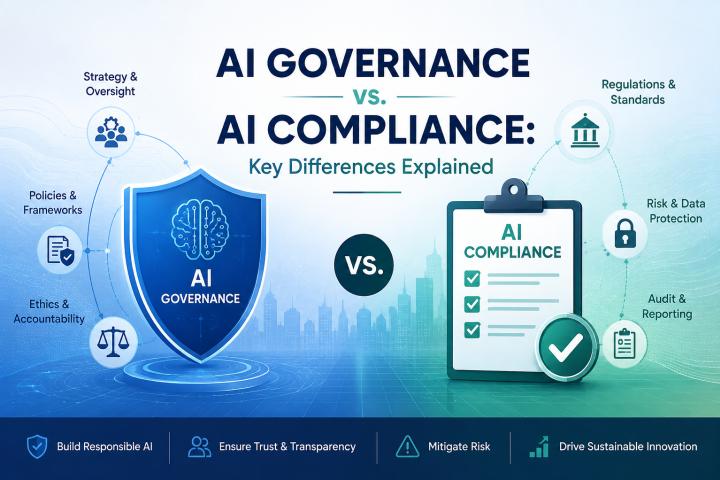
Reality in 2026: With AIDA stalled and no comprehensive federal AI law yet, businesses navigate a patchwork of privacy laws (PIPEDA), provincial rules, voluntary codes, and emerging risk-based thinking. Concerns around bias, privacy, liability, and cross-border data flows create hesitation.
Impact: Slowed decisions, compliance fears, especially for AI sovereignty (92% of execs see it as essential).
Practical Solutions:
- Adopt risk-based internal governance: Classify AI uses (low/high risk), ensure human oversight, and document accountability.
- Prioritize sovereign or Canada-hosted models/infra to align with national priorities.
- Build ethics policies early: 80% of organizations stress "human in the loop" for trust.
- Outcome example: Firms using voluntary standards reduced compliance risks and accelerated deployment.
2. Talent & Skills Shortages — The Persistent Bottleneck
Reality in 2026: Despite world-class research (e.g., Mila ecosystem), 75% of large orgs view AI as critical, but only 13% prioritize AI hiring. Literacy gaps and expertise shortages slow progress.
Impact: Pilots stall; internal teams lack MLOps/agentic skills.
Practical Solutions:
- Use augmented/partnership models: Combine internal domain knowledge with external AI specialists for faster builds.
- Focus upskilling on high-impact areas: Prompt engineering, agent orchestration, governance over full ML PhDs.
- Leverage government programs: Tap SR&ED updates (pre-claim approvals in 2026) and AI compute credits.
- Outcome example: Mid-market firms cut timelines by partnering for hybrid teams, achieving quicker ROI.
3. Data Quality, Privacy & Supply Chain Issues
Reality in 2026: Data silos, poor quality, and lack of standardized sharing frameworks hinder model training. Privacy risks (PIPEDA, cross-border transfers) and no formal "social-benefit tests" for data use add complexity.
Impact: Models underperform; trust erodes.
Practical Solutions:
- Build secure data pipelines: Use anonymization, federated learning, or sovereign datasets first.
- Start with RAG/contextual AI on internal data to minimize external risks.
- Implement strong governance: Audit trails, encryption, and privacy-by-design.
- Outcome example: Enterprises improved model accuracy 30–50% by focusing on clean, compliant internal data lakes.
4. Legacy Integration & Scaling from Pilots to Production
Reality in 2026: Many firms stuck in experimentation—only ~25% fully scaled. Legacy ERPs/CRMs and infra gaps prevent enterprise-wide impact.
Impact: No broad productivity gains; budgets wasted on non-scalable proofs.
Practical Solutions:
- Phase smartly: Target high-value, low-risk use cases (e.g., real-time decisions via agents) with APIs/microservices.
- Design modular: Use cloud-agnostic architectures for future-proofing.
- Run bounded PoCs: 4–8 weeks, KPI-tied, with clear scaling paths.
- Outcome example: Companies shifted to real-time ops (72% see it as essential) saw efficiency lifts in workflows.
5. Proving ROI & Measuring Impact
Reality in 2026: High confidence exists, but clear ROI proof lags—many report "harder than expected" implementation. Cost concerns (compute, licensing) slow mid-market uptake.
Impact: Leadership hesitates; investments stay experimental.
Practical Solutions:
- Define metrics upfront: Link to business outcomes (e.g., cost reduction, faster decisions, revenue lift).
- Focus quick wins: Agentic tools for automation deliver fast value.
- Track holistically: Include productivity, risk reduction, and long-term gains.
- Outcome example: Scaled adopters report measurable advantages in competitive positioning.
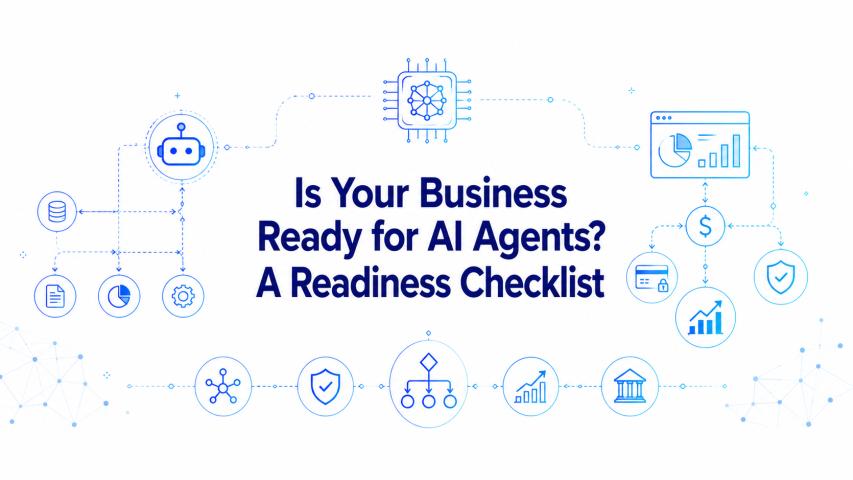
Quick 2026 AI Readiness Checklist for Canadian Businesses
- Have you mapped AI uses to risk levels and governance policies?
- Do you have a talent/partner strategy beyond internal hiring?
- Is data quality/privacy addressed in your pipelines?
- Defined 2–3 scalable use cases with KPIs?
- Prioritized sovereignty and human-centered approaches?
Tackling these challenges turns AI from hype to infrastructure—driving Canada's productivity push in 2026.
Final Thought Canada's AI leadership is strong in research and ambition, but success depends on overcoming these barriers through practical, trusted execution. Businesses that act decisively—with ethics, partnerships, and focus—will capture the edge.