In today’s competitive global market, maintaining quality, efficiency, and trust is essential for any business. This is where ISO certification plays a crucial role. It acts as a benchmark that assures customers and stakeholders that a company follows internationally recognized standards. Whether you are a startup or an established organization, understanding ISO and its processes can significantly enhance your business credibility.
What is ISO? (ISO Full Form)
ISO stands for the International Organization for Standardization. It is an independent, non-governmental international body that develops standards to ensure the quality, safety, and efficiency of products, services, and systems. These standards are accepted worldwide, making them vital for businesses aiming to expand globally.
What is ISO Certification?
ISO certification is a formal recognition that a company complies with one of the international standards set by ISO. It is issued by accredited certification bodies after a thorough assessment of the organization’s processes, systems, and policies.
Obtaining ISO certification demonstrates that a business is committed to maintaining consistent quality and improving operational performance. It also builds trust among customers, partners, and regulators.
Importance of ISO Registration
ISO registration is the process through which a company applies for certification and gets officially listed as compliant with a specific ISO standard. It is not just about obtaining a certificate—it reflects a company’s dedication to structured processes and continuous improvement.
Some key benefits of ISO registration include:
-
Improved product and service quality
-
Enhanced customer satisfaction
-
Better operational efficiency
-
Increased market opportunities
-
Stronger brand reputation
Overview of ISO Standards
ISO has developed thousands of standards covering different industries and sectors. Each ISO standard focuses on a specific aspect of business operations, such as quality management, environmental responsibility, or information security.
Some commonly used ISO standards include:
-
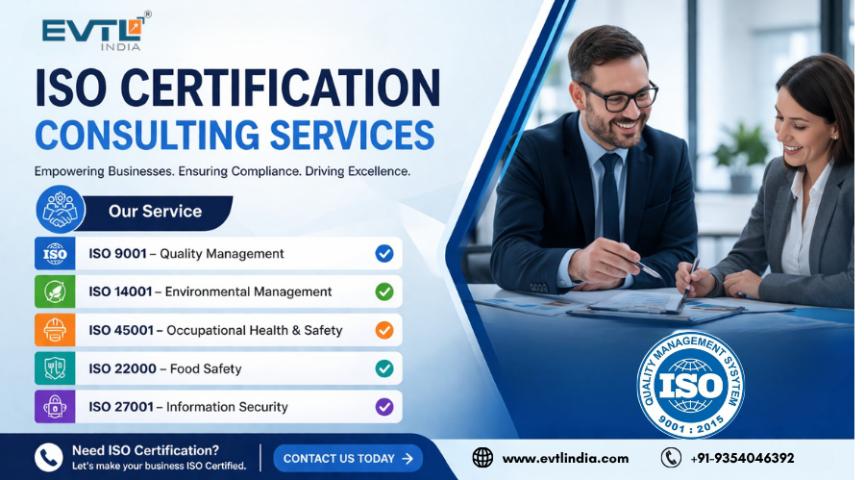
ISO 9001 – Quality Management Systems
-
ISO 14001 – Environmental Management Systems
-
ISO 27001 – Information Security Management
-
ISO 45001 – Occupational Health and Safety
These ISO standards help organizations streamline their processes and ensure consistency across operations.
Understanding ISO 9001 Standard
Among all standards, the ISO 9001 standard is the most widely recognized. It focuses on quality management systems and is applicable to organizations of all sizes and industries.
The ISO 9001 standard is based on key principles such as:
-
Customer focus
-
Leadership involvement
-
Process-based approach
-
Continuous improvement
-
Evidence-based decision making
By implementing ISO 9001, businesses can improve efficiency, reduce errors, and deliver consistent quality to customers.
ISO Certificate Registration Process
The process of ISO certificate registration involves several structured steps. While it may seem complex, it becomes manageable with proper planning and guidance.
-
Gap Analysis
The organization evaluates its current processes to identify gaps compared to the chosen ISO standard. -
Documentation
Required policies, procedures, and manuals are created to align with ISO requirements. -
Implementation
The documented processes are implemented across the organization. -
Internal Audit
An internal review is conducted to ensure compliance before the final audit. -
Certification Audit
An external certification body audits the organization’s systems. -
Issuance of Certificate
Upon successful audit, the ISO certificate is issued.
Role of an ISO Certified Consultant
An ISO certified consultant plays a vital role in simplifying the certification process. They bring expertise, experience, and structured guidance, helping businesses avoid common mistakes.
Key responsibilities of a consultant include:
-
Understanding business requirements
-
Recommending suitable ISO standards
-
Assisting in documentation and implementation
-
Preparing for audits
-
Ensuring smooth certification
Working with a knowledgeable consultant can save time, reduce costs, and increase the chances of successful certification.
Why ISO Certification Matters for Businesses
ISO certification is not just a formality—it is a strategic tool for growth. Companies that adopt ISO standards often experience improved efficiency, reduced operational risks, and better customer trust.
In addition, many government tenders and international contracts require ISO certification as a mandatory criterion. This makes it essential for businesses looking to expand their reach.
Common Misconceptions About ISO
There are several misconceptions surrounding ISO certification:
-
It is only for large companies – In reality, businesses of all sizes can apply.
-
It is a one-time process – ISO requires regular audits and continuous improvement.
-
It guarantees product quality – ISO ensures processes are effective, which leads to better outcomes.
Understanding these points helps businesses approach ISO certification with the right mindset.
Conclusion
EVTL India is one of the leading BIS Consultant in India , helping manufacturers obtain their BIS licences hassle-free. ISO certification is a powerful tool that helps organizations build credibility, improve processes, and compete in global markets. From understanding ISO full form to completing ISO certificate registration, every step contributes to long-term business success. Whether it is implementing the ISO 9001 standard or choosing the right ISO standard for your industry, the journey requires commitment and proper guidance.
For businesses looking to streamline this process and achieve certification efficiently, professional support can make a significant difference. Companies like EVTL India assist organizations in navigating the complexities of ISO registration and certification, ensuring a smooth and successful experience.