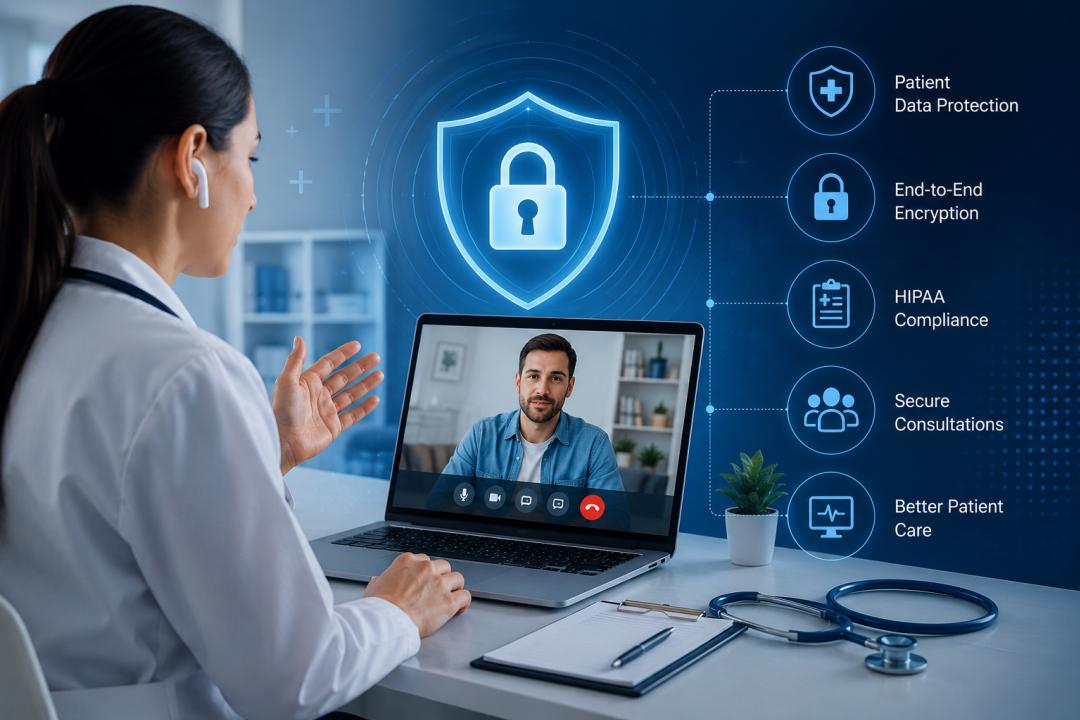
The healthcare industry has undergone a major digital transformation in recent years. Hospitals, clinics, telemedicine providers, healthcare startups, and medical organizations are increasingly relying on video conferencing platforms to deliver patient care, conduct remote consultations, collaborate internally, and improve healthcare accessibility.
However, healthcare communication involves highly sensitive patient information, medical records, prescriptions, diagnostics, and confidential discussions. This makes security, compliance, and data privacy critical requirements for healthcare communication systems.
Traditional consumer-grade video conferencing platforms may not provide the level of protection healthcare organizations require. As a result, many healthcare businesses are now investing in secure video conferencing platforms specifically designed to support healthcare communication and compliance needs.
From telemedicine consultations to virtual healthcare collaboration, secure video conferencing solutions have become essential infrastructure for modern healthcare operations.
What Is a Secure Video Conferencing Platform?
A secure video conferencing platform is a communication system designed with advanced security protocols, encryption technologies, access controls, and compliance frameworks to protect sensitive data during virtual communication.
Unlike standard video meeting applications, secure healthcare conferencing platforms focus on:
- Patient data protection
- End-to-end encryption
- Regulatory compliance
- Secure authentication
- Controlled access
- Private infrastructure
- Secure file sharing
- Protected meeting recordings
These platforms are specifically built to reduce risks related to:
- Data breaches
- Unauthorized access
- Identity theft
- Medical record exposure
- Compliance violations
Healthcare businesses require these advanced protections because patient trust and regulatory compliance are fundamental to healthcare operations.
Growing Adoption of Video Conferencing in Healthcare
Healthcare organizations increasingly use video conferencing for:
- Telemedicine consultations
- Remote patient monitoring
- Virtual diagnostics
- Mental health counseling
- Doctor-to-doctor collaboration
- Online healthcare training
- Emergency response coordination
- Patient follow-ups
- Specialist consultations
The rise of digital healthcare services and remote care has significantly increased the need for secure virtual communication systems.
Patients also prefer virtual healthcare services because they:
- Save travel time
- Improve accessibility
- Reduce waiting periods
- Enable faster consultations
- Support remote healthcare delivery
This rapid adoption has made secure video conferencing platforms a core component of healthcare digital infrastructure.
Why Security Matters in Healthcare Video Conferencing
Healthcare organizations handle highly confidential information such as:
- Patient records
- Medical histories
- Insurance information
- Prescriptions
- Diagnostic reports
- Mental health consultations
- Financial data
Any unauthorized exposure of this information can lead to:
- Regulatory penalties
- Legal liabilities
- Financial losses
- Reputation damage
- Loss of patient trust
Cybersecurity attacks targeting healthcare organizations have increased significantly in recent years because healthcare data is highly valuable.
This is why healthcare businesses cannot rely solely on generic communication tools that may lack enterprise-grade security and compliance protections.
Key Reasons Healthcare Businesses Need Secure Video Conferencing Platforms
1. Protection of Patient Data and Privacy
Patient confidentiality is one of the most important responsibilities in healthcare.
Secure video conferencing platforms protect patient information through:
- Encrypted communication
- Secure data transmission
- Protected cloud storage
- Access restrictions
- Identity verification
Advanced encryption protocols ensure that audio, video, and shared files remain inaccessible to unauthorized parties during virtual consultations.
This is essential for maintaining patient trust and protecting sensitive healthcare information.
2. HIPAA and Regulatory Compliance
Healthcare organizations in many countries must comply with strict healthcare regulations.
For example:
- HIPAA in the United States
- GDPR in Europe
- HITECH regulations
- Local healthcare data protection laws
These regulations require healthcare providers to:
- Secure patient communication
- Protect healthcare records
- Prevent unauthorized data access
- Maintain audit trails
- Ensure encrypted transmission
Secure conferencing platforms are designed to support compliance requirements through:
- Access controls
- Data encryption
- Audit logs
- Secure authentication
- Private hosting environments
Non-compliance can result in heavy penalties and legal consequences.
3. Secure Telemedicine Consultations
Telemedicine has become one of the fastest-growing sectors in healthcare.
Doctors now provide:
- Virtual consultations
- Online prescriptions
- Remote diagnostics
- Follow-up appointments
- Mental health therapy sessions
These virtual consultations often involve confidential medical discussions and sensitive patient records.
Secure conferencing platforms ensure:
- Private consultations
- Encrypted communication
- Safe file sharing
- Secure patient authentication
This allows healthcare providers to deliver virtual care safely and professionally.
4. Protection Against Cybersecurity Threats
Healthcare organizations are major targets for cyberattacks because medical data is highly valuable on the black market.
Common threats include:
- Ransomware attacks
- Unauthorized meeting access
- Data interception
- Phishing attacks
- Malware distribution
- Credential theft
Secure video conferencing platforms implement advanced cybersecurity features such as:
- Multi-factor authentication
- Encrypted media streams
- Role-based access control
- Secure APIs
- Intrusion prevention systems
These protections help reduce security risks significantly.
5. Secure Internal Healthcare Collaboration
Healthcare communication is not limited to patient consultations.
Hospitals and medical organizations also use video conferencing for:
- Doctor collaboration
- Case discussions
- Emergency coordination
- Specialist consultations
- Administrative meetings
- Staff training
These internal discussions often involve sensitive patient data and confidential operational information.
Secure conferencing platforms allow healthcare teams to collaborate efficiently while maintaining data privacy.
6. Better Access Control and Authentication
Healthcare systems require strict user access management.
Secure platforms provide:
- Role-based permissions
- User authentication
- Identity verification
- Meeting access restrictions
- Waiting rooms
- Session monitoring
Only authorized healthcare staff and verified patients can join consultations or access sensitive information.
This reduces risks associated with unauthorized access.
7. Secure File Sharing and Medical Documentation
Healthcare consultations often involve sharing:
- Medical reports
- Diagnostic scans
- Prescriptions
- Test results
- Imaging files
- Treatment plans
Secure conferencing platforms provide encrypted file sharing capabilities that protect medical documents during transmission.
This ensures patient data remains protected throughout the communication process.
8. Improved Patient Trust and Experience
Patients expect healthcare providers to protect their information.
Secure communication systems improve patient confidence by ensuring:
- Confidential consultations
- Safe communication channels
- Professional virtual care experiences
Patients are more likely to use telemedicine services when they trust the platform’s security.
A secure and reliable virtual healthcare experience also improves patient satisfaction and engagement.
9. Support for Remote Healthcare Services
Secure conferencing enables healthcare businesses to expand remote healthcare delivery.
This includes:
- Rural healthcare access
- Remote specialist consultations
- International healthcare collaboration
- Home-based patient care
- Elderly patient monitoring
Secure virtual communication helps healthcare organizations serve more patients efficiently while maintaining compliance and privacy.
10. Scalability for Growing Healthcare Organizations
Large healthcare networks require communication systems capable of supporting:
- Thousands of patients
- Multiple hospitals
- Large medical teams
- Cross-location communication
Secure conferencing platforms offer scalable infrastructure for:
- Enterprise healthcare systems
- Multi-location clinics
- Telemedicine platforms
- Healthcare SaaS applications
Cloud and self-hosted deployment models allow healthcare organizations to scale communication systems according to operational needs.
Features Healthcare Businesses Should Look for in Secure Video Conferencing Platforms
Healthcare organizations should prioritize platforms offering:
- End-to-end encryption
- HIPAA compliance
- Secure authentication
- Role-based access control
- Private cloud or self-hosted deployment
- Audit logging
- Waiting rooms
- Secure screen sharing
- Encrypted file transfer
- Session recording controls
- API integration capabilities
These features help create secure and compliant healthcare communication environments.
Role of WebRTC in Secure Healthcare Video Conferencing
Many modern healthcare conferencing platforms use WebRTC technology for real-time communication.
WebRTC enables:
- Browser-based video conferencing
- Low latency communication
- Secure encrypted media transmission
- Cross-platform accessibility
Healthcare providers benefit from WebRTC because patients can join consultations directly through browsers without downloading complex software.
This improves:
- Accessibility
- User experience
- Remote healthcare adoption
WebRTC also supports secure peer-to-peer communication with encryption standards such as DTLS and SRTP.
Benefits of Self-Hosted Video Conferencing for Healthcare
Many healthcare organizations prefer self-hosted conferencing systems because they offer:
- Full data ownership
- Infrastructure control
- Enhanced privacy
- Better compliance management
- Internal security policies
- Private server deployment
Self-hosted healthcare conferencing platforms reduce dependency on third-party providers and improve control over patient communication systems.
Challenges in Healthcare Video Conferencing
Despite its advantages, healthcare conferencing also faces challenges:
- Regulatory complexity
- Infrastructure costs
- Security management
- User authentication
- Network reliability
- Integration with healthcare systems
Healthcare organizations often partner with specialized WebRTC and healthcare software development companies to build secure communication platforms tailored to industry requirements.
Future of Secure Video Conferencing in Healthcare
The future of healthcare communication will increasingly focus on:
- AI-powered telemedicine
- Remote diagnostics
- Real-time patient monitoring
- Secure virtual healthcare ecosystems
- Intelligent healthcare collaboration platforms
Healthcare organizations are expected to continue investing heavily in secure communication infrastructure as telemedicine adoption grows globally.
Advanced technologies such as AI, cloud computing, and secure WebRTC architectures will further improve healthcare conferencing capabilities.
Conclusion
Secure video conferencing platforms have become essential for modern healthcare businesses due to the increasing demand for telemedicine, remote collaboration, and digital healthcare services.
Healthcare organizations cannot compromise on security, privacy, or compliance when handling sensitive patient information. Secure conferencing solutions help protect healthcare data, support regulatory compliance, improve patient trust, and enable scalable virtual healthcare delivery.
From encrypted telemedicine consultations to secure internal collaboration, healthcare-focused video conferencing platforms provide the foundation for safe and efficient digital healthcare communication.
As healthcare continues evolving toward remote and technology-driven care models, secure video conferencing will remain a critical component of healthcare digital transformation.
FAQs
1. Why do healthcare businesses need secure video conferencing platforms?
Healthcare businesses need secure conferencing platforms to protect patient data, maintain privacy, support telemedicine, and comply with healthcare regulations such as HIPAA.
2. What makes a video conferencing platform secure for healthcare?
Secure healthcare conferencing platforms use encryption, authentication, access controls, compliance frameworks, and secure infrastructure to protect sensitive medical information.
3. Is HIPAA compliance important for healthcare video conferencing?
Yes, HIPAA compliance is essential in the United States because healthcare providers must protect patient information and secure digital communication channels.
4. Can secure video conferencing platforms support telemedicine?
Yes, secure video conferencing platforms are widely used for telemedicine consultations, remote patient care, virtual diagnostics, and online healthcare services.
5. What security features should healthcare conferencing platforms include?
Healthcare conferencing systems should include end-to-end encryption, secure authentication, access controls, encrypted file sharing, audit logs, and private hosting options.
6. Why are healthcare organizations targeted by cyberattacks?
Healthcare organizations store valuable patient and financial data, making them common targets for ransomware attacks, data theft, and cybersecurity breaches.
7. Are self-hosted video conferencing platforms better for healthcare?
Many healthcare organizations prefer self-hosted platforms because they provide greater data control, enhanced privacy, infrastructure ownership, and improved compliance management.