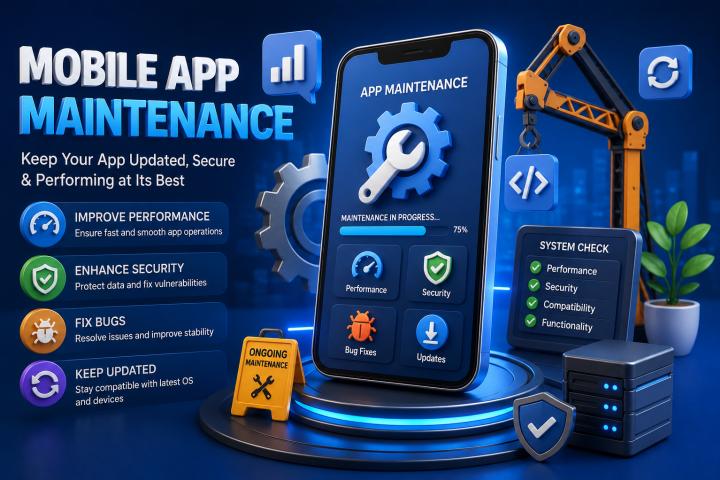
Launching a mobile application is a significant achievement, but it is only the beginning of the journey. Many businesses focus heavily on development and deployment while overlooking the ongoing effort required to keep an application running efficiently. As technology evolves and user expectations continue to rise, maintaining an app becomes essential for ensuring reliability, security, and user satisfaction.
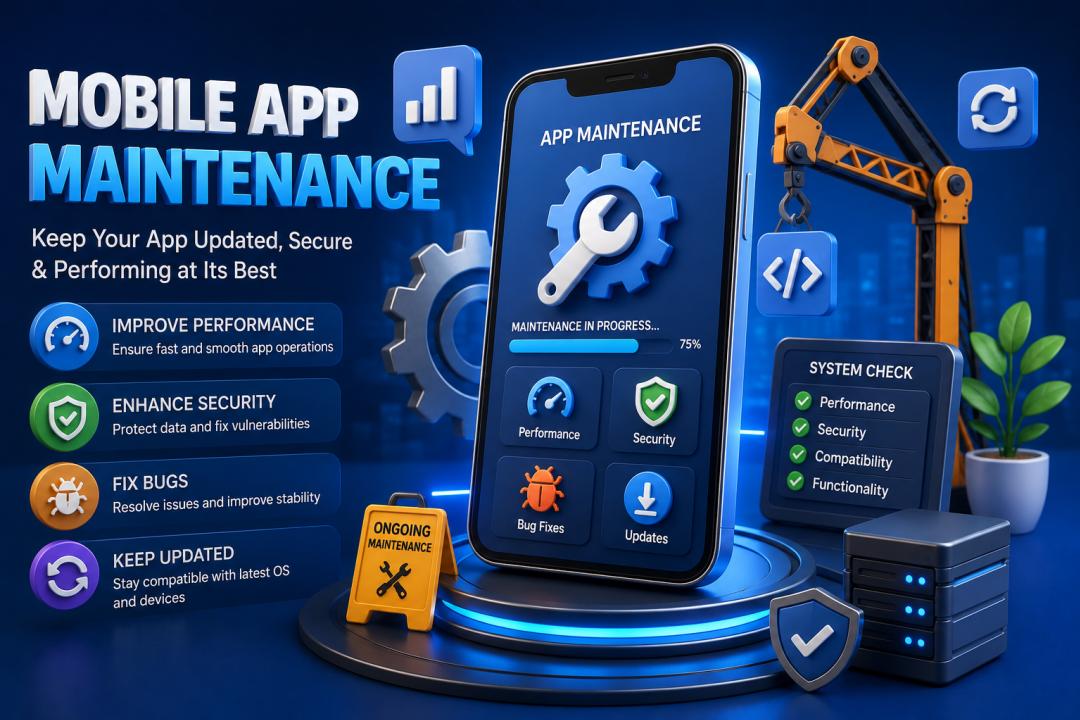
Mobile App Maintenance is a critical aspect of the app lifecycle that helps businesses keep their applications updated, secure, and optimized. Without proper maintenance, even the most innovative app can experience performance issues, security vulnerabilities, and declining user engagement.
Why Mobile App Maintenance Matters
A mobile application operates in a constantly changing environment. New operating system updates, device releases, security threats, and customer expectations can impact how an app performs.
Regular maintenance helps businesses:
- Ensure consistent app performance
- Improve security and data protection
- Fix bugs and technical issues
- Maintain compatibility with new devices
- Enhance user experience
- Increase customer retention
- Protect brand reputation
Apps that receive ongoing attention are more likely to remain competitive and continue delivering value to users.
Common Types of Mobile App Maintenance
Different maintenance activities address different operational needs.
Corrective Maintenance
Corrective maintenance focuses on fixing bugs, glitches, and errors discovered after the app launch.
Examples include:
- Resolving app crashes
- Fixing broken features
- Correcting UI issues
- Repairing functionality problems
Prompt bug resolution improves user satisfaction and reduces negative reviews.
Adaptive Maintenance
Technology evolves rapidly, requiring applications to adapt to changing environments.
Adaptive maintenance includes:
- Supporting new operating system versions
- Ensuring compatibility with new smartphones and tablets
- Updating third-party integrations
- Adjusting to regulatory requirements
This type of maintenance helps apps remain functional as technology changes.
Perfective Maintenance
Perfective maintenance focuses on improving existing features and optimizing performance based on user feedback.
Examples include:
- Enhancing navigation
- Improving app speed
- Refining user interfaces
- Adding requested features
These improvements help increase engagement and customer loyalty.
Preventive Maintenance
Preventive maintenance aims to identify and resolve potential issues before they become major problems.
Activities may include:
- Code optimization
- Database cleanup
- Security audits
- Infrastructure monitoring
A proactive approach minimizes downtime and future maintenance costs.
The Growing Importance of Mobile App Maintenance
As businesses increasingly rely on digital platforms, Mobile App Maintenance has become a strategic investment rather than an optional expense. Maintaining an application ensures that users continue to enjoy a smooth experience while organizations protect their technology investments.
Apps that are regularly maintained tend to experience:
- Higher app store ratings
- Better customer retention
- Improved operational efficiency
- Stronger security protection
- Increased revenue opportunities
Ignoring maintenance can lead to outdated functionality, frustrated users, and reduced competitiveness in the marketplace.
Key Benefits of Regular App Maintenance
Enhanced Security
Cybersecurity threats continue to evolve. Regular updates help protect sensitive user information and reduce the risk of data breaches.
Security updates may include:
- Vulnerability patching
- Authentication improvements
- Data encryption enhancements
- Compliance updates
Better User Experience
Users expect fast, responsive, and reliable applications.
Maintenance improves:
- Loading speed
- Navigation efficiency
- Feature usability
- Overall app stability
Positive user experiences encourage repeat engagement and long-term loyalty.
Improved Performance
Regular optimization helps applications perform efficiently across different devices and operating systems.
Performance improvements often include:
- Reduced memory consumption
- Faster processing times
- Improved battery efficiency
- Better network performance
Increased Customer Retention
Users are more likely to continue using an application that consistently delivers value and remains free from major issues.
Frequent updates also demonstrate that the business actively supports and improves its product.
Best Practices for Effective Mobile App Maintenance
Monitor App Performance Continuously
Use analytics and monitoring tools to track crashes, user behavior, performance metrics, and feature adoption.
Collect User Feedback
App reviews, surveys, and customer support interactions provide valuable insights into user expectations and pain points.
Schedule Regular Updates
Routine updates help address technical issues while introducing improvements and new capabilities.
Prioritize Security
Implement ongoing security assessments and vulnerability testing to protect both users and business data.
Test Before Deployment
Comprehensive testing reduces the risk of introducing new bugs during updates.
Testing should include:
- Functional testing
- Performance testing
- Security testing
- Device compatibility testing
Real-World Example of Mobile App Maintenance
Consider a retail mobile application that processes online orders.
After launch, the company notices that users experience slower checkout times during peak shopping periods. Through maintenance efforts, developers optimize database performance and improve payment processing efficiency.
Later, a new mobile operating system update causes compatibility issues. The maintenance team quickly releases an update to ensure continued functionality.
As customer feedback highlights demand for digital wallet support, developers introduce new payment options through perfective maintenance.
This continuous improvement process helps the business maintain customer satisfaction and drive revenue growth.
Future Trends in Mobile App Maintenance
The future of app maintenance is increasingly influenced by advanced technologies.
AI-Powered Monitoring
Artificial intelligence can identify performance issues and anomalies before they affect users.
Automated Testing
Automation tools enable faster testing cycles and quicker release management.
Cloud-Based Infrastructure
Cloud technologies simplify scalability, monitoring, and application management.
Enhanced Security Frameworks
Businesses are investing in advanced threat detection and zero-trust security models to strengthen protection.
Organizations that embrace these trends will be better positioned to maintain reliable and future-ready applications.
Frequently Asked Questions (FAQs)
What is Mobile App Maintenance?
Mobile App Maintenance refers to the ongoing process of updating, optimizing, securing, and improving a mobile application after its launch.
Why is app maintenance important?
Maintenance ensures security, performance, compatibility, and user satisfaction while extending the lifespan of an application.
How often should a mobile app be updated?
The frequency depends on business needs, but most successful apps receive updates monthly or quarterly, along with emergency security patches when necessary.
What are the major types of app maintenance?
The four primary categories are corrective, adaptive, perfective, and preventive maintenance.
Does app maintenance improve user retention?
Yes. Regular updates, bug fixes, and feature enhancements improve the user experience and encourage long-term engagement.
Conclusion
Developing a successful mobile application requires more than a great launch strategy. Continuous monitoring, optimization, and improvement are essential for maintaining performance, security, and customer satisfaction over time.
By investing in Mobile App Maintenance, businesses can protect their digital assets, improve user experiences, and maximize long-term return on investment. A well-maintained app not only performs better but also strengthens customer trust and supports sustainable business growth.