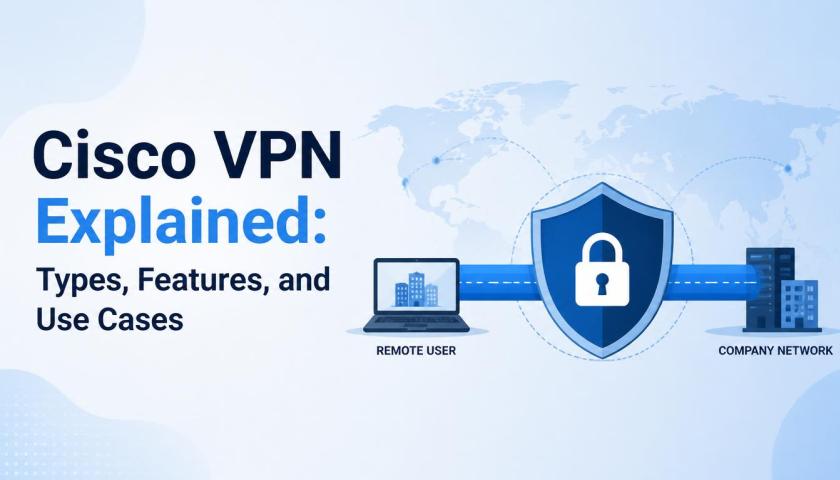
In today’s connected business environment, secure remote access is essential for employees, branch offices, and mobile users. Organizations increasingly rely on Virtual Private Networks (VPNs) to protect sensitive data while enabling secure communication across public networks. For networking professionals looking to master VPN technologies, a Cisco VPN Training program can provide valuable hands-on experience with enterprise-grade VPN solutions.
Many organizations also enroll their teams in a Cisco VPN training to understand advanced VPN deployment, troubleshooting, and security best practices.
What Is Cisco VPN?
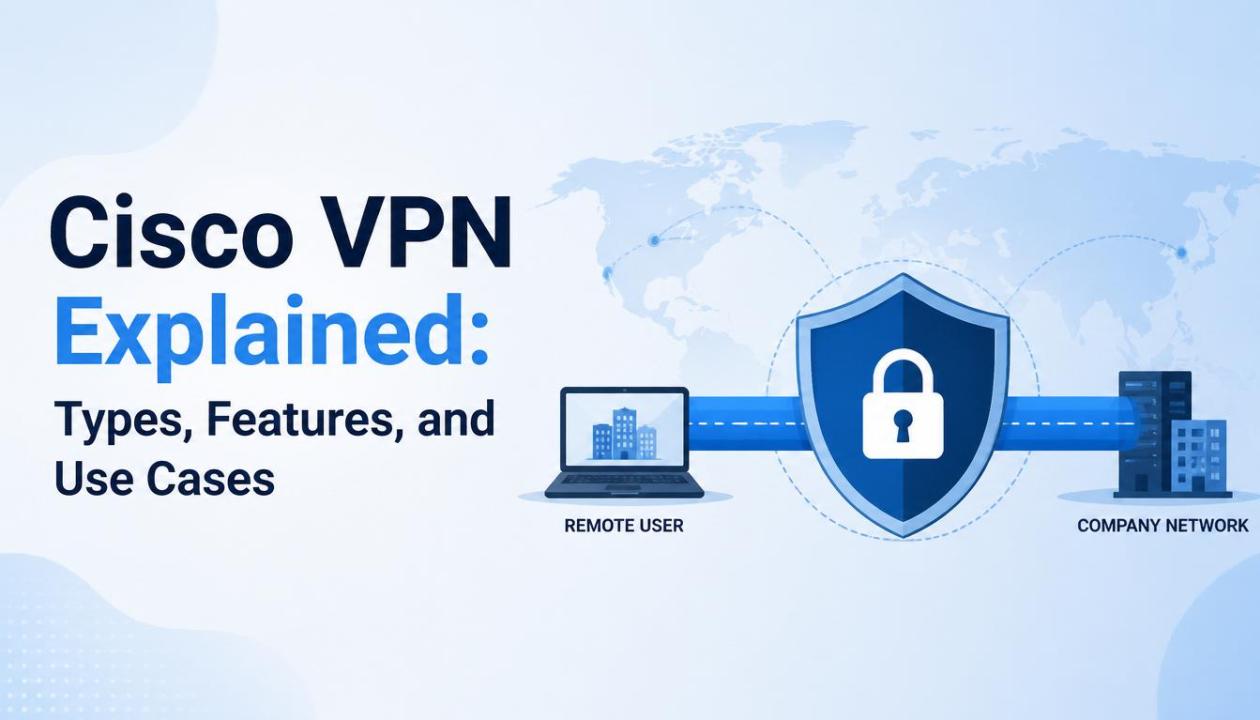
Cisco VPN (Virtual Private Network) is a secure networking technology that creates encrypted tunnels between users, branch locations, data centers, and cloud environments. These encrypted tunnels ensure that data transmitted over public networks remains private and protected from unauthorized access.
Cisco VPN solutions are widely used across enterprises because they offer strong security, scalability, reliability, and seamless integration with Cisco networking and security products.
Why Organizations Use Cisco VPN
Businesses face numerous challenges when connecting remote users and distributed locations. Cisco VPN helps address these challenges by:
Protecting sensitive business data
Enabling secure remote work
Connecting branch offices securely
Supporting hybrid and cloud environments
Reducing WAN costs
Ensuring compliance with security policies
Maintaining business continuity
How Cisco VPN Works
A Cisco VPN establishes an encrypted tunnel between two endpoints. These endpoints may include:
Remote users and corporate headquarters
Branch offices and data centers
Cloud environments and on-premises networks
Business partners and enterprise networks
The VPN process typically involves:
Authentication
The user or device verifies its identity before access is granted.
Encryption
Data is encrypted before transmission across the public network.
Secure Tunnel Creation
A secure tunnel is established between VPN endpoints.
Data Transmission
Traffic travels through the encrypted tunnel securely.
Decryption
The receiving device decrypts the data and delivers it to the intended destination.
Types of Cisco VPN
Cisco offers several VPN technologies designed for different business requirements.
Remote Access VPN
Remote Access VPN enables individual users to securely connect to corporate resources from any location.
Common Use Cases
Work-from-home employees
Remote IT administrators
Traveling employees
Third-party contractors
Benefits
Secure remote connectivity
User authentication
Data encryption
Flexible access from any location
Site-to-Site VPN
Site-to-Site VPN securely connects multiple business locations through encrypted tunnels.
Common Use Cases
Branch office connectivity
Headquarters-to-branch communication
Data center interconnection
Benefits
Reduced leased-line costs
Secure communication between offices
Centralized management
Scalability for growing businesses
Clientless SSL VPN
Clientless SSL VPN allows users to access resources through a web browser without installing VPN software.
Common Use Cases
Temporary remote access
Partner access
Contractor access
Benefits
No software installation
Simplified access
Reduced administrative overhead
AnyConnect Secure Mobility VPN
Cisco AnyConnect is one of Cisco's most popular VPN solutions.
Features
Secure remote connectivity
Multi-factor authentication support
Endpoint posture assessment
Seamless user experience
Cross-platform compatibility
Supported Platforms
Windows
macOS
Linux
Android
iOS
DMVPN (Dynamic Multipoint VPN)
DMVPN provides scalable VPN connectivity among multiple sites without requiring permanent tunnels between every location.
Benefits
Simplified deployment
Reduced configuration complexity
Dynamic tunnel creation
Lower operational costs
Common Deployments
Large enterprise WANs
Multi-branch environments
SD-WAN architectures
Key Features of Cisco VPN
Cisco VPN solutions provide numerous features that improve security and operational efficiency.
Strong Encryption
Cisco VPN supports industry-standard encryption technologies including:
AES-128
AES-192
AES-256
SHA-based hashing algorithms
These encryption methods help protect sensitive business data from interception.
Multi-Factor Authentication (MFA)
Cisco VPN supports MFA solutions to strengthen user authentication.
Examples include:
Cisco Duo
Hardware tokens
Mobile authentication applications
Biometric authentication
Identity-Based Access Control
Administrators can grant network access based on:
User identity
Device type
Department
Security posture
High Availability
Cisco VPN solutions support redundancy mechanisms to minimize downtime.
Features include:
Failover capabilities
Redundant gateways
Load balancing
Session persistence
Scalability
Cisco VPN platforms can support:
Small businesses
Medium-sized enterprises
Global organizations
This flexibility makes Cisco VPN suitable for organizations of all sizes.
Cisco VPN Protocols
Several protocols are commonly used within Cisco VPN deployments.
IPSec VPN
IPSec is one of the most widely used VPN technologies.
Features
Strong encryption
Authentication
Data integrity
Network-layer security
Best For
Site-to-site VPN deployments
Enterprise WAN connectivity
SSL VPN
SSL VPN operates through web browsers or VPN clients.
Features
Easy deployment
Secure remote access
Browser-based connectivity
Best For
Remote users
Contractors
Mobile workforce
IKEv2
Internet Key Exchange Version 2 (IKEv2) provides secure VPN tunnel negotiation.
Benefits
Faster reconnection
Improved mobility support
Enhanced security
Better stability
Cisco VPN Use Cases
Organizations deploy Cisco VPN solutions in various business scenarios.
Remote Workforce Enablement
As hybrid work models continue to expand, Cisco VPN allows employees to securely access:
Internal applications
Corporate databases
File servers
Cloud services
Branch Office Connectivity
Companies with multiple offices use Site-to-Site VPNs to:
Share resources securely
Centralize services
Reduce communication costs
Secure Cloud Access
Organizations connect their on-premises infrastructure to cloud platforms through secure VPN tunnels.
Benefits include:
Secure cloud migration
Hybrid cloud connectivity
Protected data transfer
Third-Party Access
Businesses often provide temporary VPN access to:
Vendors
Consultants
Managed service providers
This ensures controlled and secure access to critical resources.
Disaster Recovery
Cisco VPN supports business continuity strategies by maintaining secure communication during outages or disruptions.
Cisco VPN Security Best Practices
To maximize VPN security, organizations should follow these recommendations.
Use Multi-Factor Authentication
MFA significantly reduces the risk of unauthorized access.
Implement Strong Encryption
Always use modern encryption standards such as AES-256.
Regularly Update VPN Devices
Keep VPN gateways and clients updated with the latest security patches.
Monitor VPN Activity
Track user sessions and identify suspicious behavior.
Apply Least Privilege Access
Users should receive only the permissions necessary for their roles.
Benefits of Cisco VPN
Organizations choose Cisco VPN because it delivers several advantages.
Benefit | Description |
Security | Protects sensitive business information |
Flexibility | Supports remote and hybrid work |
Scalability | Grows with business requirements |
Reliability | Provides stable secure connectivity |
Compliance | Helps meet regulatory requirements |
Cost Efficiency | Reduces dependency on expensive private circuits |
Challenges of Cisco VPN
While Cisco VPN offers many advantages, organizations should also consider potential challenges.
Complex Initial Configuration
Large-scale deployments may require advanced networking expertise.
Performance Considerations
Encryption and decryption processes can impact performance if resources are insufficient.
User Management
Large organizations must maintain proper access control and authentication policies.
Choosing the Right Cisco VPN Solution
The ideal Cisco VPN solution depends on business requirements.
Small Businesses
Often benefit from:
Remote Access VPN
SSL VPN
Cisco AnyConnect
Medium Enterprises
Typically use:
Site-to-Site VPN
IPSec VPN
AnyConnect VPN
Large Enterprises
Frequently deploy:
DMVPN
IPSec VPN
Cisco Secure Client
Hybrid cloud VPN architectures
Conclusion
Cisco VPN remains one of the most trusted solutions for securing communications across modern enterprise networks. Whether organizations need remote access connectivity, branch office communication, cloud integration, or secure third-party access, Cisco VPN technologies provide the security, scalability, and reliability required for today's digital business environments.
For networking professionals looking to advance their careers, gaining expertise in Cisco VPN technologies can be highly valuable. Enrolling in a Cisco SVPN training course online helps build practical skills in VPN deployment, troubleshooting, security implementation, and enterprise network design, making professionals better prepared for real-world networking challenges.