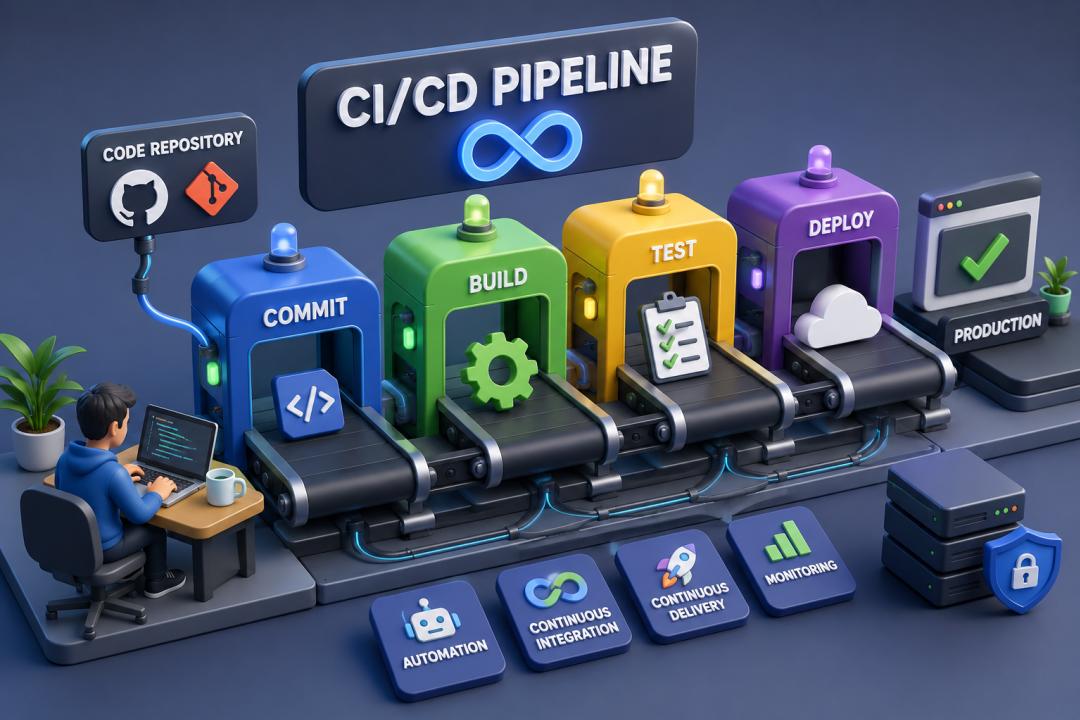
Modern software teams are under constant pressure to release updates quickly without compromising quality. This is where CI/CD Pipeline Development plays a crucial role. By automating code integration, testing, and deployment processes, organizations can reduce manual effort, minimize errors, and accelerate software delivery. Whether you're managing a startup application or a large enterprise platform, implementing a well-structured automation workflow helps ensure consistent releases and improved user experiences. As development cycles become shorter and customer expectations continue to rise, businesses are increasingly adopting continuous integration and deployment practices to stay competitive and maintain software reliability.
Why Automated Software Delivery Matters
Software development has evolved significantly over the past decade. Traditional release cycles often involved lengthy testing phases, manual deployments, and increased risk of production issues.
Modern development pipelines help organizations:
- Detect bugs earlier in the development process
- Improve collaboration between development and operations teams
- Reduce deployment risks
- Increase release frequency
- Maintain consistent software quality
Automation also enables teams to focus more on innovation rather than repetitive operational tasks.
CI/CD Pipeline Development Best Practices
A successful CI/CD Pipeline Development strategy requires careful planning and execution. Organizations should focus on building scalable workflows that support long-term growth.
Key Components of an Effective Pipeline
Continuous Integration (CI)
Developers regularly merge code changes into a shared repository. Automated tests validate each update before it moves further through the workflow.
Continuous Delivery (CD)
Validated code is automatically prepared for deployment, ensuring releases can occur at any time with minimal effort.
Continuous Deployment
Code changes that pass all testing stages are automatically deployed to production environments.
Essential Tools Often Used
Popular technologies commonly integrated into delivery pipelines include:
- Git-based version control systems
- Jenkins
- GitHub Actions
- GitLab CI/CD
- Docker
- Kubernetes
- Terraform
- Cloud platforms such as AWS, Azure, and Google Cloud
Selecting the right toolset depends on project complexity, team expertise, and infrastructure requirements.
Benefits for Businesses and Development Teams
Organizations that adopt automated deployment workflows often experience measurable improvements across multiple areas.
Faster Time to Market
Automated testing and deployment reduce bottlenecks, enabling quicker software releases and feature updates.
Improved Code Quality
Continuous testing identifies issues early, reducing the likelihood of defects reaching production environments.
Enhanced Collaboration
Development, testing, security, and operations teams work more efficiently when they share a unified workflow.
Greater Reliability
Standardized deployment processes reduce human error and improve system stability during releases.
Many technology service providers, including Noob Toys, emphasize automation-driven development practices to improve software delivery outcomes and operational efficiency.
Common Challenges and How to Overcome Them
While implementation offers significant advantages, organizations may face several challenges.
Legacy System Integration
Older applications may not be designed for automated deployment processes. Incremental modernization strategies can help address this issue.
Inadequate Testing Coverage
A pipeline is only as effective as the tests it runs. Comprehensive unit, integration, and performance testing are essential.
Security Risks
Security should be integrated throughout the development lifecycle using automated vulnerability scanning and compliance checks.
Team Adoption
Successful implementation requires organizational buy-in. Training and clear documentation can help teams embrace new workflows more effectively.
Monitoring and Continuous Improvement
Building an automation framework is not a one-time effort. Continuous monitoring ensures optimal performance and long-term success.
Key metrics to track include:
- Deployment frequency
- Lead time for changes
- Change failure rate
- Mean time to recovery (MTTR)
- Test success rates
Regular reviews help identify bottlenecks and opportunities for optimization.
Expert Buying Tips
When evaluating development partners or consulting services, consider the following:
- Assess their experience with cloud-native architectures.
- Verify expertise in automation and infrastructure management.
- Review case studies demonstrating successful deployments.
- Ensure security and compliance practices are integrated into workflows.
- Look for teams that prioritize scalability and maintainability.
- Evaluate ongoing support and monitoring capabilities.
Choosing experienced professionals can significantly reduce implementation risks and improve long-term results.
FAQ Section
What is a CI/CD pipeline?
A CI/CD pipeline is an automated workflow that integrates code changes, runs tests, and deploys applications efficiently and consistently.
Why is automation important in software delivery?
Automation reduces manual errors, accelerates releases, improves software quality, and increases development team productivity.
Which tools are commonly used for deployment pipelines?
Popular tools include Jenkins, GitHub Actions, GitLab CI/CD, Docker, Kubernetes, Terraform, and major cloud platforms.
How does continuous integration improve code quality?
Continuous integration automatically tests code whenever changes are submitted, helping identify issues before they reach production.
Is pipeline automation suitable for small businesses?
Yes. Small businesses can benefit from faster releases, improved reliability, and reduced operational overhead through automated workflows.
Conclusion
Implementing CI/CD Pipeline Development enables organizations to deliver software faster, improve reliability, and enhance collaboration across teams. By combining automation, testing, security, and monitoring, businesses can create efficient development workflows that support long-term growth and innovation. As software ecosystems become increasingly complex, investing in modern delivery practices is essential for maintaining quality and competitiveness.