A corrugated metal roof looks straightforward until you try to bolt a solar rail to it. The panel's ridges and valleys sit at different heights, the substrate underneath might be solid decking or open purlins spaced 24 to 48 inches apart, and a single misplaced lag screw can turn a weathertight roof into a slow leak. For anyone specifying or installing a mounting system on this roof type, matching the attachment method to the panel profile isn't optional. It's the difference between a system that holds up through decades of thermal cycling and one that fails at the first seam.
Reading the Roof Before Choosing Hardware
Corrugated panels vary more than people expect. Some run a 2.5-inch wave repeated every 9 inches; others use a shallower agricultural profile with wider spacing. That variation is why a bracket that seats cleanly on one roof can sit half an inch proud on the next.
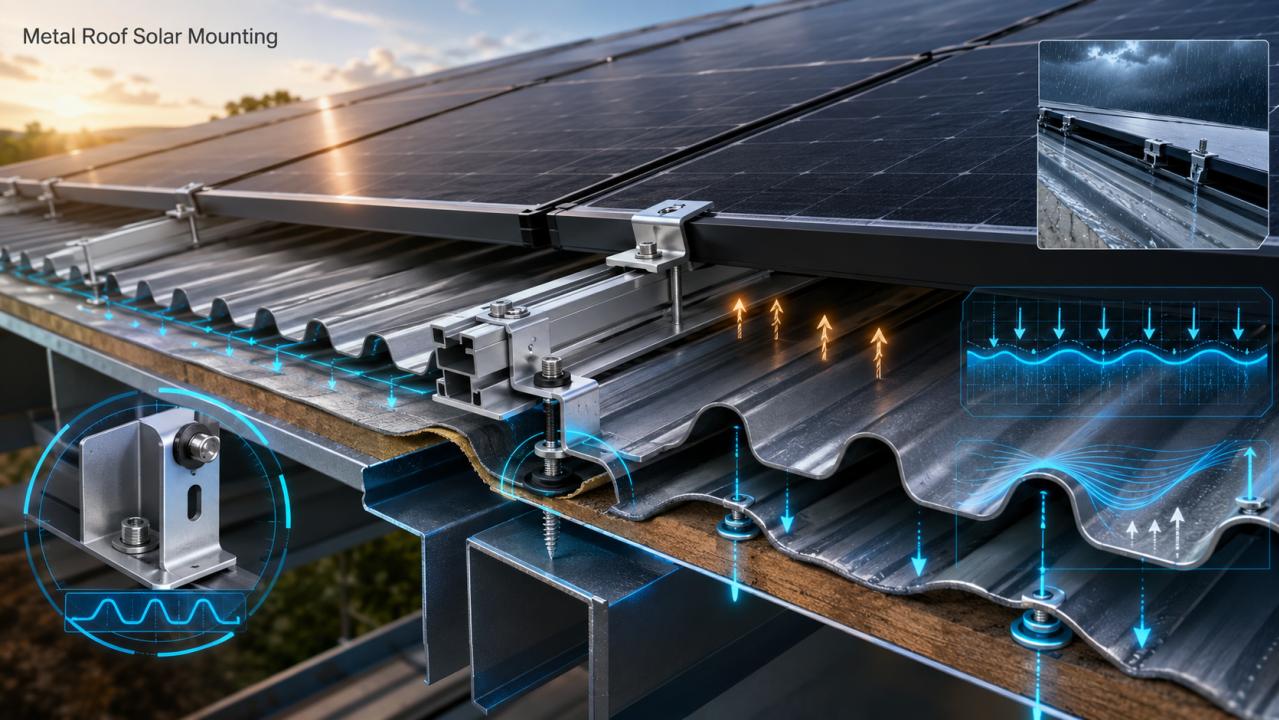
A corrugated metal roof solar mount has to account for that wave geometry directly, because the rib height and pitch spacing dictate exactly where a foot or bracket can physically land. Screw-down profiles like 5V-crimp or box-rib behave differently for the same reason: the attachment point is fixed by the panel shape, not chosen by the installer.
Attachment Methods That Actually Work
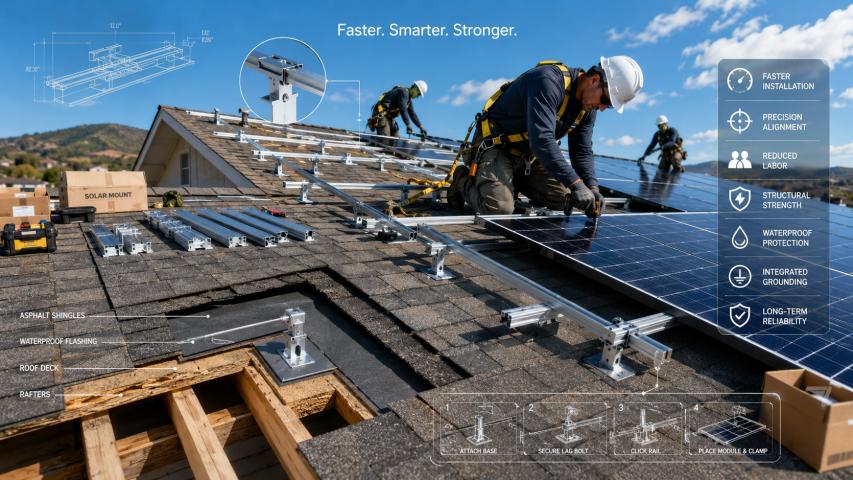
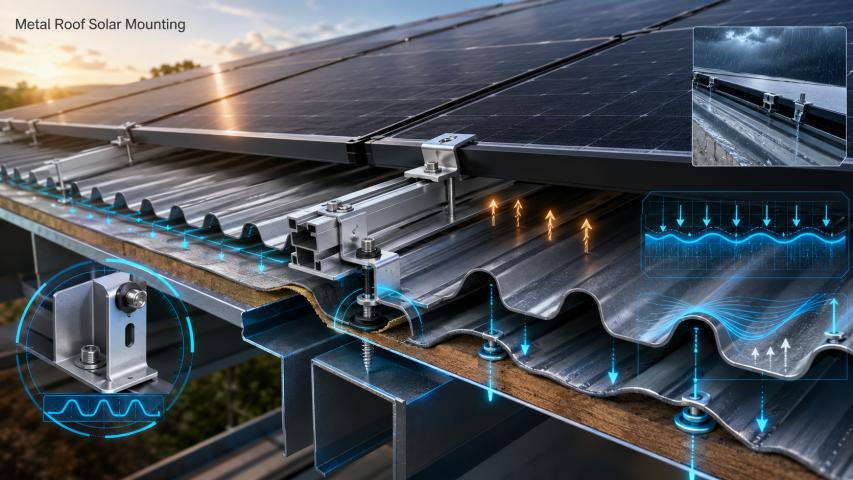
Two attachment approaches dominate. The first bolts through the panel crown into a purlin or rafter below, using a butyl-sealed lag bolt and a formed flashing boot that follows the corrugation. The second uses a raised standoff that lets the rail clear the ridges entirely, so load transfers through one elevated point instead of several penetrations.
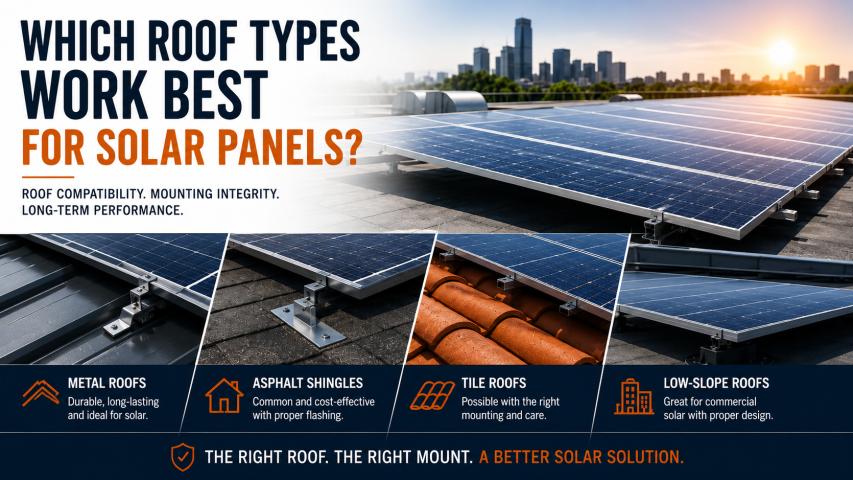
Corrugated metal sits at one end of a wider spectrum. Across the types of roofing materials commonly seen on residential and commercial buildings asphalt shingle, tile, standing seam, and membrane, corrugated panels are the profile most likely to force a custom bracket rather than a stock clamp.
Purlin spacing governs everything from here. A rail mount for shingle and metal roof systems depends on that spacing more than most installers expect: a rail spanning purlins set 48 inches apart needs a heavier gauge rail or tighter standoff spacing to keep deflection within the manufacturer's published limits. Skipping that calculation is one of the more common errors on retrofit jobs, and it rarely shows up until the first heavy snow load.
Sealing and Long-Term Performance
Butyl tape alone rarely holds up against thermal expansion on metal roofing. The panel expands and contracts more than the fastener does, so the sealant detail needs to accommodate ongoing movement, not just block water at installation. A compressible EPDM (ethylene propylene diene monomer) washer under the mounting foot, paired with a properly lapped flashing boot, handles that movement better than sealant alone.
Conclusion
Corrugated metal roofs reward a mounting approach built around the panel's actual geometry rather than a generic bracket forced onto an irregular surface. Getting the standoff height, purlin spacing, and flashing detail right at installation is what keeps a system leak-free and structurally sound for the decades a metal roof is expected to last.
FAQs
1. Can you install solar panels on a corrugated metal roof?
Yes. Corrugated metal is one of the more common substrates for rooftop solar, but it requires brackets or standoffs matched to the specific wave profile rather than a universal clamp.
2. Do you need special mounts for corrugated metal roofing?
Generally, yes. Standard flat-panel clamps don't seat correctly on a wave profile, so installers use formed brackets or raised standoffs designed for the panel's specific rib height and spacing.
3. How far apart should purlins be for solar mounting?
Purlin spacing varies by building design, but anything beyond 48 inches typically requires a heavier gauge rail or additional standoffs to keep deflection within published structural limits.
4. Does drilling into a metal roof cause leaks?
Not if the penetration is sealed correctly. Leaks usually come from missing or improperly lapped flashing, incompatible sealant, or a fastener that isn't rated for the panel's expansion and contraction cycle.