Huge quantities of information are required for modern digital services. Hyperscale data refers to data being handled at a very large-scale, in large computing infrastructures. Organizations require infrastructure to store, process and transfer information rapidly as online service expands. Activities that require Hyperscale environments include cloud computing, online platforms, AI, and big data workloads. But this model is not a simple one because of its size. The system must also scale resources in response to changes in demand and ensure that the system's performance is reliable. For those that work with digital infrastructure, it's crucial to grasp this because it illustrates the shift in computing requirements in today's world.
In this blog, the concept of hyperscale data is discussed, how the larger data centers operate, the importance of security, and the role of equipment retirement in responsible infrastructure management.
What Does Hyperscale Data Mean?
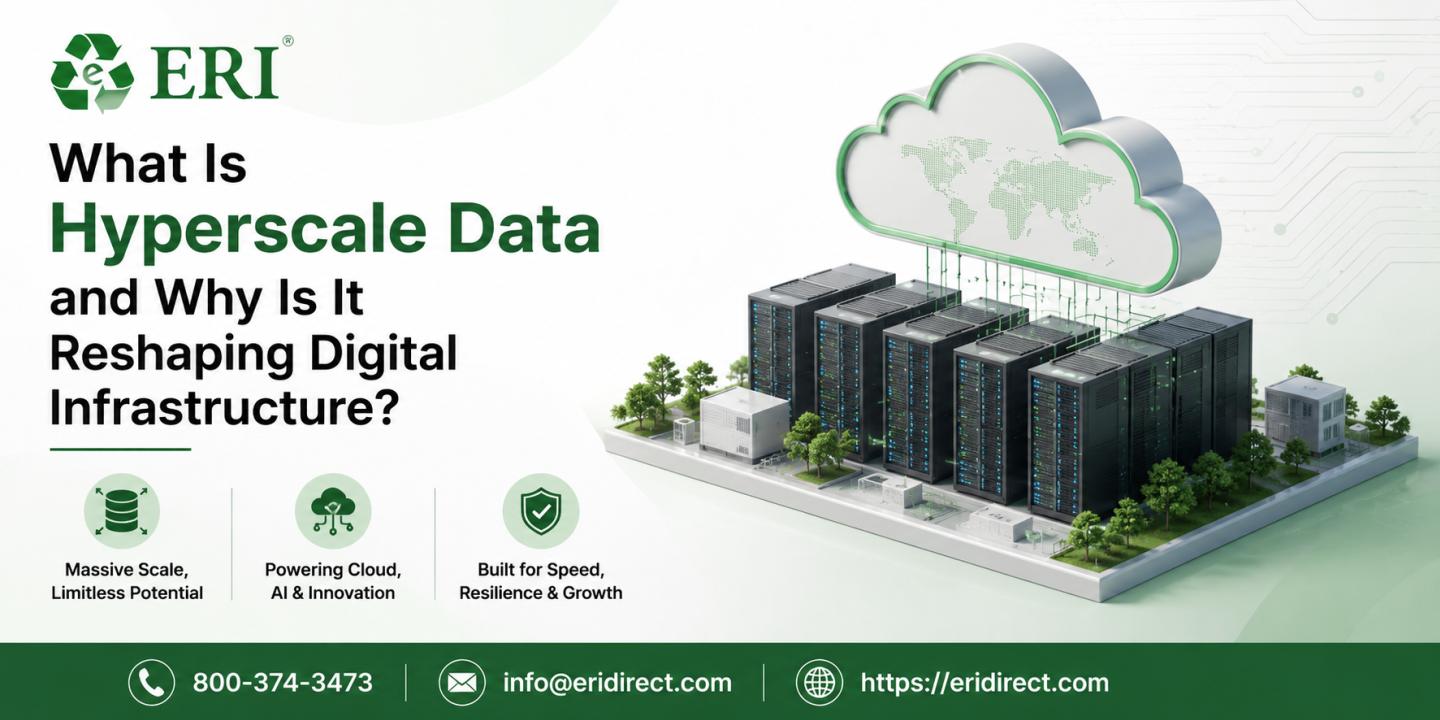
The term hyperscale data refers to data that is processed in a computing environment designed for a large and massive workload. These systems involve many servers, storage devices, networking hardware and software systems that co-operate.
A hyperscale environment allows for the ability to scale computing resources up and down according to need, unlike a small server room. Thus, flexibility, automation and effective resource utilization are the main concerns in design.
Hyperscale data depends on scalable infrastructure
A typical hyperscale setup can include:
- Large server clusters
- High-capacity storage systems
- Fast network connections
- Automated resource management
- Redundant power and cooling
- Monitoring and security controls
The key idea is scale. When users generate more traffic or applications require additional computing power, resources can be added without rebuilding the entire system.
For example, artificial intelligence workloads can require large amounts of computing power. Cloud services also need flexible capacity because demand can change quickly.
How Hyperscale Data Centers Support Digital Growth
A hyperscale data center offers the premises and infrastructure to support a large digital workload. These facilities generally employ standard hardware and software and automate the management of resources across thousands of machines.
Hyperscale data center providers have to balance performance, energy consumption, security, cooling, and equipment life. Consequently, infrastructure planning involves more than adding servers.
Capacity and efficiency work together
Large facilities need efficient power and cooling systems. Running thousands of machines creates heat, which requires careful airflow and temperature control.
Additionally, network design plays a major role. Data must move between servers and storage systems with low delays. A well-planned network can help applications respond consistently.
Automation also supports daily operations. Software can monitor system health, allocate resources, and flag faults. As a result, teams can manage complex environments with fewer manual tasks.
However, growth creates new challenges. More equipment means more assets to track, maintain, secure, and eventually retire.
Why Security Matters Across the Equipment Life Cycle
Large computing environments store and process sensitive information. Therefore, security needs to continue even when equipment reaches the end of its useful life.
Old servers, storage devices, and networking hardware can contain data. Simply removing a device from a rack does not remove information stored on it.
Secure IT asset disposition protects retired equipment
A secure IT asset disposition process should address what happens to equipment after removal. Organizations need clear steps for data erasure, reuse, recycling, or physical destruction when required.
For example, AI data center ITAD security needs careful planning because artificial intelligence workloads can use high-value servers and storage systems. Retired equipment should be tracked from removal through its final outcome.
A sound process can include:
- Asset identification
- Data sanitization
- Chain-of-custody records
- Approved reuse or recycling
- Certificates or other disposal records
Furthermore, organizations should define who can access retired assets. Clear controls reduce the risk of equipment being misplaced or handled without approval.
How Hyperscale Growth Is Changing Infrastructure Planning
The growth of cloud services and AI workloads is changing how organizations plan computing capacity. Instead of building systems for a fixed workload, many facilities now plan for rapid changes in demand.
This shift affects several areas:
- Power capacity
- Cooling design
- Network performance
- Server density
- Equipment replacement
- Data security
- Asset retirement
As hardware becomes more powerful, older equipment can become less suitable for new workloads. Consequently, asset planning must consider the full life cycle of each device.
Infrastructure teams also need better records. Accurate asset data helps organizations know what equipment they own, where it is located, and when it should be replaced.
Common Questions About Hyperscale Data
Is hyperscale data the same as big data?
No. Big data describes large or complex datasets that require special methods for storage and analysis. Hyperscale refers more broadly to infrastructure designed to handle computing and data workloads at a very large scale.
Who uses hyperscale infrastructure?
Large cloud platforms, online services, technology companies, and organizations with major computing workloads can use hyperscale infrastructure.
Conclusion
Hyperscale data is transforming digital infrastructure to accommodate very large workloads and scale with demand. These systems are built on scalable servers, storage, networks, automation, power and cooling.
Growth comes with responsibility, however. Security should be provided throughout the equipment lifecycle, from retirement to disposal. Organizations then need to have robust infrastructure planning and attention to asset management and data protection.
With the increasing amount of digital workloads, organizations can leverage hyperscale systems to make informed decisions regarding capacity, security, resource management, and future investments in their infrastructure.