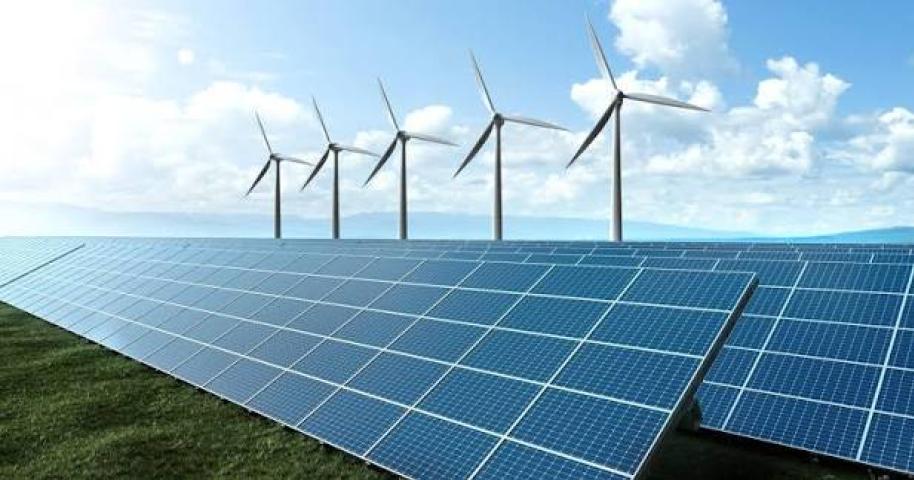
India's energy transition has entered a decisive phase. The country is rapidly expanding renewable energy capacity while electricity demand continues to rise due to industrialization, urbanization, digital infrastructure, electric mobility, and economic growth. At the center of this transformation is India's ambitious target of achieving 500 GW of non-fossil fuel-based installed power capacity by 2030.
The scale of this target makes one question increasingly important: Is India's power grid ready to absorb, transmit, manage, and distribute such a large volume of renewable electricity?
The answer is increasingly positive—but grid readiness will require continuous investment, advanced technologies, stronger transmission infrastructure, energy storage, digital monitoring, and coordinated project execution.
India has already made significant progress. Government data indicates that the country had around 263 GW of renewable energy capacity commissioned as of January 2026, while the broader non-fossil installed capacity had crossed the 50% mark of total installed electricity capacity in 2025.
At the same time, the government has planned transmission infrastructure specifically to integrate more than 500 GW of renewable energy by 2030. The National Electricity Plan also envisages substantial expansion in transmission lines, transformation capacity, inter-regional connectivity, and energy storage.
This means India's next energy transition will not simply be about building more solar parks and wind farms. It will be about creating an electrical network capable of managing a much more dynamic power system.
Understanding India's 500 GW Renewable Energy Ambition
The 500 GW target refers to non-fossil fuel-based installed power capacity, rather than only solar and wind generation. It includes renewable sources as well as other non-fossil technologies.
India's renewable energy expansion has been supported by:
- Utility-scale solar parks
- Wind energy projects
- Rooftop solar
- Floating solar
- Hybrid renewable projects
- Battery Energy Storage Systems
- Green Energy Corridors
- High-voltage transmission infrastructure
The government has already prepared transmission plans for integrating more than 500 GW of renewable energy by 2030. The Central Electricity Authority has also developed dedicated planning for renewable energy zones and associated transmission systems.
This planning is critical because renewable generation and transmission infrastructure do not always develop at the same pace. Solar and wind projects can be constructed relatively quickly, while transmission corridors, substations, and other grid infrastructure can require longer development timelines.
Why the Power Grid Is Becoming the Next Energy Challenge
India's conventional power system was largely designed around centralized generation and predictable electricity flows. Renewable energy introduces a different operating model.
Solar generation varies throughout the day. Wind generation changes according to weather conditions. Rooftop solar creates distributed generation at the consumer level, while battery storage can change when and where electricity enters the network.
This creates several challenges:
- Variable electricity generation
- Two-way power flows
- Transmission congestion
- Voltage fluctuations
- Frequency management
- Peak-demand balancing
- Renewable energy curtailment
- Greater need for real-time monitoring
The grid therefore needs to become more flexible and responsive.
A successful clean energy transition requires the generation system and the transmission network to develop together.
1. Transmission Expansion Is the Backbone of the 500 GW Target
A major requirement for integrating large-scale renewable energy is expanding transmission capacity.
Renewable resources are not evenly distributed across India. Some of the country's strongest solar and wind resources are located far from major consumption centers.
For example, large renewable energy zones are being developed in states such as Rajasthan, Gujarat, Karnataka, Andhra Pradesh, Tamil Nadu, and other regions.
Electricity generated in these areas must be transmitted over long distances to industrial and urban demand centers.
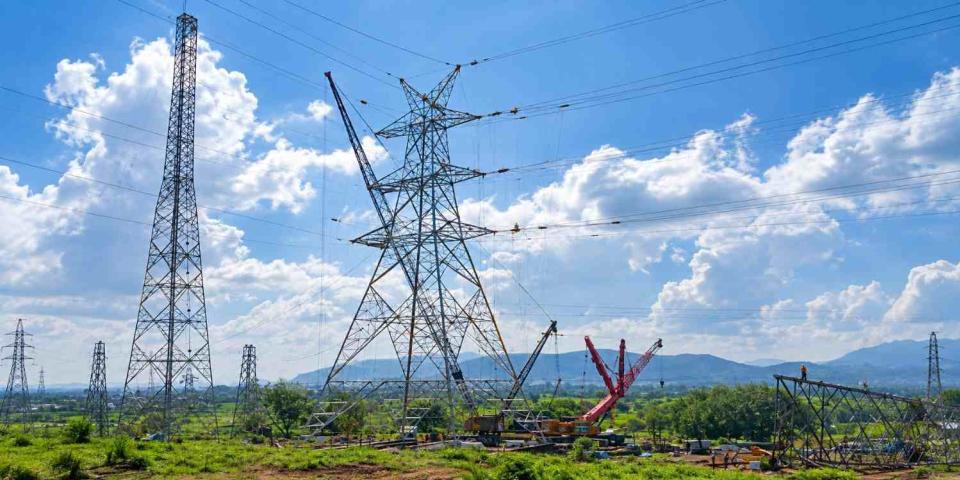
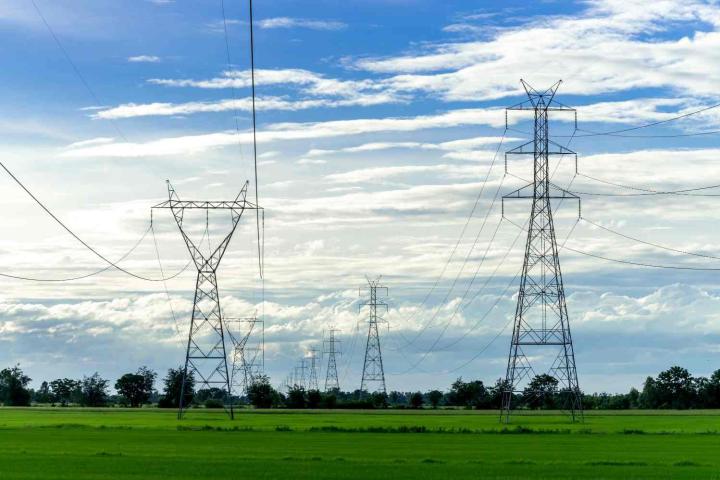
The Ministry of Power states that the transmission network at 220 kV and above is planned to expand from about 5.04 lakh circuit km in February 2026 to 6.48 lakh circuit km by 2032, while transformation capacity is planned to rise from approximately 1,429 GVA to 2,345 GVA.
This expansion will be essential for supporting India's growing renewable energy capacity.
2. Green Energy Corridors Will Connect Renewable Generation to Demand
Green Energy Corridors are an important component of India's renewable energy infrastructure.
These transmission systems are designed to evacuate renewable electricity from generation-rich regions and transfer it to consumption centers.
The government is implementing Green Energy Corridor projects across several states, with Phase I and Phase II designed to support renewable energy evacuation and integration.
Green Energy Corridors can help address one of the central challenges of India's clean energy transition: how to move renewable electricity from where it is generated to where it is needed.
3. High-Voltage Infrastructure Will Become More Important
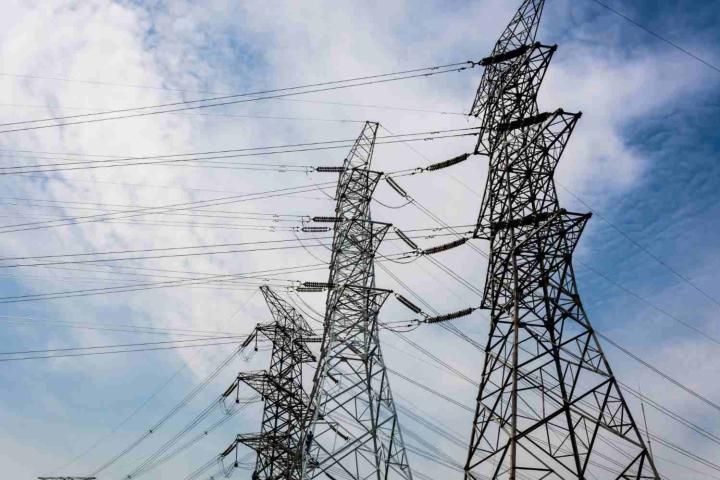
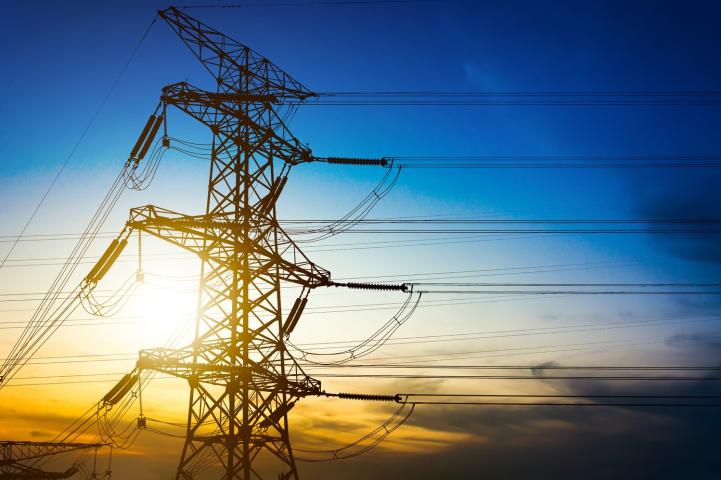
Long-distance renewable power transmission requires high-capacity electrical infrastructure.
Future grid development will increasingly involve:
- 765 kV transmission systems
- 400 kV networks
- HVDC corridors
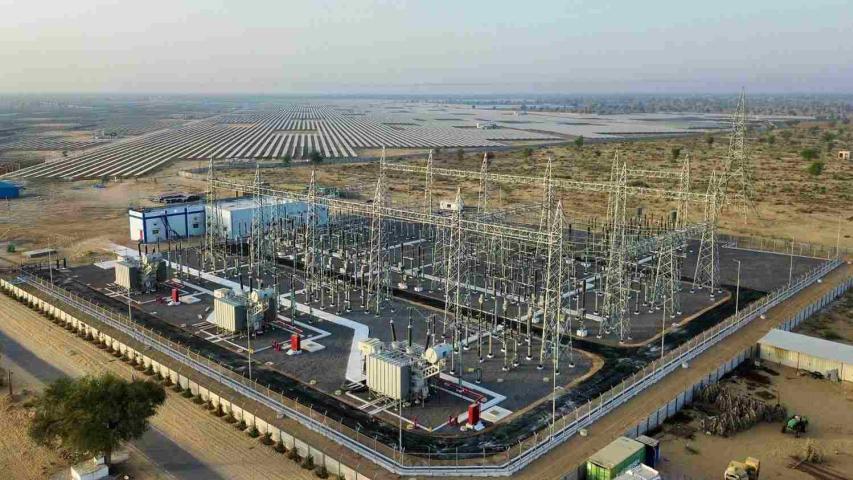
- High-capacity substations
- Advanced transformers
- Digital protection systems
- Automated switching
The government's transmission roadmap includes high-capacity AC and HVDC systems designed to support large-scale renewable power evacuation.
This creates growing opportunities for experienced epc companies in india with expertise in substations, transmission infrastructure, renewable energy integration, and electrical systems.
4. Substations Will Become Intelligent Energy Hubs
Substations are evolving from conventional switching facilities into intelligent energy management points.
A modern substation may include:
- Transformers
- Switchgear
- Protection systems
- Digital relays
- SCADA
- Communication networks
- Remote monitoring
- Automated control
A relay control panel is an important component of electrical protection infrastructure. It monitors electrical conditions and helps initiate protective actions during abnormal operating conditions.
A modern control and relay panel can support transformer protection, feeder protection, busbar protection, circuit monitoring, and fault isolation.
The role of control relay panel manufacturers in india will become increasingly important as utilities and renewable energy developers modernize substations.
A properly designed control and relay panel in substation applications can improve equipment protection and support faster fault response.
For appropriate high-voltage projects, a 132 kv control relay panel can form part of the protection and control architecture of the substation.
5. Medium- and Low-Voltage Systems Matter Too
The success of India's energy transition will not depend only on large transmission lines.
Power must eventually reach industrial facilities, commercial buildings, infrastructure projects, and consumers through distribution networks.
This makes modern electrical distribution equipment equally important.
A medium voltage switchboard supports the safe control and distribution of electrical power across relevant industrial and utility applications.
A medium voltage panel can support switching, protection, isolation, and power management within electrical networks.
At the low-voltage level, low voltage switchboard manufacturers provide equipment designed for safe and efficient electricity distribution.
An lv switchgear panel can support circuit protection, equipment isolation, load management, and operational safety.
Together, these systems create the electrical infrastructure required to connect renewable generation with end users.
6. Packaged Substations Can Support Faster Deployment
As renewable projects expand, project developers are looking for solutions that can reduce installation complexity and support faster infrastructure deployment.
A packaged transformer substation can integrate key components such as transformers, switchgear, protection equipment, and control systems into a coordinated solution.
Depending on project requirements, packaged solutions can offer:
- Faster installation
- Reduced on-site work
- Standardized equipment integration
- Efficient space utilization
- Simplified maintenance
These solutions can be particularly useful for industrial, commercial, renewable, and distributed energy applications where project schedules and space constraints are important considerations.
7. SCADA Will Become Essential for a Renewable-Rich Grid
A renewable-heavy grid requires continuous visibility.
Operators need to know:
- How much power is being generated
- Where power is flowing
- Which assets are operating
- Whether voltage levels are within limits
- Where faults have occurred
- How demand is changing
This is where SCADA becomes increasingly important.
A scada system in power system applications can provide real-time monitoring and control of substations, renewable energy plants, transmission assets, and distribution infrastructure.
An advanced scada control system can support:
- Remote monitoring
- Remote switching
- Alarm management
- Fault identification
- Data collection
- Performance monitoring
A scada based system can connect field equipment with centralized control platforms, allowing operators to make faster decisions.
The wider adoption of scada in power systems will be important as India's electrical network becomes more complex and decentralized.
8. Energy Storage Will Help Manage Renewable Variability
Solar and wind power cannot always generate electricity when demand is highest.
Solar generation, for example, falls after sunset, while electricity demand can remain high during evening hours.
Energy storage can help bridge this gap.
India's transmission planning already incorporates significant storage capacity to support renewable integration. The Ministry of Power's 2025–26 annual report identifies planning for 47 GW of Battery Energy Storage Systems and 35.6 GW of pumped storage plants as part of the broader transmission strategy.
Battery storage can support:
- Peak demand management
- Renewable energy shifting
- Grid balancing
- Frequency support
- Backup power
- Reduced renewable curtailment
The future grid will therefore increasingly combine renewable generation with storage and flexible power resources.
9. Smart Grid Technologies Will Improve Grid Flexibility
The next generation of India's power network will need to be more intelligent.
Smart grid technologies can help with:
- Real-time monitoring
- Automated switching
- Demand management
- Distributed generation integration
- Fault detection
- Predictive maintenance
- Power quality management
The government has specifically highlighted smart grid technologies and energy storage as part of measures supporting renewable energy integration.
Digitalization will allow grid operators to move from reactive operations toward more predictive and data-driven management.
10. EPC Companies Will Play a Larger Role
The scale of India's energy transition requires strong project execution capabilities.
Modern renewable projects are no longer limited to solar module installation. They may involve:
- Solar generation
- Transmission infrastructure
- High-voltage substations
- Protection and control systems
- SCADA
- Switchgear
- Energy storage
- Grid synchronization
This is increasing the importance of epc solar companies that can coordinate renewable generation with electrical infrastructure.
The top solar epc companies in india are increasingly expected to have capabilities extending beyond solar generation into grid integration, substations, automation, and electrical systems.
Similarly, the top epc companies in india can contribute to large infrastructure programs by integrating multiple engineering disciplines within a coordinated project framework.
Is India's Power Grid Ready?
The evidence suggests that India is actively preparing its grid for the 500 GW renewable energy target, rather than waiting for renewable capacity to create transmission bottlenecks.
The country has already planned transmission infrastructure specifically for more than 500 GW of renewable capacity. Government plans also include major increases in transmission lines, transformation capacity, inter-regional transfer capability, Green Energy Corridors, HVDC links, and energy storage.
However, "grid ready" should not be interpreted as a one-time achievement.
Grid readiness is an ongoing process.
As renewable capacity grows, the power system will need continuous upgrades in:
- Transmission capacity
- Distribution infrastructure
- Storage
- Protection systems
- Digital monitoring
- Cybersecurity
- Forecasting
- Grid management
- Skilled technical resources
The challenge is therefore not simply whether India can build a grid capable of integrating 500 GW. The bigger question is whether the grid can adapt continuously as the country's energy mix evolves beyond 2030.
The Role of Integrated EPC Solutions
The clean energy transition requires coordination between renewable generation and power infrastructure.
Companies with capabilities across solar EPC, power systems, substations, electrical distribution, and automation can help address this integration challenge.
Hartek Group states that it has connected more than 10 GW of solar power to the grid, executed more than 400 EHV and HV substations, and installed 200 MWp of rooftop solar capacity, providing turnkey capabilities from site assessment through commissioning.
Such integrated capabilities demonstrate why EPC expertise is becoming increasingly important in India's energy transition.
Key Priorities for India's Next Energy Transition
To make the 500 GW ambition successful, several priorities will remain important:
1. Build Transmission Ahead of Generation
Transmission infrastructure needs to be planned and developed in coordination with renewable capacity additions.
2. Expand Energy Storage
Storage will help manage renewable variability and support power availability during high-demand periods.
3. Digitize the Grid
SCADA, automation, advanced sensors, and data analytics will improve grid visibility.
4. Modernize Protection Systems
Digital protection and control equipment will help safeguard increasingly interconnected networks.
5. Strengthen Distribution Networks
Renewable energy must ultimately reach consumers through capable distribution infrastructure.
6. Develop Technical Skills
India will need engineers, technicians, project managers, and digital specialists capable of managing increasingly complex energy infrastructure.
The Road Ahead: From Renewable Capacity to Renewable-Ready Infrastructure
India's 500 GW non-fossil capacity target represents more than a generation milestone. It is a test of the country's ability to build an energy system capable of integrating large amounts of variable renewable power while maintaining reliability and affordability.
The foundations are already being developed. Transmission planning is aligned with the 500 GW objective, Green Energy Corridors are being implemented, inter-regional capacity is being expanded, and energy storage is becoming part of long-term grid planning.
The next phase will require greater coordination between renewable developers, transmission utilities, distribution companies, technology providers, EPC contractors, and policymakers.
For India's energy transition to succeed, solar generation and grid development must move together.
Building the Infrastructure Behind India's 500 GW Clean Energy Vision
India's 500 GW renewable energy ambition is achievable only when generation capacity is supported by a strong, flexible, digitally enabled, and resilient power network.
The next decade will see increasing demand for advanced substations, high-voltage transmission, smart grid technologies, energy storage, intelligent protection systems, modern switchgear, and real-time monitoring.
For epc solar companies, solar epc companies, and broader epc companies in india, this creates an opportunity to move beyond conventional project execution and become strategic partners in India's power infrastructure transformation.
Hartek Group's capabilities across renewable energy, power systems, substations, distribution products, and automation position it within this broader infrastructure transition. As India's renewable capacity expands, integrated engineering and project execution will be essential for turning clean power generation into dependable electricity for industries, businesses, and communities.
The real success of India's 500 GW target will not be measured only by how much renewable capacity is installed. It will be measured by how effectively that electricity can be generated, transmitted, managed, stored, and delivered when and where it is needed.
That is where the future of India's power grid—and the next chapter of its clean energy transition—will be decided.
Frequently Asked Questions (FAQs)
1. What is India's 500 GW renewable energy target?
India has set a target of achieving 500 GW of non-fossil fuel-based installed power capacity by 2030. The target includes renewable energy and other non-fossil generation sources.
2. Is India's power grid ready for 500 GW of renewable energy?
India is actively preparing for the target through planned transmission expansion, Green Energy Corridors, inter-regional transmission capacity, energy storage, and smart grid technologies. The government has specifically planned transmission infrastructure for integrating more than 500 GW of renewable energy by 2030.
3. Why is energy storage important for renewable energy integration?
Solar and wind generation varies according to resource availability. Battery and pumped storage can help shift renewable electricity, manage peak demand, support grid balancing, and improve the availability of clean power.
4. What role do EPC companies play in India's energy transition?
Epc solar companies and broader epc companies in india can support renewable projects through engineering, procurement, construction, substations, electrical systems, grid integration, automation, testing, and commissioning.
5. How does SCADA support India's modern power grid?
A scada system in power system applications provides real-time monitoring, data collection, alarms, and remote control. A scada control system can help operators manage increasingly complex renewable generation and transmission networks more effectively.
6. Why are substations and protection systems important for renewable integration?
Substations, transformers, switchgear, and protection systems help control and safeguard electricity as it moves from renewable generation facilities into transmission and distribution networks. Equipment such as a control and relay panel, medium voltage switchboard, and packaged transformer substation can form important parts of this infrastructure.