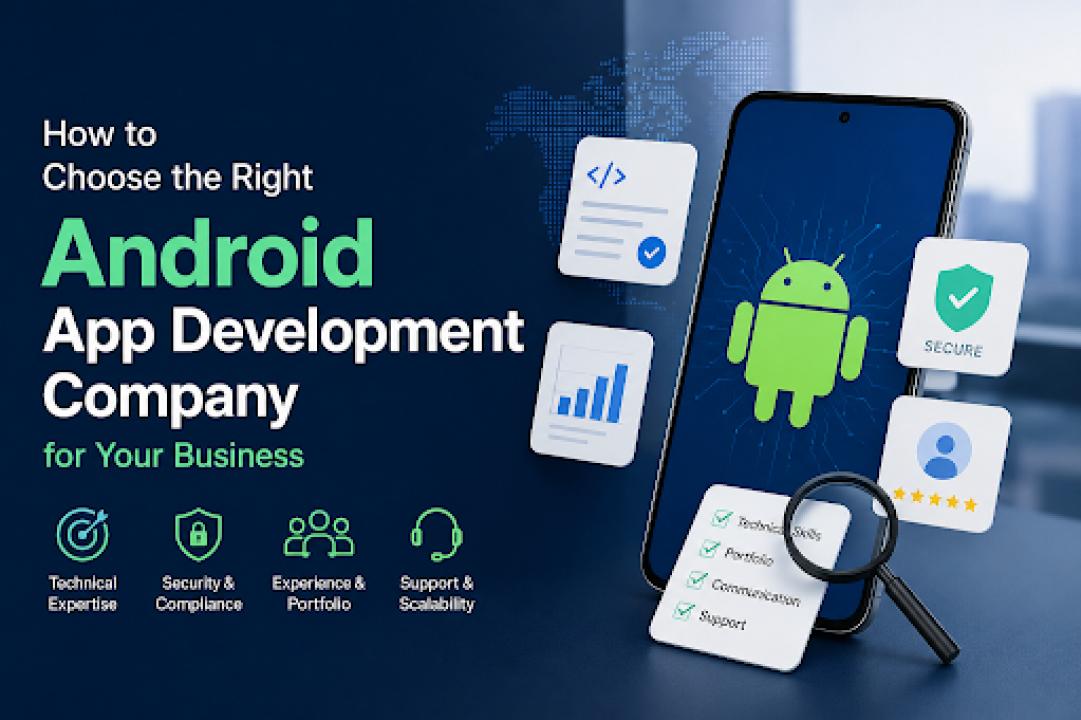
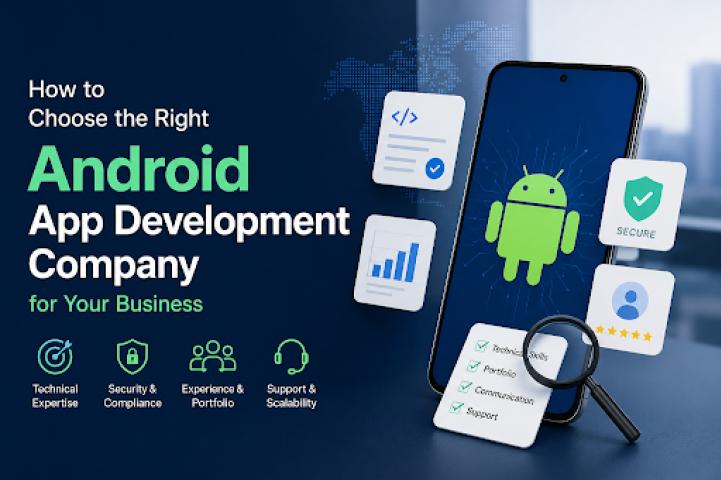
Choosing the right Android development partner can directly affect your app's quality, security, scalability, and long-term cost. The challenge is that many companies make similar promises about experienced developers, affordable pricing, and successful projects.
Instead of choosing based only on price or portfolio screenshots, businesses should evaluate technical expertise, communication, security, development processes, and post-launch support.
Start With Your Business Requirements
Before approaching an Android development company, clearly define what you want the app to accomplish.
Consider:
Who will use the app?
What problem will it solve?
What are the essential features?
Will it connect with existing systems?
Does it require offline functionality?
How many users do you expect?
What security requirements apply?
For example, an e-commerce app may require payment gateways, product catalogs, and personalized recommendations, while an enterprise app may need CRM integration, offline access, location services, and advanced security.
A good development partner should understand these requirements before recommending a technology stack.
Check Relevant Experience
A portfolio is useful, but don't judge a company only by the number of apps it has built.
Look for experience with projects similar to yours, such as:
Enterprise applications
Payment integrations
Real-time applications
AI-powered apps
Location-based services
IoT integrations
Complex API integrations
Data-heavy applications
Also ask what the company handled. Did it manage architecture, UI/UX, backend integration, testing, deployment, and maintenance, or only the Android development?
Relevant experience can help a team identify potential challenges before they become expensive problems.
Evaluate Android Technical Expertise
Android development involves supporting different devices, screen sizes, operating-system versions, and usage environments.
Google's Android quality guidelines emphasize adaptive layouts, usability, accessibility, privacy, security, and performance.
Ask potential developers which technology they recommend and why.
Depending on your requirements, native Android or a cross-platform approach may be appropriate. The important thing is whether the team can explain the trade-offs.
They should also understand architecture, APIs, databases, authentication, testing, CI/CD, monitoring, and scalability.
Prioritize Security
Security should be part of development from the beginning.
Business apps may handle customer information, payment details, employee data, or confidential company information.
Ask how the company handles:
Authentication
Data encryption
API security
Permissions
Secure data storage
Vulnerability testing
Dependency updates
Google recommends minimizing permissions, protecting stored data, securing communications, and maintaining updated dependencies as part of Android security best practices.
A development partner should be able to explain its security approach clearly rather than simply promising that the application will be “secure.”
Examine Their Testing Process
A reliable development company should have a structured QA process.
Ask whether they perform:
Functional testing
Integration testing
Performance testing
Security testing
Regression testing
Device compatibility testing
Testing should happen throughout development, not only before launch. This reduces the chances of users encountering crashes, broken features, or compatibility problems.
Don't Ignore Communication
Even a technically strong team can become difficult to work with if communication is poor.
Before signing a contract, clarify:
Who will manage the project?
How often will you receive updates?
Can you communicate directly with developers?
Which project-management tools will be used?
How are delays and technical issues handled?
How are changes to requirements managed?
Clear communication makes complex development projects much easier to manage.
Compare Pricing Carefully
The cheapest proposal isn't always the most affordable option.
Check whether the quoted price includes:
UI/UX design
Backend development
API integrations
Testing
Cloud infrastructure
App deployment
Maintenance
Post-launch support
Also clarify how additional features or changing requirements will affect the budget.
A transparent proposal is more valuable than an unusually low initial quote.
Ask About Post-Launch Support
App development doesn't end when the application goes live.
Your app may require bug fixes, security updates, performance improvements, new features, and compatibility updates as Android evolves.
Google Play requirements also change. From August 31, 2026, new apps and updates generally need to target Android 16 (API level 36) or higher, subject to applicable exceptions.
Ask whether the development company provides ongoing maintenance and support.
Choose a Long-Term Technology Partner
The right Android app development company should do more than write code.
It should understand your business goals, recommend practical solutions, identify technical risks, communicate clearly, and support the product after launch.
Before making a decision, ask:
Have they built similar applications?
Can they explain their technology choices?
Do they follow strong security and testing practices?
Can they integrate with your existing systems?
Is pricing transparent?
Who owns the source code and development accounts?
What support is available after launch?
The best partner isn't necessarily the biggest or cheapest company. It's the one that combines relevant experience, technical expertise, clear communication, security, and long-term support.
Evaluating these factors before development begins can help businesses avoid costly mistakes and build an Android application that remains reliable and scalable as the business grows.