Market Overview
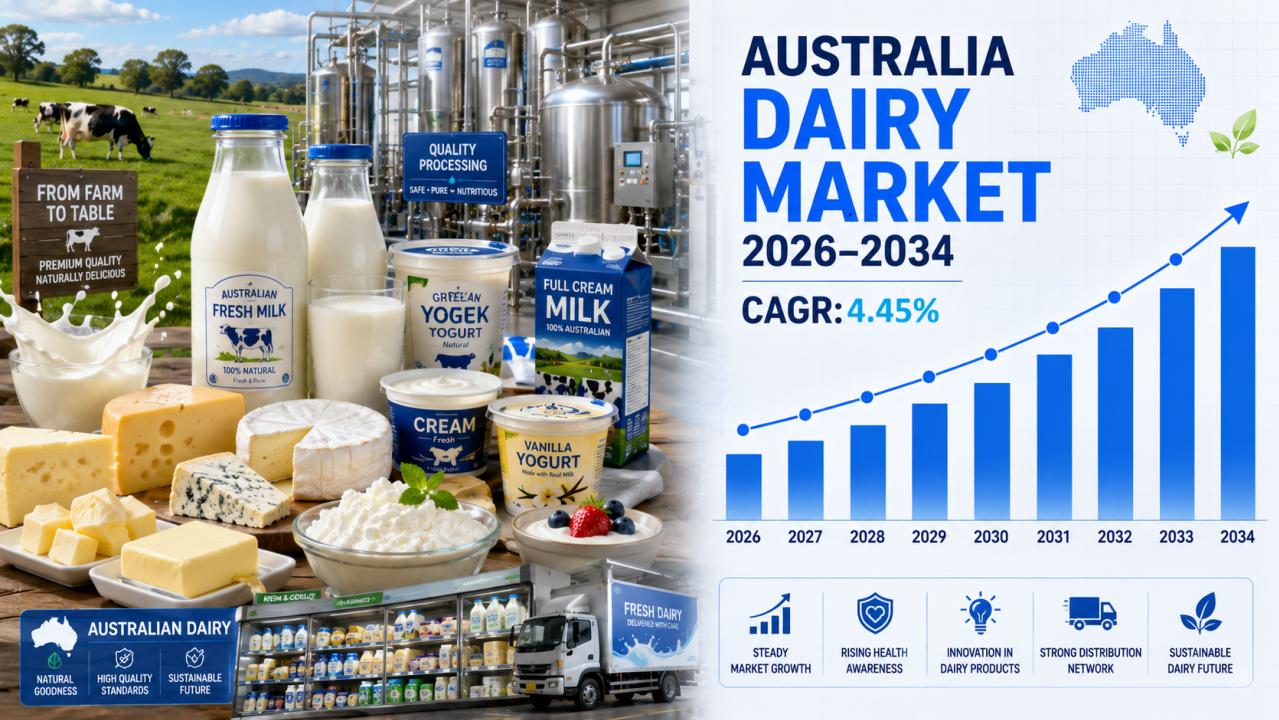
The Australia dairy market size was valued at USD
7.05 Billion in 2025 and is projected to reach USD 11.02
Billion by 2034, growing at a CAGR of 4.45% from
2026-2034. The market is growing steadily and is driven by factors such as
increasing health awareness among consumers, increasing demand for premium and
specialty products, and increasing use of dairy farming technology. The high
demand for dairy products in export markets and increasing use of dairy
products in bakery products, confectionery products, and clinical nutrition
also add to the growth. In June 2025, Australian processor Bega Cheese
reportedly sought informal clearance from the ACCC for a potential acquisition
of Fonterra's Oceania business.
Request a Sample Report for In-Depth Market Insights: https://www.imarcgroup.com/australia-dairy-market/requestsample
Australia Dairy Market Summary
- The
Australia dairy market encompasses liquid milk, cheese, yogurt, butter,
and other products, serving applications in bakery and confectionery,
clinical nutrition, and frozen food, distributed through supermarkets,
convenience stores, and online channels.
- These
products are valued for their role in providing essential nutrition,
supporting culinary applications, and contributing to export revenues.
- The
ecosystem includes dairy farmers, processors (Bega, Saputo, Fonterra),
retailers, exporters, and consumers.
- Major
segments identified in the market include product (liquid milk, cheese,
yogurt, butter), application (bakery and confectionery, clinical
nutrition, frozen food), distribution channel (supermarkets, convenience
stores, online), and region.
- The
market is benefiting from health-conscious consumer demand, export growth
to Asian markets, and technological innovation enhancing production
efficiency.
- In
December 2025, Pure Dairy opened a state-of-the-art manufacturing facility
in Dandenong South, Victoria, marking one of the largest private
investments in the sector in decades.
PORTER'S FIVE FORCES ANALYSIS
- Competitive
Rivalry: High, with large-scale multinational processors,
domestic cooperatives, and boutique producers competing on quality,
innovation, and price. Business implication: Companies
must differentiate through product innovation, sustainability, and brand
positioning.
- Supplier
Power (Raw Milk): Moderate. Dairy farmers have some leverage, but
the presence of multiple processors and long-term contracts moderates this
power. Business implication: Processors should maintain
diverse farm relationships and invest in supply chain partnerships.
- Buyer
Power (Retailers and Exporters): Moderate to high. Large
supermarket chains and international buyers have bargaining power through
volume purchasing. Business implication: Brands must
focus on quality, innovation, and value to maintain shelf space and export
contracts.
- Threat
of Substitutes: Moderate. Plant-based alternatives compete, but
dairy's nutritional profile and culinary versatility support its
position. Business implication: The industry should
emphasize dairy's unique nutritional and functional benefits.
- Threat
of New Entrants: Moderate. Higher barriers for large-scale
processors (capital, scale, supply chain), but lower barriers for niche
and artisan producers. Business implication: Established
players should build defensible positions through scale, innovation, and
export networks.
MARKET GROWTH DRIVERS
Health-Conscious Consumer Demand Fueling Dairy Innovation
Health and wellness have become central pillars of food
purchasing decisions for Australian consumers. Growing awareness of dairy's
role in supporting bone strength, muscle development, and digestive health is
driving sustained demand across multiple product categories. In November 2025,
Bega Group expanded its portfolio of functional dairy products with the launch
of high-protein Dairy Farmers smoothies and plans for gut-health yogurt ranges.
Products rich in protein, calcium, and probiotics are gaining popularity among
fitness-focused individuals and aging demographics alike.
Export Growth and Asian Market Penetration
Australia's geographic proximity to high-growth Asian
economies positions its dairy sector advantageously for export expansion.
Rising incomes and growing middle-class populations in China, Japan, and
Southeast Asia are generating increasing demand for high-quality dairy
products. In December 2025, Bubs Australia confirmed that the U.S. FDA would
continue facilitating imports of its infant formula products beyond 2025,
supporting the company's international expansion strategy. Australia's
reputation for rigorous food safety standards and premium production gives it a
strong competitive edge.
Technological Innovation Enhancing Production Efficiency and Quality
Technological advancement is playing an increasingly
important role in Australia
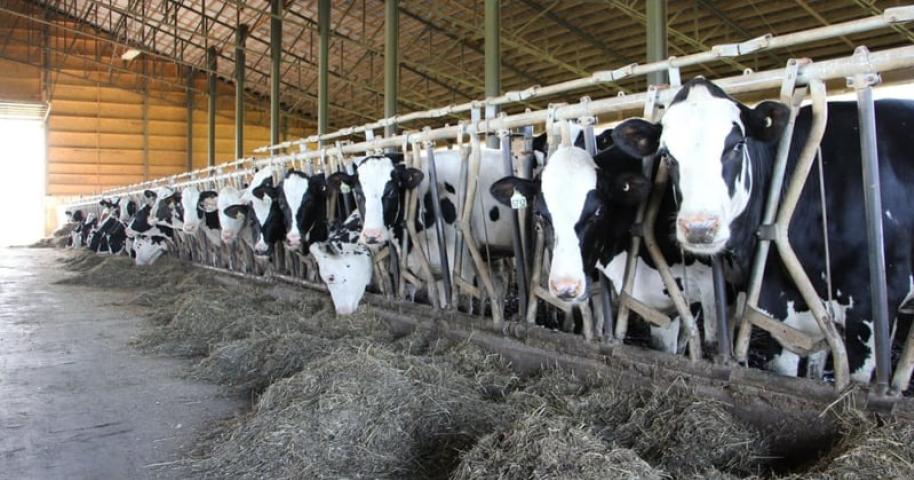
dairy market. Precision farming technologies, including automated
milking systems, sensor-based herd monitoring, and IoT-integrated feed
management, are enabling farmers to optimize productivity and improve animal
welfare outcomes. In February 2025, ABC News highlighted that Australian dairy
farms are increasingly deploying robotic "voluntary milking systems,"
allowing cows to be milked automatically while generating real-time data on
herd health and milk production.
AUSTRALIA DAIRY MARKET SEGMENTATION
Product Insights:
- Liquid
Milk
- Cheese
- Laban
- Yogurt
and Curd
- Butter
and Clarified Butter
- Others
Application Insights:
- Bakery
and Confectionery
- Clinical
Nutrition
- Frozen
Food
- Others
Distribution Channel Insights:
- Supermarkets
and Hypermarkets
- Convenience
Stores
- Specialist
Retailers
- Online
Stores
- Others
Regional Insights:
- Australia
Capital Territory & New South Wales
- Victoria
& Tasmania
- Queensland
- Northern
Territory & Southern Australia
- Western
Australia
COMPETITIVE LANDSCAPE
The Australia dairy market features a competitive landscape
encompassing large-scale multinational processors, established domestic
cooperatives, and a growing segment of boutique and artisanal producers. Market
participants differentiate through investment in product innovation,
sustainable practices, and export market development. Premium and specialty
categories, including organic milk, artisanal cheeses, and functional dairy,
are emerging as key battlegrounds for competitive positioning, attracting both
established players and newer entrants. Strategic mergers and acquisitions
continue to reshape the ownership landscape.
Key players mentioned in the report context include:
- Bega
Cheese
- Saputo
Dairy Australia
- Fonterra
- Pure
Dairy
- Bubs
Australia
- The
a2 Milk Company
- (Complete
list provided in the full report)
REGIONAL ANALYSIS
- Victoria
& Tasmania: Leads with 28.4% share, underpinned by the most
concentrated and productive dairy farming landscape in Australia.
Victoria's Gippsland region is notable for its scale of milk, cheese, and
butter production, supported by fertile pastures and sophisticated
processing infrastructure. Tasmania contributes premium artisanal and
organic dairy products for domestic niche and high-value export channels.
- ACT
& New South Wales: A key market with Sydney's large
population driving strong demand for liquid milk and value-added dairy.
The region benefits from well-developed retail and distribution networks.
- Queensland: A
growing market with expansion driven by population growth, increasing
consumption, and developing export capabilities. Queensland's warm climate
supports year-round production.
- Western
Australia: A growing market driven by Perth's expanding
population and the state's strong export orientation, particularly to
Asian markets.
- NT
& South Australia: Emerging markets with growing dairy
consumption, supported by improving retail access and increasing consumer
awareness of premium dairy products.
RECENT INDUSTRY DEVELOPMENTS
August 2026: Australia's dairy industry remained an
important contributor to the national economy. The Australian Government
reported that the industry was worth A$5.96 billion in 2024–25 and
supported approximately 30,400 jobs nationwide. The government also
committed to implementing all eight recommendations from the second review of
the mandatory Dairy Code to improve transparency and fairness between farmers
and processors.
August 2026: Milk production remained under pressure
from declining herd numbers. Dairy Australia's latest available production
statistics cover the 2025–26 financial year, while ABARES reported that lower
cow numbers were outweighing productivity improvements. The trend is increasing
attention on farm efficiency, herd productivity and production-cost management.
August 2026: Weather conditions continued to
influence dairy production decisions. ABARES noted that variable seasonal
conditions across eastern Australia have affected pasture and livestock
production, while wetter-than-expected winter conditions in southeastern Australia
improved soil moisture across important agricultural regions.
Key Aspects Required for the Australia Dairy Market
- Market
Performance: USD 7.05 Billion in 2025, with a projected
trajectory to USD 11.02 Billion by 2034.
- Market
Outlook: A 4.45% CAGR through 2034 indicates steady growth across
products and applications, driven by health awareness, export demand, and
technological innovation.
- Growth
Drivers: Health-conscious consumer demand fueling dairy
innovation; export growth and Asian market penetration; technological
innovation enhancing production efficiency and quality; rising demand for
premium and specialty dairy; and sustainability and ethical practices
driving brand differentiation.
- Competitive
Landscape: A competitive market with multinational processors,
domestic cooperatives, and boutique producers. Differentiation occurs
through innovation, sustainability, and brand positioning.
- Value
Chain Analysis: From farm production and processing through
distribution and retail to end-use by consumers and foodservice, with
technology and export markets shaping market dynamics.
- Industry
Trends: Rising demand for premium and specialty dairy;
technological innovation transforming dairy farming and processing;
sustainability and ethical practices driving brand differentiation;
functional dairy and health-focused products; and strategic mergers and
acquisitions.
- Strategic
Recommendations: Invest in functional and premium dairy product
innovation; adopt precision farming and processing technologies; expand
export capabilities to Asian markets; develop sustainable and circular
production systems; and strengthen brand positioning through health and
sustainability credentials.
Note: If you need any specific information that is not currently covered within the scope of the report, we will provide the same as a part of customization.
Speak to an analyst: https://www.imarcgroup.com/request?type=report&id=21990&flag=C
Report Format, Delivery, and Customization Details
- Report
Format Mode: PDF and Excel (Editable version in PPT/Word format
available on special request)
- Report
Delivery Mode: Online Delivery, Physical Delivery
- Report
Delivery Time: report delivered over email within 24 to 48 hours.
If requested by the client, a physical copy will be delivered within three
to ten days.
- Report
Confirmation Mode: Yes, via email
- Report
Customization Mode: Yes, via Email / Call
- Report
Table of Content: Yes
- Report
List of Figures: Yes
- Report
Methodology Mode: Yes
- Request
For Sample Report: Yes
About Us
IMARC Group is a global management consulting firm that
helps the world's most ambitious changemakers to create a lasting impact. The
company provides a comprehensive suite of market entry and expansion services.
IMARC offerings include thorough market assessment, feasibility studies,
company incorporation assistance, factory setup support, regulatory approvals
and licensing navigation, branding, marketing and sales strategies, competitive
landscape and benchmarking analyses, pricing and cost research, and procurement
research.
Contact Us
IMARC Group
134 N 4th St., Brooklyn, NY 11249, USA
Email: sales@imarcgroup.com
Tel No: (D) +91 120 433 0800
United States: +1-201-971-6302