Building a mobile app is one thing. Turning an early version into a reliable product that can support thousands of users, handle growing transaction volumes, and adapt to changing customer expectations is another challenge entirely. For startups and established businesses alike, choosing a development partner who understands both stages can make a meaningful difference to long-term success.
That’s where MVP-to-scale development comes in. Rather than building a minimum viable product (MVP) and treating it as a one-off project, the right partner helps you validate your idea, launch essential features, gather user feedback, and expand the product without repeatedly rebuilding its foundations. This might involve introducing modular architecture, improving API performance, strengthening security, or preparing cloud infrastructure for higher traffic.
New York offers a strong environment for this type of work, bringing together startups, financial services firms, healthcare innovators, retail brands, and experienced technology teams. However, not every agency approaches product development with scalability in mind.
When evaluating mobile app development companies in New York, look beyond the initial launch plan. Consider how each team handles architecture, product iteration, integrations, maintenance, and future growth. The seven companies below offer different capabilities worth exploring when you need an app development partner that can support your product from its first release through its next stages of expansion.
7 Mobile App Development Companies to Consider for MVP-to-Scale Services
1. Code Brew Labs
Code Brew Labs is a technology development partner for businesses that need more than a basic app launch. Its service offering spans
mobile app development services in New York, AI-powered applications, enterprise software, cloud technologies, and ongoing product support, making it relevant to founders planning a longer product roadmap.
A useful distinction when evaluating a partner for MVP-to-scale services in New York is whether it can support both early product validation and the engineering work required as adoption grows. Code Brew Labs' broad technology capabilities can help businesses plan those stages together rather than treating each new feature or integration as a separate development effort.
Key strengths include:
- Cross-platform development: iOS, Android, Flutter, and React Native options for products targeting different devices and audiences.
- AI integration: Machine learning, generative AI, chatbots, and automation capabilities for products where intelligent features support a clear business need.
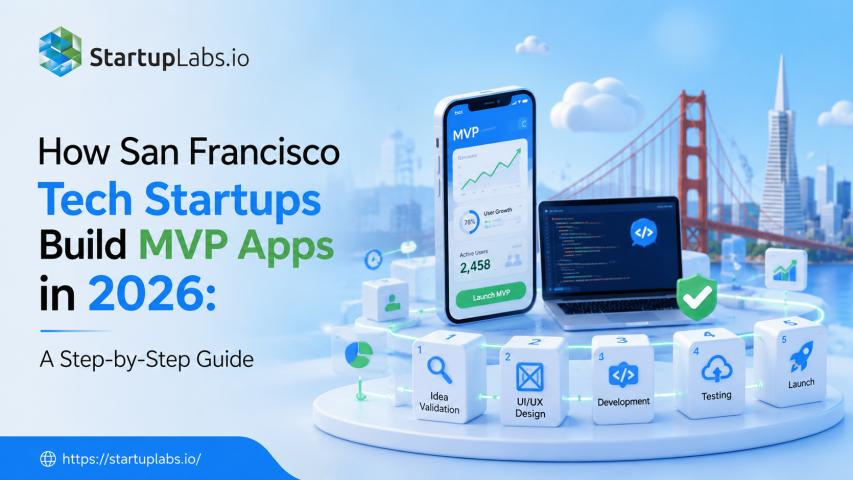
- Product development: Support spanning idea validation, UI/UX design, MVP development, deployment, and maintenance.
- Enterprise capabilities: Backend development, API integrations, cloud technologies, quality assurance, and ongoing technical support.
Consider a startup launching a subscription-based mobile service. Its initial MVP might include account creation, a basic dashboard, payments, and essential user workflows. As subscriptions grow, the product may need personalized recommendations, stronger analytics, improved infrastructure, and more sophisticated access controls. A development partner with experience across these areas can help plan the transition.
Businesses should clarify team availability, communication arrangements, project ownership, and support commitments before engaging a distributed development partner. Code Brew Labs is worth evaluating when a project requires a combination of mobile engineering, AI capabilities, and a roadmap that extends beyond the initial release.
Best suited for: Startups and growing businesses seeking a broad technology partner for mobile products, AI features, and ongoing development.
2. Dubai App Developers
Dubai App Developers is an option for businesses looking for mobile application development alongside backend engineering, cloud services, and enterprise integrations. Its broad service scope makes it relevant to companies that expect their products to evolve after launch rather than remain limited to an initial feature set.
For MVP-to-scale projects, the key consideration is how the development team structures the first release. A well-planned MVP should validate the most important assumptions without locking the business into an architecture that becomes difficult to extend. That means separating core business logic, designing sensible API boundaries, and choosing technologies that fit the expected product lifecycle.
Key strengths include:
- Native and cross-platform mobile app development.
- Backend systems and third-party API integrations.
- Cloud-oriented development and infrastructure planning.
- UI/UX design and feature development for evolving products.
- Opportunities to coordinate mobile, backend, and integration work through one development partner.
Imagine a business launching a booking app with a small group of service providers. The first release might support profiles, availability, reservations, and notifications. A later phase could introduce provider dashboards, automated reminders, loyalty features, and reporting. The initial architecture should accommodate these additions without forcing a complete redesign.
That is the practical value of an MVP-to-scale approach: developers plan for likely changes while resisting the temptation to build every possible feature before validating demand.
Before choosing Dubai App Developers, ask for examples of projects that have progressed beyond MVP, along with details about performance testing, deployment practices, documentation, and post-launch maintenance. Businesses in New York should also confirm working-hour overlap and the process for handling urgent production issues.
Best suited for: Businesses seeking mobile development combined with backend systems, cloud capabilities, and business integrations.
3. Royo Apps
Royo Apps focuses on digital products built around on-demand services, marketplaces, and multi-sided business models. These applications often need a carefully staged development plan because their complexity increases as more customers, service providers, transactions, and operational workflows enter the system.
A marketplace MVP, for example, might initially connect customers with a limited number of vendors. At launch, the essential requirements could include registration, listings, bookings or orders, payments, and basic notifications. Scaling introduces different demands: vendor management, refunds, customer support workflows, promotions, analytics, and more sophisticated administrative controls.
Key strengths include:
- On-demand and marketplace-oriented application development.
- Customer-facing and service-provider workflows.
- Booking, ordering, and transaction-related functionality.
- Features that support multi-role applications.
- Opportunities to expand an initial product through additional modules and operational tools.
What's worth noting is that marketplace scaling involves more than increasing server capacity. The product must also accommodate more complex business rules. A delivery platform may need separate workflows for customers, merchants, and couriers. A home-services marketplace may need provider verification, scheduling rules, cancellation policies, and dispute management.
A development partner familiar with these patterns can help identify which workflows belong in the MVP and which can wait until the business has evidence that users need them.
Royo Apps is worth considering when the commercial model depends on connecting multiple user groups or coordinating services through a mobile platform. During vendor discussions, clarify how much of the proposed solution is configurable, which elements require custom engineering, and how future changes affect the overall cost.
Also ask how the team handles source-code ownership, third-party dependencies, security updates, and integrations with external payment or logistics providers.
Best suited for: Entrepreneurs and businesses building on-demand apps, booking platforms, service marketplaces, or multi-sided digital products.
4. Blocktech Brew
Blocktech Brew is a technology development option for businesses exploring applications that combine conventional mobile functionality with AI, blockchain, Web3, or other emerging technologies. These projects can benefit from a staged roadmap because the technical uncertainty is often greater than it is for a straightforward consumer app.
The MVP stage should establish whether the proposed technology solves a genuine user or business problem. For instance, a digital platform might test a core transaction workflow before introducing blockchain-based records, automated verification, or additional AI functionality. Building every advanced feature at the outset can increase cost without proving that customers value the result.
Key strengths include:
- Mobile application development and emerging-technology integration.
- AI-related capabilities for products with defined automation or intelligence requirements.
- Blockchain and Web3 development considerations.
- Backend integration and technical architecture planning.
- A staged approach to testing specialized features before broader rollout.
For scaling, the engineering questions become more specific. How will the app handle concurrent users? What happens if an external service becomes unavailable? Which operations require immediate processing, and which can run asynchronously? If blockchain is involved, what are the transaction costs, latency implications, and data privacy considerations?
These questions matter because advanced technology does not automatically produce a scalable product. The underlying mobile experience, backend services, monitoring, and security controls still need sound engineering.
Businesses evaluating Blocktech Brew should request a clear explanation of its proposed architecture, the evidence supporting each technology choice, and the maintenance implications of specialized components. A small proof of concept can also help establish feasibility before committing to a larger build.
Best suited for: Businesses developing mobile products with specific AI, blockchain, Web3, or emerging-technology requirements.
5. Blue Label Labs
Blue Label Labs is a New York-based digital product development company known for work spanning strategy, product design, and software development. Its product-oriented approach makes it a relevant option for businesses that need to connect early-stage discovery with the practical requirements of a production application.
MVP development works best when the team understands the business hypothesis behind the product. Rather than simply implementing a feature list, developers and product specialists should identify the main user problem, define the minimum workflow needed to test it, and agree on the evidence that will determine the next development phase.
Key strengths include:
- Product strategy and discovery.
- User experience and interface design.
- Mobile and digital product engineering.
- Collaboration between design and development teams.
- Iterative development informed by product objectives and user feedback.
Consider a financial services startup exploring a mobile budgeting product. An initial release might test account onboarding, expense categorization, and spending summaries. After observing user behavior, the team could prioritize bank integrations, shared budgets, alerts, or more advanced analytics.
This staged process helps prevent a common problem: spending heavily on features that look impressive in a demonstration but do little to improve adoption or retention.
Blue Label Labs is worth considering when product definition is as important as the engineering itself. During consultations, ask how discovery findings translate into technical requirements, how priorities change between releases, and how the company measures progress after launch.
For regulated or data-sensitive products, also confirm the team's experience with relevant security requirements, third-party integrations, and production monitoring. These capabilities should be demonstrated through project examples rather than assumed from a general product-development offering.
Best suited for: Startups and established businesses that need product strategy, user-centered design, and mobile engineering under a coordinated development process.
6. Fueled
Fueled is a digital product agency associated with New York and known for mobile app development, product design, and digital experiences. It is worth evaluating for businesses that see the mobile app as a central part of their customer experience and expect to refine that experience as the product matures.
A product can function correctly and still struggle to grow if onboarding is confusing, important actions are difficult to find, or performance deteriorates on older devices. MVP-to-scale development therefore requires attention to both engineering quality and the user behaviors that influence retention.
Key strengths include:
- Mobile product design and development.
- User experience and interface design.
- Product refinement and feature iteration.
- Technical planning for evolving digital products.
- Collaboration between product, design, and engineering disciplines.
For example, an ecommerce company might launch with product discovery, checkout, order tracking, and customer accounts. Once usage data becomes available, the roadmap could focus on faster checkout, personalized product discovery, loyalty features, and improved search. The team would need to prioritize these changes based on measurable customer needs rather than assumptions.
Scaling also brings technical considerations. More complex checkout flows may require additional payment integrations. Growing catalogues can affect search performance. New customer engagement features may introduce notification, privacy, and analytics requirements.
Fueled is a potential fit when the business needs a carefully considered customer experience alongside the underlying technology. During the selection process, ask how the agency handles post-launch improvements, performance testing, accessibility, and handover to an internal product team.
It is also worth clarifying the engagement model and the resources available after the initial release. A strong design-led process can help a product stand out, but sustainable growth still depends on maintainable code, operational discipline, and ongoing measurement.
Best suited for: Consumer-facing businesses that prioritize mobile experience, product design, and iterative improvements after launch.
7. thoughtbot
thoughtbot is a software consultancy with a long-standing focus on product design, development, and collaborative engineering. Its emphasis on iterative delivery and established software practices makes it a useful candidate for businesses that want to validate an idea while building a maintainable technical foundation.
For an MVP, speed matters, but speed should not come from skipping decisions that will become expensive later. A disciplined team can use short development cycles, automated tests, code reviews, and continuous integration to deliver a focused first version without abandoning engineering quality.
Key strengths include:
- Product design and software development.
- Agile collaboration and iterative delivery.
- Engineering practices that support maintainability.
- Testing and continuous integration.
- Technical collaboration with client-side product and engineering teams.
Suppose a startup is building a mobile service with a web-based administration portal. The first release may need only a small set of user journeys and essential administrative functions. As adoption grows, the product may require role-based permissions, more integrations, reporting, and a larger engineering team.
A partner with a strong software-development process can help manage these changes through incremental releases, documented decisions, and regular technical reviews. It can also help the client's internal developers understand and maintain the codebase instead of creating long-term dependence on an outside vendor.
thoughtbot is worth considering when engineering discipline, collaboration, and sustainable product development are priorities. Businesses should confirm the team's current mobile-specific capabilities and the technologies proposed for their project, especially if they require native iOS or Android development rather than a web-focused solution.
Ask for examples of how the team has handled changing requirements, improved an existing application, or transferred technical ownership to a client team.
Best suited for: Product teams and startups that value collaborative engineering, iterative development, and maintainable software.
How to Choose the Right App Scaling Partner in NYC
When evaluating mobile app development companies in New York, assess the team's ability to support your current stage and your next meaningful milestone.
Technical expertise: Ask how the team approaches modular architecture, database design, API integrations, automated testing, and cloud infrastructure. Request examples of products that have evolved beyond their initial releases.
Communication and accountability: Establish who owns the roadmap, how progress is reported, and how the team handles changes in scope. Agile sprint cycles are useful when they produce working software, clear priorities, and regular feedback—not just recurring meetings.
Flexibility: Your requirements will probably change after launch. Choose a partner that can reprioritize features without sacrificing code quality or losing sight of the business objectives.
Post-launch support: Clarify maintenance arrangements, bug-fix response times, monitoring responsibilities, security updates, and the process for emergency releases.
Commercial transparency: Understand what the initial estimate covers, how change requests are priced, and which recurring costs sit outside development fees. Cloud hosting, third-party APIs, subscriptions, and ongoing maintenance can materially affect your budget.
Also consider team compatibility. A startup launching its first MVP may need close product guidance, while an established enterprise may prioritize integration with existing systems, governance, and internal engineering teams.
The right partner isn't necessarily the largest agency or the one promising the shortest timeline. It's the team that can explain the trade-offs, demonstrate relevant experience, and help you make sound decisions at each stage.
Conclusion
Choosing among mobile app development companies in New York requires more than comparing portfolios or initial development estimates. If your goal is to move from MVP to scale, you need a partner that understands how product strategy, engineering quality, user feedback, and operational support work together.
Code Brew Labs, Dubai App Developers, Royo Apps, Blocktech Brew, Blue Label Labs, Fueled, and thoughtbot offer different approaches worth exploring. Their relevance depends on what you're building, the technologies involved, your internal capabilities, and the level of support you expect after launch. Before making a decision, verify each company's current service offering, relevant project experience, team availability, and engagement terms.
Start by defining your immediate objective. You might need to validate a new concept, modernize an existing app, support a growing user base, or introduce features that open up a new revenue stream. Those goals will help you identify the capabilities that matter most.
Consider reaching out to 2–3 companies for consultations. Discuss your roadmap, ask how they would approach the next 12 months, and request a clear explanation of the technical and commercial trade-offs.
New York's app development ecosystem will continue to create opportunities for businesses building digital products. With a thoughtful roadmap and the right development partner, your MVP can become a foundation for sustainable, long-term growth.