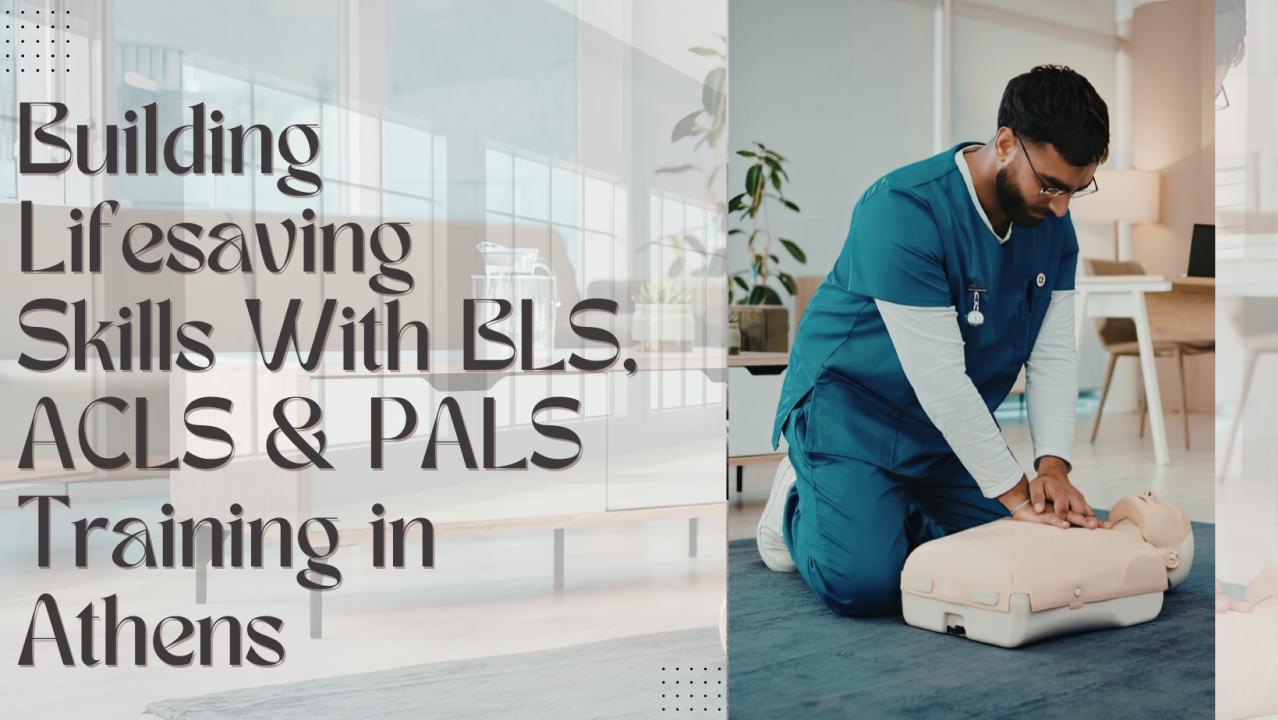
Every second counts during a medical emergency. Whether you
are a healthcare professional needing to renew your credentials or a concerned
citizen wanting to be prepared, knowing how to perform CPR can make the
difference between life and death. For those residing in the Classic City and
surrounding areas, finding high-quality CPR Training near you in
Athens is the first step toward empowering yourself with these critical
skills.
In the medical field, preparedness isn't just a buzzword; it
is a requirement. From understanding the basics of chest compressions to
managing complex cardiovascular emergencies, the right certification can boost
your career and, more importantly, save a life. This comprehensive guide will
walk you through the different levels of certification available, specifically
focusing on the distinctions between BLS, ACLS, and PALS, helping you decide
which course aligns best with your professional and personal goals.
Why Quality Training Matters
Medical emergencies are unpredictable. They can happen at
home, in the workplace, or on the street. The "chain of survival"
relies heavily on immediate intervention. High-quality training ensures that
when an emergency strikes, panic does not take over. Instead, muscle memory and
learned protocols guide your actions.
For healthcare providers, holding a current certification is
often a mandatory condition of employment. However, the value goes beyond a
checkmark on a resume. It instills the confidence to act swiftly. When you sign
up for CPR Training
in Athens, you aren't just sitting in a classroom; you are engaging in
scenario-based learning that simulates real-world pressure. This preparation is
vital for nurses, doctors, EMTs, and even teachers and coaches who are
responsible for the safety of others.
Who Needs Basic Life Support Certification?
For many entering the healthcare field or working in public
safety, the foundation of their emergency response education begins with Basic
Life Support Certification. Often abbreviated as BLS, this course is designed
for a wide audience but is specifically tailored for healthcare professionals
and other personnel who need to know how to perform CPR and other basic
cardiovascular life support skills in a wide variety of in-facility and
prehospital settings.
A Basic Life
Support Certification course focuses on the "ABCS" of life
support: Airway, Breathing, and Circulation. It goes beyond the standard
"layperson" CPR class by teaching high-quality CPR for adults,
children, and infants. It also covers the importance of early use of an AED
(Automated External Defibrillator) and effective team dynamics.
During the course, students learn how to recognize
life-threatening emergencies, provide CPR to victims of all ages, use an AED,
and relieve choking in a safe, timely, and effective manner. This certification
is typically a prerequisite for more advanced courses. If you are a nursing
student, a medical assistant, or a police officer, this is likely the baseline
certification you require. It proves to employers that you possess the
necessary skills to sustain life until more advanced medical help arrives.
Elevating Your Skills with Advanced Cardiovascular Life Support
Certification
While BLS provides the foundation, Advanced Cardiovascular
Life Support Certification (ACLS) builds a skyscraper on top of that
foundation. This course is strictly for healthcare professionals who either
direct or participate in the management of cardiopulmonary arrest or other
cardiovascular emergencies. This includes doctors, nurses, paramedics, and
respiratory therapists.
The jump from BLS to Advanced Cardiovascular Life
Support Certification represents a significant shift in responsibility.
In an ACLS course, the focus expands from simply maintaining circulation to
actively treating the underlying causes of cardiac arrest. Providers learn how
to read electrocardiograms (ECGs) to identify rhythms like ventricular
fibrillation or tachycardia. They also learn about pharmacology, knowing which
drugs to administer and when to stabilize a patient’s heart rhythm.
One of the most critical components of ACLS is the emphasis
on team dynamics. In a hospital code blue situation, effective communication
and defined roles are just as important as the medical interventions. ACLS
training simulates these high-stress environments, teaching providers how to
lead a resuscitation team or function as an effective team member. By obtaining
your Advanced Cardiovascular Life Support Certification, you are demonstrating
a mastery of complex algorithms designed to optimize survival rates in critical
care scenarios.
Specialized Care: Pediatric Advanced Life Support Certification
Children are not just small adults. Their physiology is
different, and their medical emergencies often stem from different causes than
adults. This is why Pediatric Advanced Life Support Certification (PALS) is a
distinct and essential credential for anyone working in pediatrics, emergency
medicine, or intensive care units.
The goal of Pediatric
Advanced Life Support Certification is to improve outcomes for
pediatric patients suffering from cardiac arrest or other cardiovascular
emergencies. The course uses a series of simulated pediatric emergencies to
reinforce the important concepts of a systematic approach to pediatric assessment,
basic life support, PALS treatment algorithms, and effective resuscitation.
In a PALS course, providers learn to recognize and treat
infants and children at risk for cardiopulmonary arrest. This includes
understanding the specific nuances of pediatric airway management, vascular
access, and fluid resuscitation. The anxiety level is often incredibly high
when a child is involved, making the calm, systematic approach taught in
Pediatric Advanced Life Support Certification courses absolutely invaluable. It
equips healthcare providers with the knowledge to not only resuscitate but to stabilize
a child for transport to a higher level of care.
Choosing the Right Course for Your Career Path
Navigating the world of medical certifications can be
confusing. Do you need BLS, ACLS, or PALS? The answer largely depends on your
job description and your level of responsibility.
- For
the Entry-Level or Non-Clinical Staff: If you are a medical student, a
CNA, or a lifeguard, Basic Life Support Certification is your entry point.
It is the universal standard for anyone expected to perform CPR in a
professional capacity.
- For
Critical Care and Emergency Staff: If you work in an ER, ICU, or as a
paramedic, you will almost certainly require both ACLS and PALS. These
roles demand the ability to manage complex airways and administer drugs.
- For
Pediatric Specialists: If you work in a children’s ward or a pediatric
clinic, Pediatric Advanced Life Support Certification is non-negotiable.
However, you will still need to maintain your BLS credentials as well.
Many professionals find that they need a combination of
these certifications. Fortunately, training centers in the area offer flexible
scheduling. When looking for CPR Training in Athens, look for American Heart
Association (AHA) accredited courses. The AHA sets the standard for emergency
cardiovascular care, and their certification cards are recognized globally by
hospitals and medical institutions.
The Importance of Local Training
There is a distinct advantage to taking your classes
locally. While online-only courses exist for theory, they cannot replace the
hands-on skills check required for legitimate certification. By enrolling in
local CPR Training in Athens, you get the opportunity to practice on manikins,
receive real-time feedback from instructors, and network with other local
healthcare professionals.
Local instructors understand the specific needs of the
community. They can provide insight into the protocols followed by regional
hospitals and emergency services. Furthermore, taking a class locally reduces
the friction of travel and scheduling, making it easier to stay current with
your recertifications.
Keeping Your Skills Current
It is important to remember that medical science is always
evolving. The guidelines for CPR and life support change as new research
emerges. This is why certifications generally expire every two years. A Basic
Life Support Certification or an ACLS card that has lapsed is often treated the
same as having no certification at all by employers.
Recertification courses are typically shorter than initial
certification courses, designed to refresh your memory and update you on any
changes in the latest guidelines. Staying proactive about your recertification
ensures you are never caught in a situation where your credentials are invalid
when an emergency strikes.
Conclusion
Whether you are looking to launch a career in healthcare,
advance your current medical qualifications, or simply want to be a prepared
citizen, getting certified is a noble and necessary pursuit. From the
foundational skills found in a Basic Life Support Certification to the advanced
protocols of Advanced Cardiovascular Life Support Certification and the
specialized knowledge of Pediatric Advanced Life Support Certification, there
is a course designed for your needs.
Don't wait for an emergency to realize you lack the skills
to help. Seek out professional CPR Training in Athens today. By doing so, you
are not just earning a card for your wallet; you are gaining the power to save
a life. Whether it is a stranger on the street or a loved one at home, the
knowledge you gain in these courses is the ultimate tool for protection and
safety. Sign up for a class today and take the first step towards becoming a
certified life-saver.