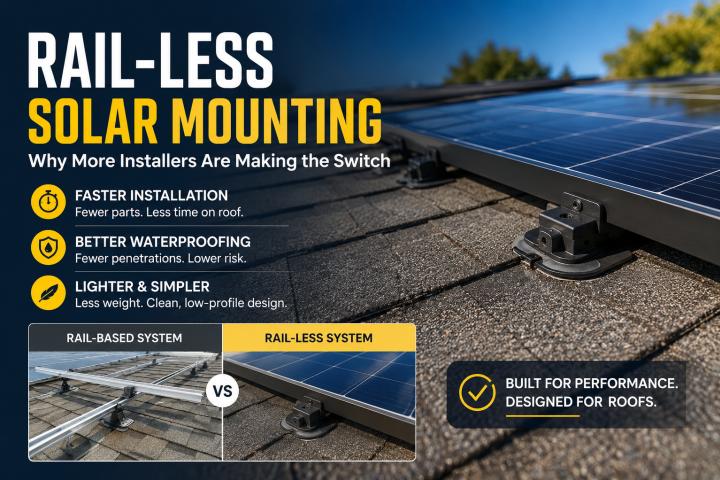
Why Some Installers Are Moving Toward Rail-less Solar Mounting Systems
A lot of rooftop solar installs look clean on day one. The problems usually show up later. Rails are expanding during extreme summer heat. Small alignment corrections are turning into bigger spacing issues halfway through the array. Flashing details are being rushed near the end of the day as crews try to finish before the weather moves in.
Older roofs make things even less predictable. Slight decking dips or warped rafters can throw rail alignment off faster than most homeowners realize.
That’s part of the reason rail-less mounting systems have received more attention over the last several years, especially on residential reroof projects where contractors are trying to simplify installation while reducing long-term disruption to the roof.
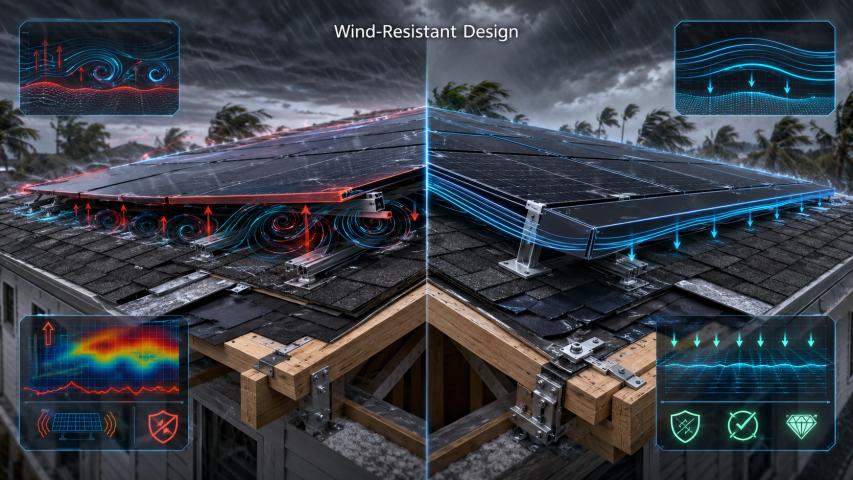
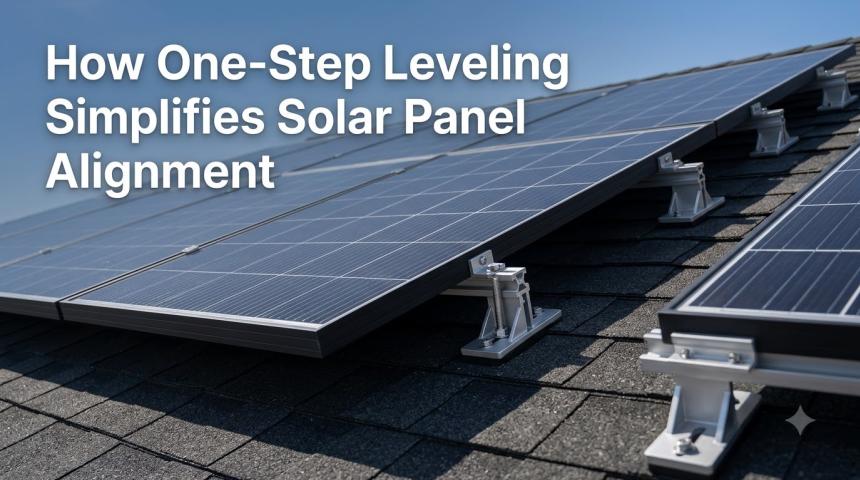
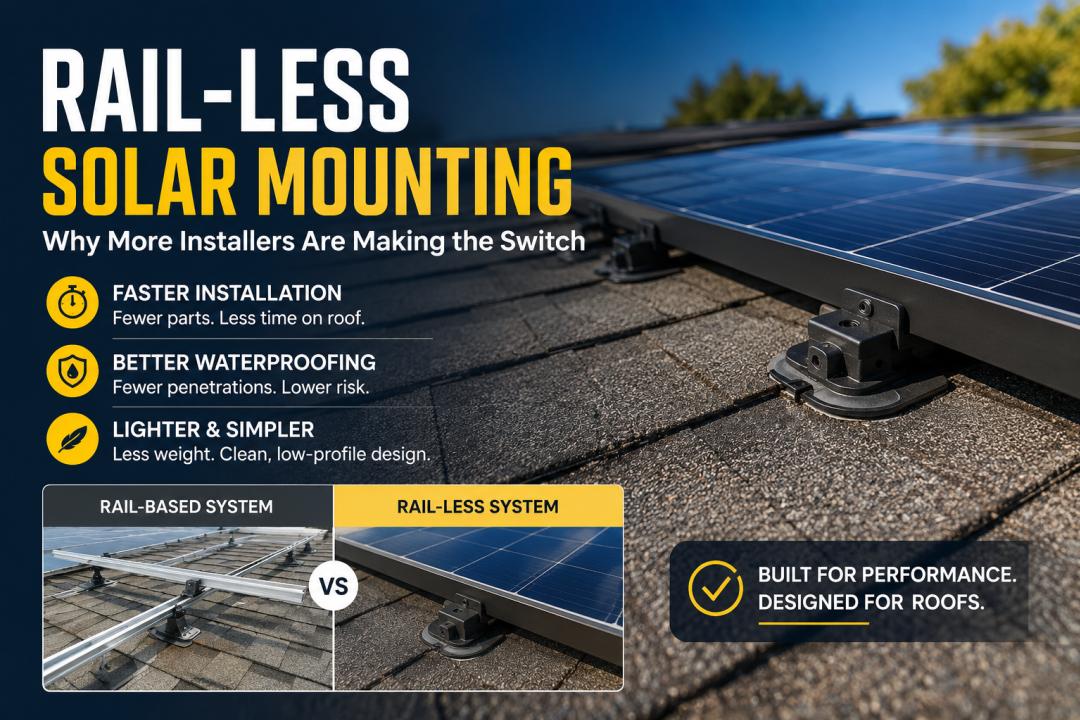
Some newer mounting layouts, including systems like RT-APEX, focus on reducing excess hardware across the roof plane rather than building a large secondary rail structure above the shingles.
The conversation has shifted beyond installation speed alone. Contractors are paying closer attention to waterproofing, maintenance access, and the behavior of mounting systems after years of exposure to weather.
Less Hardware Changes the Workflow More Than People Expect
Rail systems can work well, especially on larger commercial layouts where flexibility and span adjustment matter. But on residential roofs, installers often spend a surprising amount of time correcting small inconsistencies.
One attachment lands slightly off-center. A rail splice needs adjustment. The roof surface crowns more than expected near the ridge line.
None of those issues is major on its own, but they add up over the day.
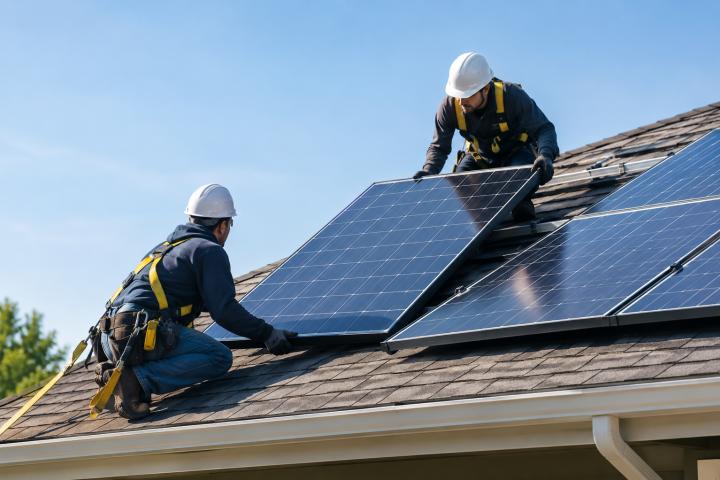
Rail-less systems reduce some of that correction work simply because there are fewer components involved. Crews are not carrying long rail sections across steep roofs or constantly checking alignment between multiple attachment points.
That can help reduce:
- Unnecessary roof traffic
- Staging clutter
- Hardware management issues
- Installation adjustments
- Material handling time
On older asphalt roofs, minimizing excessive movement across the shingles can matter more than most people think.
Roof Load and Structural Simplicity Still Matter
Not every solar project starts on a brand-new structure.
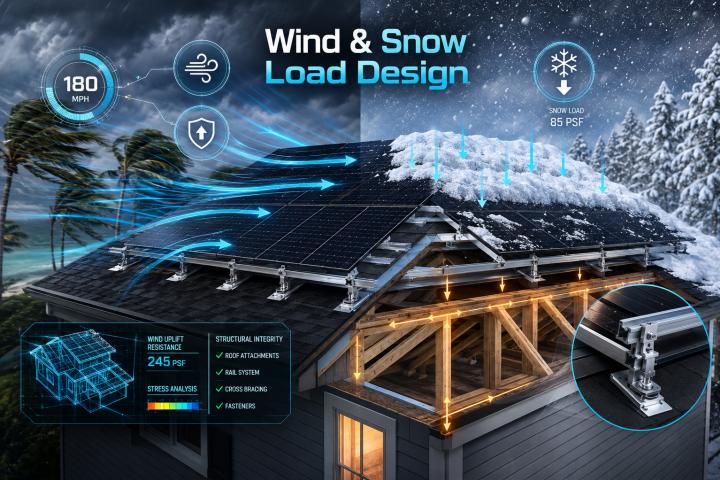
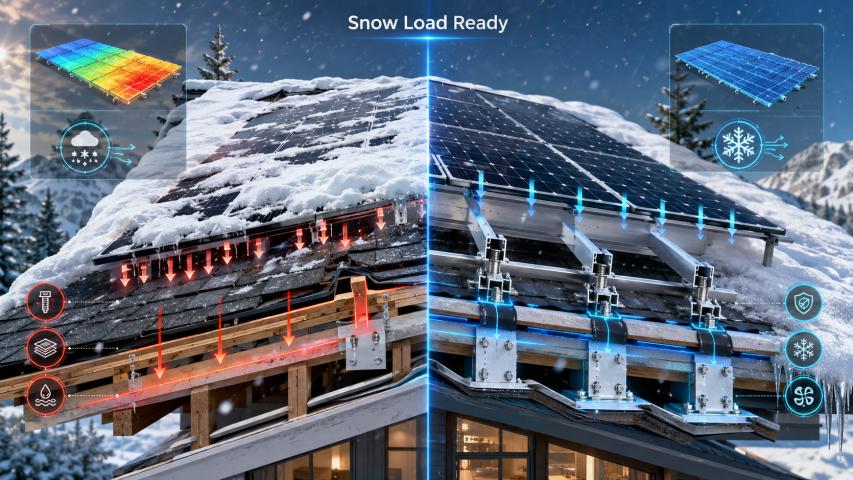
A large number of systems have been installed on roofs for years during their service life. In those situations, reducing unnecessary weight becomes part of the discussion, especially in snow-load regions or areas with older framing designs.
Traditional rail systems add a continuous aluminum structure beneath the array. Rail-less layouts remove much of that extra material.
That does not automatically make one system better than the other in every scenario. Some commercial projects still benefit from rails because of engineering requirements, module layout flexibility, or installer familiarity.
But in many residential installations, contractors are finding that simpler mounting layouts lead to fewer installation complications overall.
Industry sources like Solar Power World have increasingly covered how attachment methods affect roof longevity and long-term system maintenance, not just installation efficiency.
Waterproofing Usually Becomes the Bigger Conversation Later
Homeowners often focus on panel output first. Roofing contractors usually focus on penetrations. That difference says a lot.
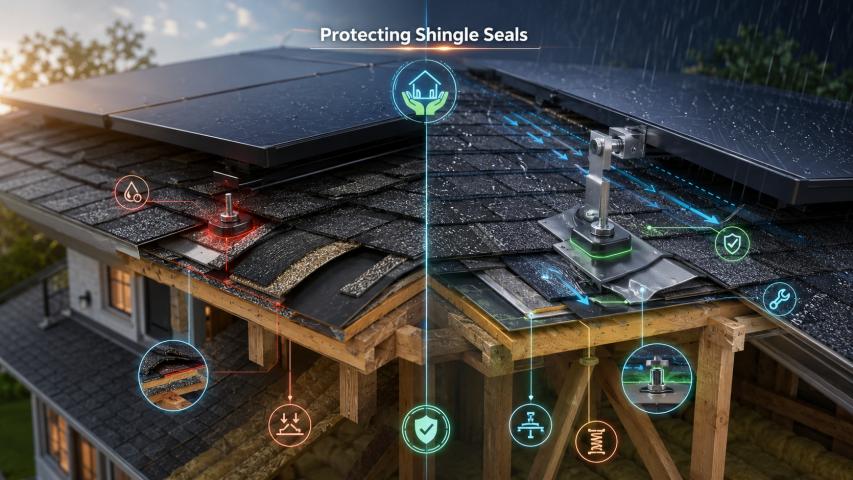
Most long-term service issues are tied to water intrusion, flashing deterioration, or movement of attachments over time. Freeze-thaw cycles, thermal expansion, and years of weather exposure eventually reveal weak installation details.
Crews who handle reroof projects see this firsthand.
Sometimes the original solar system itself is still functioning well, but the mounting and waterproofing details underneath become the problem.
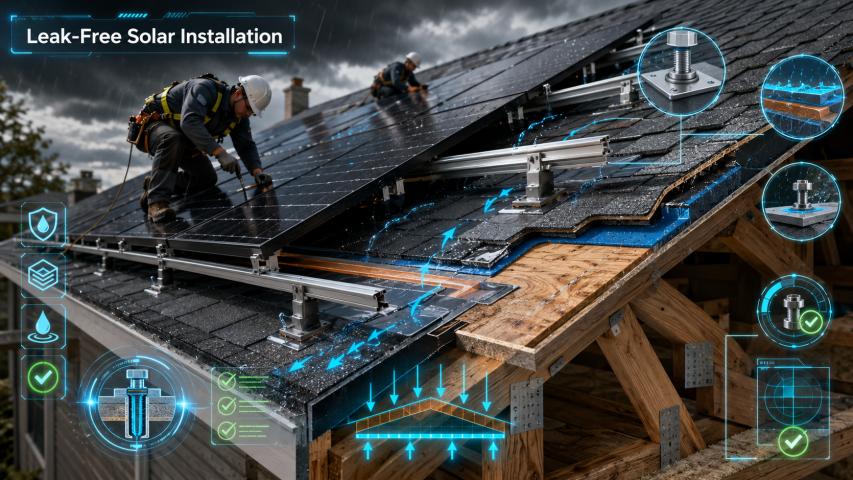
That is why sealing methods and flashing integration have become a bigger part of the industry conversation. This breakdown of roof penetration sealing technology explains how some newer approaches aim to reduce long-term moisture risks around rooftop attachments.
In real-world conditions, water eventually finds shortcuts. Good attachment design matters because of what happens years later, not just during installation week.
Contractors Usually Remember the Callbacks
One Arizona installer mentioned that his crew stopped thinking about mounting systems strictly in terms of install speed after dealing with several difficult service visits on aging arrays.
The biggest frustrations were rarely the modules themselves.
It was things like:
- Rail movement after repeated thermal cycling
- Difficult access around crowded hardware
- Corrosion around mixed-metal contact points
- Attachment corrections during reroof work
- Small leaks appearing years after the original install
That experience pushed their crew toward simpler layouts whenever the project allowed.
Most experienced installers are not chasing trends. They are trying to avoid future headaches that could turn into expensive callbacks.
Final Thoughts
Rail-based systems still make sense for plenty of projects, especially larger or more complex layouts.
But rail-less mounting continues to gain traction because many contractors prefer to reduce unnecessary components wherever possible. Fewer parts usually mean fewer adjustment points, fewer roof penetrations to manage, and less clutter across the roof surface.
Most of the advantages are not flashy. They show up gradually over time through easier maintenance, cleaner reroof integration, and fewer long-term issues underneath the array. That tends to matter more after five winters than it does on installation day.