India’s solar sector is moving beyond conventional ground-mounted projects as developers look for ways to expand renewable generation without placing additional pressure on land resources. Floating solar photovoltaic (FSPV) projects offer an alternative by using reservoirs, ponds and other suitable water bodies for solar generation. In February 2026, MNRE noted that only around 700 MW of floating solar had been commissioned in India and highlighted the need for better site data and a clearer framework for project execution.
Unlike land-based solar, however, floating solar cannot simply transfer a conventional PV layout onto a water surface. The engineering approach changes significantly because the project must account for water levels, waves, wind, anchoring, mooring, floating structures, electrical movement and aquatic conditions.
For epc solar companies, this means floating solar requires a more specialised approach to site assessment, engineering, construction and long-term operations.
Key Takeaways
- Floating solar requires water-body-specific site assessment rather than conventional land surveys.
- Anchoring and mooring become critical structural design elements.
- Water-level variations, wind and wave action influence array design.
- Electrical infrastructure must accommodate movement between the floating array and shore.
- SCADA, monitoring and preventive maintenance require specialised planning.
- Strong coordination between civil, structural, electrical and marine engineering teams is essential.
1. Site Assessment: Land Survey vs. Water-Body Assessment
For a land-based solar project, engineers typically evaluate land availability, topography, soil conditions, drainage, shading, access roads and proximity to transmission infrastructure.
Floating solar adds another layer of assessment.
Engineers need to study water depth, bathymetry, seasonal water-level variation, wind conditions, wave characteristics, shoreline conditions and the nature of the water-bed. The location of the floating array must also account for operational requirements of the reservoir, including water intake structures, irrigation activities, navigation where applicable and restricted zones.
Recent Indian project specifications specifically highlight water-level variation and wind speed as important considerations for floating solar anchoring and mooring systems.
This makes the initial site study one of the biggest differences between floating and land-based solar.
2. Structural Design Moves from Foundations to Floating Platforms
A conventional solar plant transfers module and structural loads into the ground through fixed foundations, piles or other mounting systems.
Floating solar uses interconnected floats or floating platforms to support the PV modules. The system must provide adequate buoyancy while remaining stable under changing environmental conditions.
The structure therefore needs to account for:
- Module and mounting loads
- Wind forces
- Wave action
- Buoyancy
- Dynamic movement
- Equipment loading
- Water-level changes
- Long-term material durability
The floating platform also needs to maintain the required electrical and mechanical configuration as the water surface changes.
This is why floating solar design is not simply a variation of conventional ground-mounted PV engineering.
3. Anchoring and Mooring Become Core Engineering Components
One of the most important differences is the anchoring system.
In land-based projects, the module structure is physically fixed to the ground. In floating projects, the array must remain within its designated operating area while being able to accommodate changing water levels and environmental forces.
A mooring system connects the floating platform to suitable anchoring points. Its design depends on factors such as:
- Reservoir depth
- Water-level fluctuation
- Wind speed
- Wave conditions
- Water-bed characteristics
- Shoreline geometry
- Floating-array configuration
Indian tender specifications for floating solar require anchoring and mooring systems to accommodate water-level variability and dynamic wind conditions.
For project developers and solar epc companies, this makes geotechnical and water-body data an important part of engineering decisions.
4. Electrical Design Requires Greater Flexibility
The electrical architecture of a land-based solar plant is comparatively straightforward because modules, combiner boxes, inverters and other equipment are installed on stable ground.
In floating solar, part of the electrical system moves with the floating array while other equipment may be located on shore.
This creates additional design considerations for:
- DC cable routing
- Floating-to-shore cable transitions
- Cable movement
- Cable protection
- Electrical isolation
- Earthing
- Inverter placement
- Transformer positioning
- AC evacuation
The transition between the floating platform and land-based electrical infrastructure needs particular attention because cables must accommodate movement without creating excessive mechanical stress.
Depending on the plant architecture, the project may also incorporate a medium voltage panel, medium voltage switchboard, low voltage switchboard manufacturers' equipment and an lv switchgear panel as part of the electrical distribution system.
5. Substation Design Still Matters
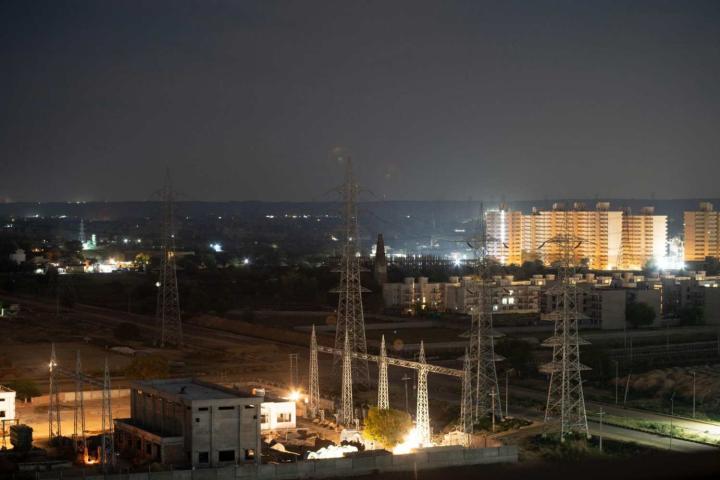
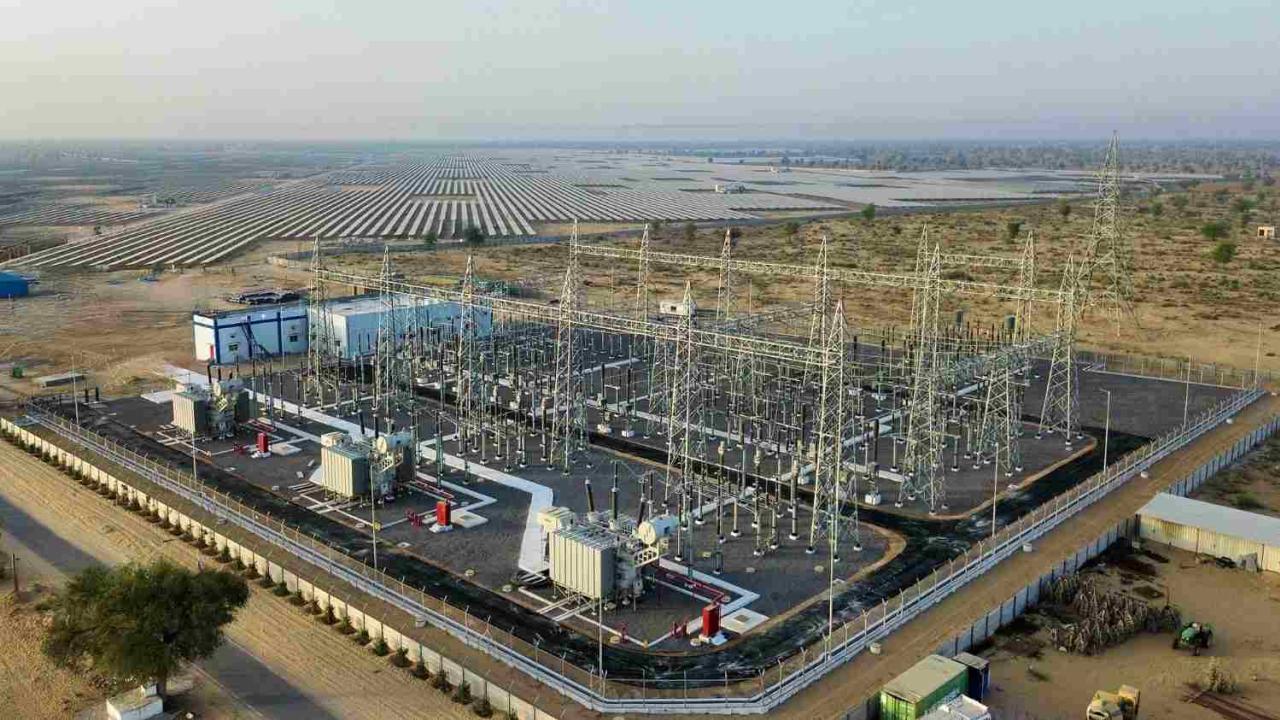
Floating solar does not eliminate conventional grid infrastructure. Generated electricity still needs to be collected, stepped up and evacuated to the grid.
A project may therefore require transformers, switchgear, protection systems and a pooling or evacuation substation.
Depending on voltage and project requirements, equipment such as a control and relay panel, relay control panel, control relay panel manufacturers in india, and a control and relay panel in substation can play an important role in protecting and controlling the electrical network.
For higher-voltage evacuation systems, a 132 kv control relay panel may also form part of the protection and control architecture, subject to the project's electrical design.
Similarly, a packaged transformer substation can be considered where the project configuration and installation requirements make a compact transformer solution appropriate.
6. SCADA and Monitoring Need a Different Approach
Monitoring is important for both land-based and floating solar, but floating plants introduce additional parameters that operators need to observe.
A modern scada system in power system applications can provide centralized visibility of generation, electrical parameters, alarms and equipment status.
For floating solar, monitoring can also support operational awareness around:
- Inverter performance
- Transformer parameters
- String-level performance
- Electrical faults
- Water-level conditions
- Environmental conditions
- Mooring-related alerts where integrated monitoring is available
- Equipment availability
A properly designed scada control system can help operators manage plant performance from a centralized control environment.
The use of a scada based system can also support data collection and analysis across multiple plant assets. This becomes particularly valuable when floating solar is integrated with existing generation or grid infrastructure.
In modern utility projects, scada in power systems is increasingly connected with broader digital monitoring and automation strategies.
7. Operations and Maintenance Are Also Different
Maintenance practices change considerably when solar modules are installed over water.
Technicians need safe access to floating platforms, walkways and electrical equipment. Inspection planning must consider water conditions, weather, wind and platform movement.
Cleaning requirements can also differ because the operating environment may expose equipment to humidity, dust, biological growth and other site-specific conditions.
Land-based solar generally allows easier movement of maintenance vehicles and equipment across the project site. Floating solar requires more controlled access arrangements and specialised safety procedures.
Consequently, O&M planning should be considered during the engineering stage rather than treated only as a post-construction activity.
8. Environmental and Water-Body Considerations
Floating solar can help utilize existing water surfaces while reducing competition for land. Recent national work by MNRE and NISE has specifically focused on assessing floating solar potential across India.
However, every water body has its own characteristics.
Project planning may need to consider water usage, aquatic ecology, reservoir operations, navigation, fisheries and local regulatory requirements. Environmental conditions should therefore form part of site selection and detailed engineering.
The goal should be to develop the project without interfering with the primary purpose and operational requirements of the water body.
Floating Solar vs. Land-Based Solar: A Quick Comparison
The Role of Experienced EPC Companies
The complexity of floating solar makes EPC capability particularly important. Experienced epc companies in india need to coordinate multiple engineering disciplines instead of treating the project as a standard PV installation.
The right EPC partner should be able to bring together solar engineering, electrical systems, structural design, evacuation infrastructure, automation, safety and project execution.
For developers evaluating top epc companies in india or top solar epc companies in india, floating solar experience should therefore be assessed alongside conventional solar credentials.
Hartek's renewable business includes solar EPC, C&I rooftop and floating solar solutions, supported by its wider power-system capabilities. Its portfolio also includes floating solar work, including North India's large floating solar installation in Chandigarh.
Building the Next Generation of Floating Solar in India
India's floating solar opportunity is closely connected with the availability of reservoirs and other suitable water bodies. A national FSPV assessment released by NISE in 2026 reflects the growing focus on mapping this potential.
However, the success of a floating solar project depends on more than installing PV modules on water. Site conditions, anchoring, structural stability, electrical design, evacuation, automation, safety and long-term O&M all need to work together.
For solar epc companies, this creates an opportunity to move from conventional PV execution toward more integrated renewable infrastructure capabilities.
As India scales renewable generation, floating solar can become an important part of the country's diversified solar portfolio particularly where suitable water bodies can support projects without compromising their primary functions.
Why Choose Hartek for Floating Solar?
Hartek combines renewable energy EPC capabilities with expertise in power systems, electrical infrastructure and grid connectivity. Its renewable portfolio includes land-based solar, C&I rooftop and floating solar, while its broader power business supports high-voltage infrastructure and substation solutions.
Planning a floating solar project in India? Partner with an experienced EPC team that can connect solar generation with the electrical infrastructure required for efficient grid integration.
Explore Hartek's C&I Rooftop & Floating Solar Solutions
Note: Technical requirements for floating solar vary by water body, project capacity, grid-connection voltage, applicable standards and state-level approvals. Project-specific engineering should be carried out based on detailed site investigations and applicable regulations.