Cyber threats continue to evolve, making traditional security solutions less effective against zero-day attacks, ransomware, and sophisticated malware. To stay ahead, organizations need tools capable of analyzing unknown files and detecting malicious behavior before threats reach users or critical systems. FortiSandbox—Fortinet’s advanced threat-detection platform—plays a vital role in strengthening enterprise security by providing dynamic analysis, automated response, and seamless integration with the Fortinet Security Fabric. For many professionals, especially those enhancing their cybersecurity expertise through Fortinet NSE 4, mastering FortiSandbox has become an essential skill.
What Is FortiSandbox?
FortiSandbox is an advanced threat-analysis system designed
to detect previously unknown or evasive malware by observing its behavior in a
secure, isolated environment. Instead of relying solely on signature-based
detection, FortiSandbox uses a multi-layered approach to analyze suspicious
files, URLs, and payloads.
It works by:
- Executing
files in a controlled virtual environment
- Monitoring
system behavior, network activity, and file modifications
- Identifying
malicious intent that traditional security tools may overlook
This proactive method enables security teams to detect
zero-day threats long before signatures are available.
Why Enterprises Need Sandboxing Technology
Cybercriminals constantly develop new malware designed to
bypass traditional defenses. Advanced threats often use:
- Polymorphism
to alter appearance
- Encryption
to evade detection
- Delayed
execution to bypass real-time scanning
- Fileless
techniques to hide in memory
Sandboxing fills the gap by analyzing behavior rather than
relying purely on known patterns. With FortiSandbox, enterprises benefit from:
- Increased
detection accuracy
- Automatic
mitigation across the network
- Better
protection against ransomware and targeted attacks
- Greater
visibility into emerging threats
How FortiSandbox Works: Multi-Layer Analysis
FortiSandbox uses several detection layers to ensure
thorough inspection:
1. Pre-Filter Scanning
Initial checks include antivirus, static analysis, and
anti-bot detection. If a file is already known to be malicious, it’s blocked
before entering the sandbox.
2. Dynamic Sandbox Execution
Suspicious files are executed in virtual environments that
mimic real operating systems. FortiSandbox monitors:
- Registry
changes
- File
system modifications
- Network
calls
- Process
creation
- Attempts
to exploit vulnerabilities
This dynamic analysis is crucial for catching stealthy
threats.
3. Post-Analysis Reporting
Once analysis is complete, FortiSandbox provides:
- Threat
score
- Behavioral
timeline
- Indicators
of compromise (IOCs)
- Malware
classification
These insights help security teams respond effectively and
strengthen future defenses.
Integration with the Fortinet Security Fabric
One of FortiSandbox’s strengths is its native integration
across Fortinet’s ecosystem. This enables automated threat intelligence sharing
and faster response.
Key Integrations Include:
- FortiGate
Firewalls
Automatically submits suspicious files for sandboxing and blocks malicious payloads. - FortiMail
Email Security
Scans attachments and quarantines high-risk messages. - FortiClient
Endpoint Protection
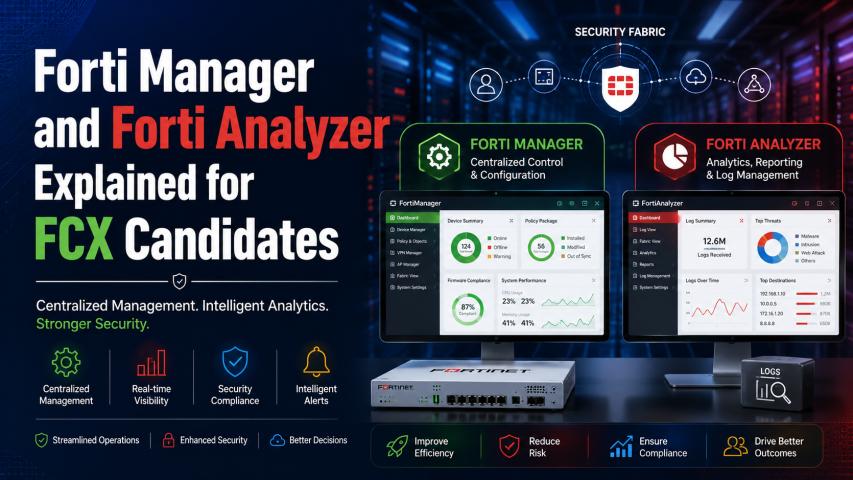
Provides real-time feedback and implements automated remediation. - FortiAnalyzer
and FortiSIEM
Offer centralized visibility and log correlation for security operations.
Through seamless integration, FortiSandbox transforms
detection into instantaneous protection across the entire network.
Deployment Models for FortiSandbox
Organizations can deploy FortiSandbox in multiple ways
depending on their size, compliance requirements, and infrastructure needs:
- Physical
appliance for maximum performance and on-prem control
- Virtual
machine for flexible scaling in private clouds
- Cloud-hosted
service for organizations seeking minimal setup
- Hybrid
deployment combining local analysis with cloud-based intelligence
This flexibility makes FortiSandbox suitable for SMEs, large
enterprises, and distributed environments.
Use Cases for FortiSandbox
Enterprises use FortiSandbox to strengthen various aspects
of their security architecture:
- Email
Security
Scans attachments to stop phishing and ransomware attacks. - Web
Traffic Protection
Analyzes downloads and scripts triggered by suspicious URLs. - Endpoint
Defense
Enhances detection when endpoints encounter suspicious files. - Incident
Response
Provides detailed forensic data to handle security events effectively. - Zero-Day
Protection
Identifies new malware variants before they spread.
Best Practices for Using FortiSandbox
To maximize its effectiveness:
- Enable
automatic file submission from FortiGate and FortiMail
- Integrate
FortiSandbox logs with FortiAnalyzer
- Use
cloud-based threat intelligence updates
- Configure
automation rules for instant blocking
- Regularly
review sandbox reports for threat patterns
Following these practices ensures faster threat detection
and reduced exposure.
Conclusion
FortiSandbox is a powerful solution for detecting advanced
threats that evade traditional security tools. By combining behavioral
analysis, multi-layer inspection, and seamless integration with the Fortinet
Security Fabric, it plays a pivotal role in modern cybersecurity strategies.
For professionals strengthening their expertise—or progressing through Fortinet NSE 4 training—understanding how to deploy and optimize FortiSandbox is
crucial for delivering comprehensive, real-world protection against sophisticated
cyberattacks.