
Any business owner is aware that “excellent customer service” is an absolute requirement, which is not an optional thing, but rather it's the difference between having an individual who sticks with you and the loss of clients without adequate informing of the boss. The new issues that people demand from a brand have increased dramatically over the last few years, and traditional support is unable to catch up.
This is where technology has started to change the game. With the demands of modern customer experience due to volume, speed, and personalization, companies are increasingly relying on AI-powered tools. What previously needed the help of people who worked around the clock in big teams might now be done in part by smart systems that learn from each interaction and act in real time.
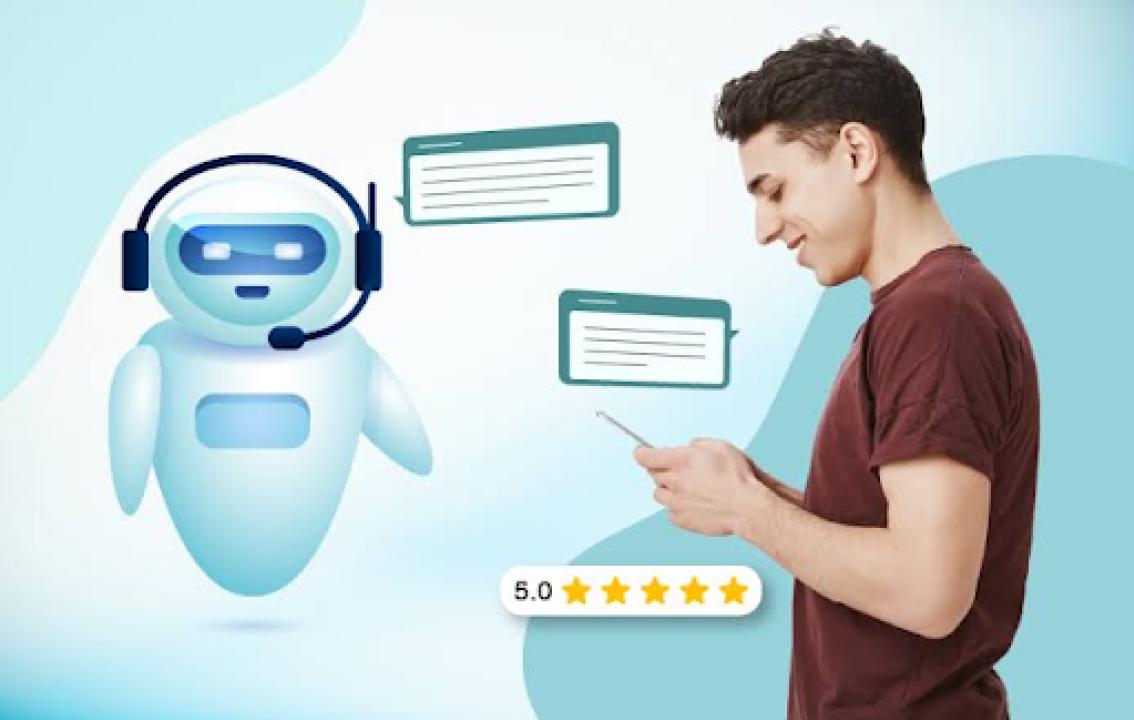
This evolution is driven around the concept of an AI concierge, a digital assistant that doesn't just respond to inquiries but actively understands and addresses needs, learning customer preferences and helping to navigate their interactions with a business. Together with a wider customer experience platform, this is helping businesses of any size to provide personal service at scale.
Why Customer Services Are Evolving So Quickly
Ten years ago, customer services consisted mostly of phone lines, some e-mail tickets, or perhaps a live chat widget that was added to a site. Customers have the expectation of immediate, cross-channel (chat, social media, SMS, voice) responses, and they want them to be the same, no matter which channel they are trying to call us.
This change did not occur in a flash. It is due to a number of factors:
Rising customer expectations: Consumers make comparisons between brands' support experience and the best they've ever had, not just in your industry, but other industries as well.
Always-on demand: Customer enquiries do not happen during working hours, and customers do not want to wait until Monday morning for a response.
Growing data availability: Businesses are now equipped with more data than they ever had on customers' behaviors, making the ability of personalization possible in ways that weren't feasible before.
Those that don't give thought to customer service end up losing ground rather fast. Conversely, those who invest in smarter systems see measurable gains in loyalty, retention, and word-of-mouth referrals.
What Makes an AI Concierge Different from Traditional Support Tools
While it may be easy to categorize all automated support tools under AI, it is not the same case for two types of AI: a basic chatbot and an actual AI concierge.
The typical chatbot is inflexible and always knows the exact sequence of “what to say.” It will handle a narrow range of questions that have already been programmed, and beyond that, it will cause frustration and will be handed over to a human agent. An AI concierge, on the other hand, is capable of comprehending context. Can then have a more natural conversation and make relevant suggestions, based on a customer's history and behavior.
It's similar to the distinction between a vending machine and an actual concierge at a hotel. But the vending machine will provide no more than you ask for. The concierge, however, is familiar with your tastes and your stay last time, and will know about something you didn't even know you were interested in.
This is the transformation that is taking place in the industry today. Businesses aren't only automated responses; they're attempting to replicate that type of caring, personal touch by means of technology when there is no human available around the clock.
The Role of a Customer Experience Platform
Many people think that AI concierge is a standalone service, but that is not the case. It is typically integrated into a larger customer experience solution that is the glue that holds all of the various touchpoints in which a customer interacts with a business together.
A good quality platform will usually feature:
Centralized inbox for communication channels, such as chat, e-mail, SMS messages, and social messaging.
Purchase history, past conversations, preferences, and behavior patterns of customers.
Automation tools: Workflows that trigger follow-ups, reminders, or personalized offers |
Response times, satisfaction scores, recurring issues and more – analytics and reporting.
These components need to interact and work together, creating a seamless support experience rather than one that is disjointed. Customers must not share their problem three times over three different channels. They are already known to the system and what they need.
This type of integration was previously reserved for enterprise-sized organisations, but is now available for small and mid-sized firms as well. But that's changed dramatically, and now the sophistication of these platforms is available to businesses of all sizes via easier-to-use platforms.
Real Benefits Businesses Are Seeing
It's not all sunshine here; the truth of the matter is that not every AI implementation provides businesses with the outcomes it desires. However, when carried out strategically, it results in some common shifts in customer experiences.
Faster response times: There's no waiting in line for a straightforward question. With an AI concierge handling common requests in real-time, human agents can concentrate on matters that demand their singular attention.
More consistent service: Automated systems have no vacation days! They use monotonous, precise, and detailed messaging in all interactions, thus promoting consistency throughout the branding process.
Improved scalable personalization: A human agent who manages dozens of conversations per day isn't always going to remember all of the customer's history. An AI-powered system can do this in real time, ensuring that each interaction is both personalized and relevant.
Reduced operational costs: This automated response engine can manage high-volume, repetitive inquiries, reducing the need for a larger customer support staff in the face of increasing customer numbers.
Improved customer retention: Humans are much more likely to stay around and get service when we're heard and assisted promptly, and more likely to recommend the business to others.
What to Look For Before Adopting AI Concierge Technology
Not all solutions are equally well-made, and business owners must be a little bit careful when it comes to selecting the solution, and must not take the initial solution they see.
Some practical factors that may need to be considered:
Does it play well with the other tools you are using? Failure to integrate with your CRM, email, or e-commerce system is going to lead to more friction than value for a concierge.
Do you have transparency in your escalation process? The most effective systems recognize the need for a handoff to one of their human agents at the right moment and not attempt to automate something for which it's not suited.
Is handling of data secure? Customer trust is based on the security of their data storage and use.
Can it indeed learn and adapt? A system that evolves over time and is built upon real interactions will do better than a system which remains static.
However, when businesses carefully consider these, the experience of buying or hiring a fan coach may turn out to be smoother, with improved long-term benefits, as compared to those who hasten the decision.
Looking Ahead
The direction is fairly clear at this point. Nowadays, customer service is transitioning to automation, not totally replacing humans, but working side by side with them. It is not always the business with the largest budget that is the one benefiting the most from this evolution; it is the company that has carefully considered the role that technology can play in its actual customers' journey rather than where it can reduce costs.
The closer AI concierge technology gets to grasping nuance, tone, and intent, the more it will distinguish itself from "automated" and become "personal", and the better it will get.
Frequently Asked Questions
What exactly does an AI concierge do?
More than just a scripted chatbot, it can help answer customer questions, recall prior conversations, and provide tailored recommendations.
Is AI concierge technology only useful for large companies?
No. Numerous platforms today are designed to scale and can therefore be accessible and convenient for a small or midsize business on the lookout for improved support without the need to employ a big team of individuals.
Will an AI concierge replace human customer service agents?
Not entirely. Most businesses rely on it for tasks and common queries, and human agents take care of critical and sensitive tasks that demand judgment and sensitivity.
How does a customer experience platform differ from a basic help desk?
A customer experience platform brings together all communication channels, customer data, and automation, while an ordinary help desk is simply a system that takes care of support tickets.
Is customer data safe when using AI-driven support tools?
This varies according to the source. Look for platforms that disclose their data security measures and specify their policies for customer information storage and usage.
Conclusion
Businesses and their customer service practices have changed, and there are no indications that it will end anytime soon. So, rather than endlessly growing their teams, businesses can now use tools such as AI concierge to provide quicker, more personalized support through a larger customer experience platform.
It is not only about keeping up with technology trends but also about ensuring customers are served in the way to which they are already accustomed - in an attentive, responsive manner.