Buying insurance has become more convenient with online platforms, digital documentation, and multiple policy options. At the same time, having more choices can make the decision-making process complicated. Customers may need to understand coverage, exclusions, deductibles, premiums, policy conditions, renewals, and claims before selecting a policy. This is where insurance brokers in India can play an important role.
An insurance broker can help customers understand available insurance options, assess their requirements, compare relevant policy features, and receive support during different stages of the insurance journey. However, not every broker offers the same services or customer experience. Understanding what brokers do and knowing how to compare them can help policy buyers conduct better research.
What Is an Insurance Broker?
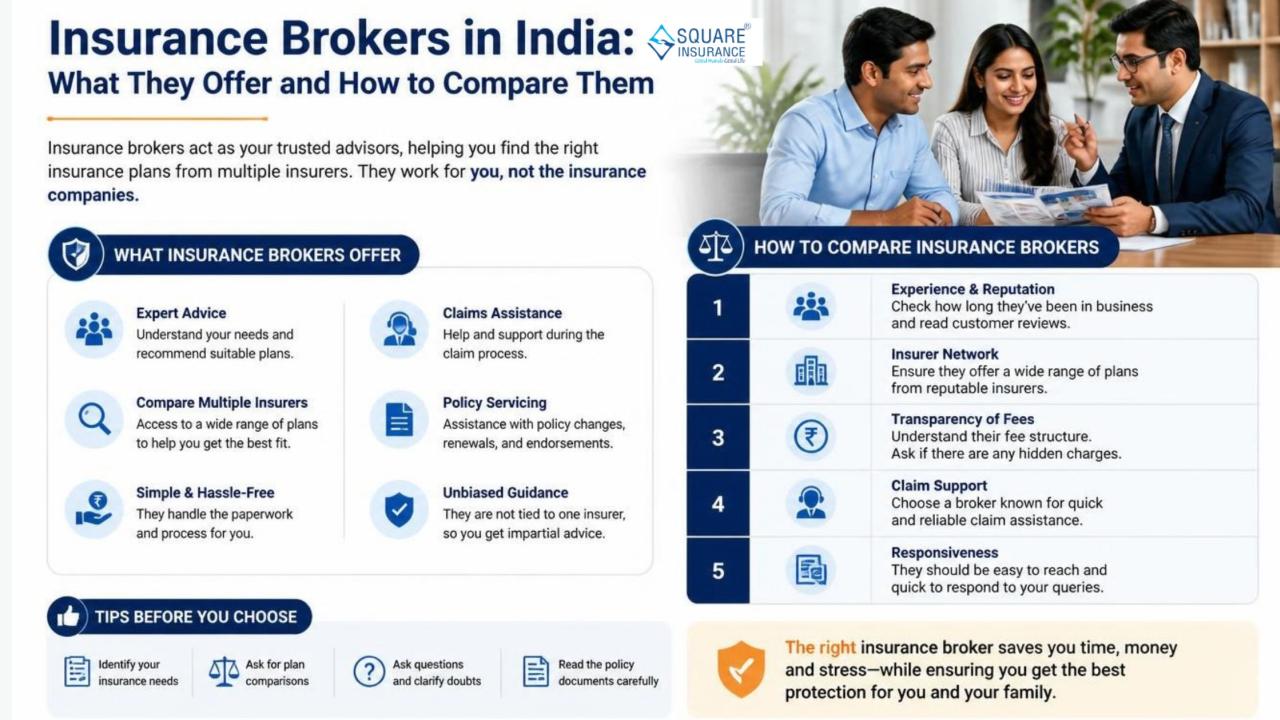
An insurance broker is an intermediary that assists customers with insurance-related requirements. Depending on the type of broking service and applicable regulations, brokers may support customers with policy selection, product information, documentation, policy servicing, renewals, and claims-related assistance.
Insurance brokers operate within the regulatory framework established by the Insurance Regulatory and Development Authority of India (IRDAI). Customers can verify relevant intermediary details before proceeding with an insurance transaction.
The regulatory framework is designed to support orderly insurance distribution and protect policyholders. Customers should therefore check the broker's credentials rather than relying only on advertisements or online claims.
What Services Do Insurance Brokers Offer?
The services offered can vary from one broker to another. Common areas of assistance may include:
Policy Selection Assistance
Brokers can help customers understand their insurance requirements and explain different policy options. For example, a person purchasing health insurance may need to consider coverage limits, waiting periods, exclusions, co-payment, deductibles, and other conditions.
Similarly, a motor insurance customer may need to understand third-party liability, own-damage coverage, deductibles, and optional add-ons.
Policy Comparison
Comparison is one of the areas where a broker can provide useful assistance. Customers can examine differences between available products instead of looking at one policy in isolation.
However, comparison should go beyond premium. A lower premium may come with different coverage conditions, exclusions, limits, or deductibles. Customers should evaluate the overall policy structure according to their requirements.
Documentation Support
Insurance involves documentation at the proposal, policy issuance, renewal, and claim stages. Brokers may help customers understand which documents are required and how information should be submitted.
Proper documentation can also make policy servicing more organised and reduce confusion when customers need to update or verify policy information.
Renewal Assistance
Insurance policies often require timely renewal to maintain continuity of coverage. Brokers may provide renewal reminders and help customers review available options before renewing.
Customers should still verify the renewal terms, premium, coverage, exclusions, and changes in policy conditions before proceeding.
Claims-Related Assistance
A broker may assist customers in understanding the claims process, documentation, and communication involved. However, customers should remember that the insurer assesses claims according to the applicable policy terms and conditions.
A broker cannot guarantee claim approval simply because the policy was purchased through the broker. Policyholders should carefully review their policy wording and follow the insurer's prescribed claim process.
How to Compare Insurance Brokers in India
Choosing a broker should involve more than comparing advertisements or promotional offers. Consider the following factors.
Check Regulatory Credentials
Start by verifying the broker's relevant registration and licence information. Regulatory verification provides an important first step when evaluating an intermediary.
IRDAI's Bima Bharosa platform specifically provides fields for complaints involving brokers, including broker name and broker licence number, highlighting the importance of keeping these details available.
Compare Areas of Expertise
Insurance requirements differ significantly between individuals and businesses. Some customers may need motor insurance, while others may require health, life, travel, or commercial insurance.
Look for a broker that has relevant experience in the insurance category you are researching. The broker should be able to explain important terminology and policy conditions in a clear manner.
Examine Transparency
A good comparison process should include clear information about coverage, exclusions, deductibles, policy limits, premiums, and applicable conditions.
Avoid making a decision based solely on verbal promises. Ask for important information in writing and read the policy document before making the final purchase.
Evaluate Customer Support
Customer service can become important after the policy is issued. Check how the broker handles policy-related queries, renewals, documentation, and claims assistance.
Consider whether support is available through convenient channels and whether your questions are answered clearly.
Look at Digital Services
In 2026, digital access has become an important part of insurance servicing. Customers may expect online policy documents, renewal reminders, digital communication, and convenient access to policy-related information.
Digital convenience can be useful, but customers should also verify that payment pages, websites, communication channels, and documents are genuine before sharing sensitive information.
Don't Compare Brokers Only on Price
A broker's service cannot always be measured by the lowest premium or a promotional offer. Policy buyers should consider the quality of information, range of services, transparency, responsiveness, and support available throughout the policy lifecycle.
The objective should be to understand the policy properly rather than simply finding the cheapest option.
What Should Customers Ask Before Choosing a Broker?
Before proceeding, customers can ask questions such as:
- What type of insurance policies do you assist with?
- What coverage options are available?
- What are the major exclusions and limitations?
- What documentation is required?
- What support is provided after policy issuance?
- How are renewals handled?
- What assistance is available during claims?
- How can I verify your regulatory credentials?
Clear answers to these questions can help customers understand what to expect from the broker.
Role of Square Insurance in Insurance Guidance
Square Insurance can be explored by customers looking for accessible information and guidance across different insurance categories. Whether someone is researching car insurance, bike insurance, health insurance, or life insurance, understanding coverage, policy features, renewals, and claims can help make the insurance journey more structured.
Customers should always compare policy conditions and review the final policy document before making an insurance decision.
Grievance Support for Policyholders
If a customer has a grievance involving an insurer or intermediary, the first step is generally to approach the insurer's designated grievance redressal mechanism. IRDAI's Bima Bharosa system also provides an online route for policyholders to register and track complaints.
Keeping policy documents, correspondence, payment records, and relevant broker details can make it easier to explain an issue if a complaint needs to be raised.
Conclusion
Insurance brokers in India can help simplify several parts of the insurance journey, including understanding policy options, comparing coverage, completing documentation, managing renewals, and navigating claims-related processes. However, customers should not select a broker solely because of price or promotional claims.
Before choosing an insurance broker, verify regulatory credentials, compare relevant services, assess transparency, examine customer support, and consider digital facilities. Most importantly, understand the policy's coverage, exclusions, limits, and conditions before purchasing.
A well-informed approach allows customers to use broker assistance effectively while keeping the final insurance decision aligned with their own financial requirements and coverage needs.
If you are interested in building a career in the insurance sector, explore our guide “What Are the Requirements to Become an Insurance Agent in 2026” to learn about eligibility, documentation, training, examination, and the steps involved in becoming an insurance agent.
FAQs
1. What is an insurance broker in India?
An insurance broker is an intermediary that helps customers understand, compare, and purchase insurance products. Brokers may also provide assistance with documentation, renewals, policy servicing, and claims-related processes.
2. What services do insurance brokers provide?
Insurance brokers may offer policy comparison, insurance guidance, documentation support, renewal assistance, policy servicing, and claims-related support, depending on their services.
3. How can I compare insurance brokers in India?
Compare brokers based on their regulatory credentials, areas of expertise, services offered, transparency, customer support, digital facilities, and claims-related assistance.
4. Should I choose an insurance broker based on the lowest premium?
Not necessarily. Premium is only one factor. Customers should also compare coverage, exclusions, deductibles, limits, policy conditions, and available services before making a decision.
5. Can an insurance broker help with claims?
A broker may assist with claim documentation and communication. However, the insurer evaluates and settles claims according to the terms and conditions of the applicable policy.