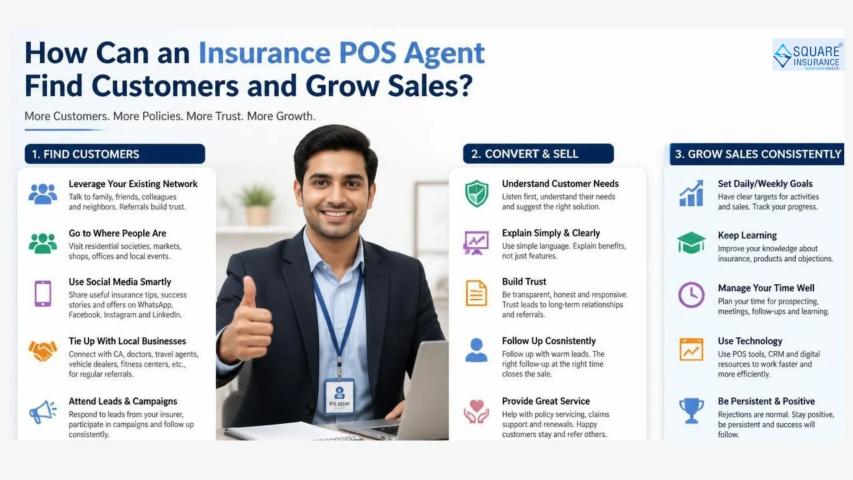
Finding customers is one of the biggest challenges for anyone starting an insurance distribution business. For an Insurance POS agent, selling is not simply about presenting a policy and asking for a purchase. It involves identifying the right prospects, understanding their requirements, explaining suitable coverage, building trust, and maintaining relationships after the sale.
In 2026, customers have more ways to research insurance than ever before. They may compare policies online, ask questions on social media, read reviews, or seek recommendations from people they trust. This creates opportunities for Insurance POS agents who combine personal guidance with digital customer engagement.
Understand Who Your Ideal Customers Are
The first step towards finding customers is knowing whom you want to serve. Instead of approaching everyone with the same insurance pitch, an Insurance POS agent can divide prospects according to their needs.
For example, a person who recently purchased a car may need motor insurance guidance, while a young family may be more interested in health or life protection. A business owner could have different insurance requirements from a salaried professional.
Creating simple customer categories helps an agent prepare more relevant conversations. It also prevents unnecessary sales pitches and makes communication more useful.
Start With Your Existing Network
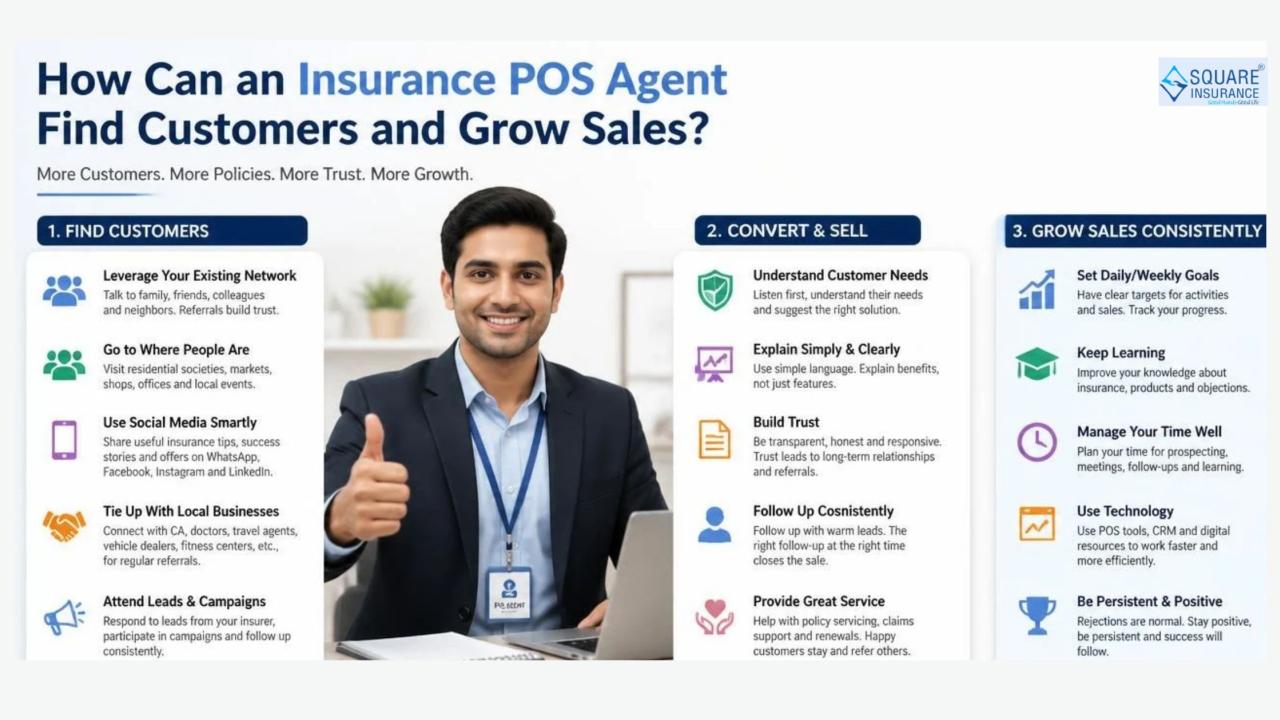
A new Insurance POS agent does not always need to begin with expensive advertising. Friends, relatives, former colleagues, neighbours, local professionals, and existing social contacts can become an initial source of prospects.
However, the objective should not be to pressure people into buying a policy. Instead, agents can inform their network that they provide insurance assistance and are available to answer questions about coverage, renewals, and policy options.
A helpful conversation can lead to referrals even when the person contacted does not immediately purchase insurance.
Use Digital Platforms to Reach More People
Digital communication can significantly expand an Insurance POS agent's reach. Platforms such as social media, messaging applications, email, and professional networking channels can help agents stay visible among potential customers.
An effective digital strategy should focus on useful information rather than constant promotional messages. An agent could share content explaining topics such as how motor insurance works, what customers should check before buying health insurance, why policy documents matter, or what to consider before renewal.
When customers repeatedly see useful and accurate information, the agent can gradually become a trusted source for insurance-related questions.
Create Content That Answers Customer Questions
One of the most effective ways to attract relevant prospects is to create content around questions customers actually ask.
For example, an Insurance POS agent could create short posts, videos, or articles around questions such as:
- What should I check before renewing my car insurance?
- How can I compare insurance coverage?
- What information is required when buying a policy?
- Why should customers understand exclusions?
- What should I do after purchasing an insurance policy?
This approach can attract people who are already researching insurance. Instead of chasing completely cold leads, the agent can connect with prospects who have demonstrated an interest in solving a particular problem.
Build Trust Before Asking for a Sale
Insurance is based on financial protection, so trust plays a major role in the customer's decision. An agent who focuses only on closing a sale may lose the opportunity to build a long-term relationship.
A better approach is to explain the relevant policy features clearly, discuss important conditions, avoid unrealistic promises, and encourage customers to understand what they are purchasing.
For instance, if a customer asks about a health insurance policy, the agent should explain relevant coverage features as well as applicable exclusions, waiting periods, limits, or conditions rather than presenting only the attractive benefits.
Transparent communication can make customers more confident in their decisions.
Follow Up Without Becoming Pushy
Many potential customers do not purchase insurance during their first interaction. They may need time to compare options, discuss the decision with family members, arrange documents, or review their budget.
This is where systematic follow-up can help.
An Insurance POS agent can maintain a simple prospect list containing customer requirements, previous conversations, renewal dates, and follow-up schedules. Instead of repeatedly sending the same sales message, the agent can provide relevant information based on the customer's situation.
A polite follow-up such as asking whether the customer has any questions can be more effective than repeatedly asking whether they are ready to buy.
Turn Existing Customers Into Referral Opportunities
Satisfied customers can become an important source of new business. After successfully assisting a customer, an Insurance POS agent can request referrals in a professional manner.
For example, if a customer appreciates the support received during policy selection or renewal, the agent can ask whether they know anyone else who may need similar assistance.
Referral-based growth can be valuable because prospects often feel more comfortable speaking with an agent recommended by someone they already trust.
Focus on Customer Retention, Not Just New Sales
Growing sales should not mean constantly searching for new customers while ignoring existing ones. Insurance is a relationship-driven industry, and existing customers may have future insurance requirements.
An agent can stay connected by providing timely renewal reminders, responding to questions, helping customers understand policy-related information, and maintaining accurate records.
Good service can increase the possibility of repeat business and referrals. It can also help an Insurance POS agent develop a stronger customer base over time.
Use Simple Digital Tools to Organise Leads
Managing customer information manually can become difficult as the business grows. Basic digital tools can help agents organise prospects, follow-ups, renewal reminders, communication history, and customer requirements.
The purpose is not to use complicated technology. Even a well-maintained spreadsheet, calendar, customer-management system, or authorised insurance platform can help an agent avoid missed follow-ups.
Agents should also handle customer information responsibly and use only authorised systems and processes for insurance-related activities.
Measure What Is Actually Working
An Insurance POS agent can improve sales by tracking basic performance indicators. Instead of focusing only on the number of policies sold, it can be useful to monitor how many leads were generated, how many prospects responded, how many conversations became quotations, and which customer sources produced genuine enquiries.
Suppose an agent receives ten enquiries from social media but converts more customers through referrals. That information can help the agent invest more effort in referral relationships while improving the digital strategy.
Consistent measurement turns sales activity into a repeatable process rather than guesswork.
How square insurance Can Fit Into the Customer Journey
For agents exploring insurance distribution opportunities, square insurance can be considered as part of the broader journey of understanding insurance products, customer requirements, digital processes, and available support.
The exact products, permissions, onboarding requirements, and compensation arrangements can vary according to the applicable distribution structure. Agents should understand these terms clearly before beginning their insurance activities.
Conclusion
An Insurance POS agent does not need to depend on one method to find customers. A combination of personal networking, referrals, useful digital content, customer education, timely follow-ups, and strong after-sales service can create a more sustainable approach to sales growth.
The strongest long-term strategy is not simply to sell more policies. It is to become a reliable point of guidance for customers. When an agent understands customer needs, communicates transparently, uses digital tools responsibly, and maintains relationships beyond the initial transaction, customer acquisition and retention can become more consistent.
For an Insurance POS agent, sustainable growth comes from trust, relevance, follow-up, service, and continuous learning—not from aggressive selling alone.
Frequently Asked Questions
1. How can an Insurance POS agent find new customers?
An Insurance POS agent can find customers through personal networks, referrals, social media, digital content, local networking, existing customer relationships, and online enquiries. Understanding the target audience can also help generate more relevant leads.
2. What is the best way for an Insurance POS agent to generate leads?
There is no single best method for every agent. Referrals, educational content, social media engagement, networking, and consistent follow-ups can all contribute to lead generation when used appropriately.
3. Can an Insurance POS agent use social media to find customers?
Yes. Social media can help agents reach potential customers by sharing useful insurance information, answering common questions, and building professional credibility. Communication should remain accurate, transparent, and compliant with applicable requirements.
4. How can an Insurance POS agent convert leads into sales?
Agents can improve conversions by understanding customer needs, explaining relevant policy features clearly, addressing questions, discussing important conditions, and following up at the right time instead of using aggressive sales tactics.