Interior design
is about much more than making a room look beautiful. It involves understanding
how people use spaces, planning layouts, selecting suitable materials, working
with colours and lighting, managing budgets, and turning design ideas into functional
interiors. If you enjoy creativity and want to build a career in this field,
choosing the right interior design course is an important first step.
However, with
so many training options available, deciding where to study can feel confusing.
Some programmes focus mainly on theory, while others offer practical
assignments, workshops, site exposure, and opportunities to work on real design
projects. Understanding these differences can help you choose a course that
matches your career goals.
If you are exploring
interior design courses in bangalore, this guide explains what to look for
before enrolling, which skills matter, and how to evaluate whether a training
programme offers genuine value.
1. Start by Understanding Your Career Goals
Before
comparing institutes, think about what you want to achieve through interior
design training. Do you want to work with an interior design firm, join an
architecture or construction company, specialise in residential interiors, or
eventually start your own design business?
Your career
goals can influence the type of programme you choose.
For example,
someone interested in residential interiors may want to focus on space
planning, furniture layouts, lighting, colour combinations, material selection,
and kitchen or wardrobe design. Someone who wants to work on commercial
projects may also need to understand office layouts, retail spaces,
circulation, and functional design requirements.
A good training
programme should help you develop a strong foundation before introducing more
advanced concepts. It should also give you a clearer understanding of how
interior designers work with clients, contractors, suppliers, and other
professionals.
You do not need
to know everything about the industry before joining. However, having a general
career direction will help you ask the right questions when comparing
institutes.
2. Look Beyond the Course Name and Check the Curriculum
Not every
interior design course covers the same subjects. Before enrolling, request a
detailed syllabus and understand what you will actually learn during the
programme.
A well-rounded
curriculum should combine creative thinking with technical knowledge. Depending
on the programme, important subjects may include:
- Design fundamentals: Elements and principles of
design, colour theory, balance, proportion, texture, and visual
composition.
- Space planning: Arranging furniture and other
elements to create comfortable, functional spaces.
- Materials and finishes: Understanding flooring, wall
finishes, laminates, tiles, fabrics, furniture materials, and their
practical applications.
- Lighting design: Learning how natural and
artificial lighting influence the appearance and usability of a space.
- Furniture and interior detailing: Understanding furniture layouts,
storage solutions, kitchens, wardrobes, and other interior elements.
- Technical drawings: Learning to communicate design
ideas through floor plans, elevations, sections, and working drawings.
- Design software: Getting practical exposure to
relevant drafting, modelling, and visualisation tools, depending on the
course syllabus.
- Project planning: Understanding measurements,
budgeting, material selection, coordination, and the process of executing
a design.
A course should
not simply introduce these topics by name. Ask how they are taught, how much
practical work is included, and whether you will complete assignments that
demonstrate your understanding.
When comparing
interior design courses in bangalore, reviewing the curriculum carefully can
help you distinguish a structured learning programme from one that offers only
a basic introduction to the subject.
3. Choose Practical Learning Over Theory Alone
Interior design
is a hands-on profession. Knowing design principles is important, but applying
them to an actual space is what helps students understand the challenges of
real projects.
Imagine
designing a living room. You may have a clear idea of the colours, furniture,
and lighting you want to use. But can you create a workable layout? Have you
considered movement between furniture pieces, electrical points, natural light,
storage requirements, material costs, and the client's preferences?
Practical
exercises help students answer these questions.
Look for an
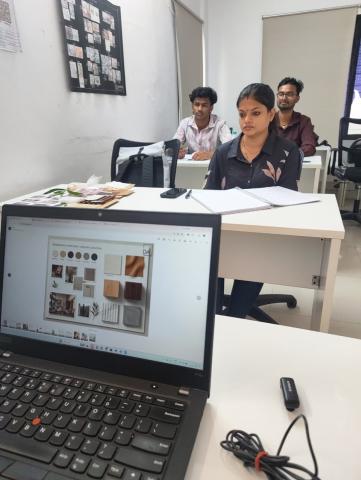
interior design course that includes design assignments, drawing practice,
material exploration, presentations, and project-based learning. Workshops and
demonstrations can also help you understand how design decisions affect the
finished space.
Site visits and
factory visits, where included, offer another valuable perspective. They can
help you observe materials, finishes, furniture production, construction
details, and the relationship between a design concept and its execution.
Before
enrolling, ask the institute how frequently students participate in practical
activities and whether these experiences are part of the regular curriculum.
4. Ask Whether You Will Work on Live Interior Design
Projects
One of the most
useful questions to ask an institute is whether students get an opportunity to
understand the complete design process through a project.
A live
residential project may involve studying a client's requirements, measuring a
space, preparing layouts, selecting materials, developing drawings, considering
budgets, and understanding execution requirements. The exact level of student
involvement will depend on the project and the supervision provided.
Working through
these stages helps you connect classroom learning with the decisions interior
designers make in professional environments.
At Eduleem,
students can explore practical learning opportunities that include a
three-month internship with one live residential interior project, subject to
project availability and programme arrangements. Project types may include
1BHK, 2BHK, 3BHK homes, or villas, depending on the opportunities available.
When evaluating
any institute, clarify what the internship involves, whether you will receive
guidance from experienced professionals, and what work you are expected to
complete. Ask whether you will contribute to drawings, planning, material
selection, presentations, or other project activities.
The goal is not
just to add an internship to your résumé. It is to gain meaningful exposure
that helps you understand how interior design works outside the classroom.
5. Evaluate the Trainers and Their Industry Experience
The quality of
instruction can make a significant difference to your learning experience.
Interior design involves both creative judgement and technical decision-making,
so it helps to learn from trainers who understand how design concepts are
applied in practice.
When speaking
with an institute, ask about the trainers' experience, teaching approach, areas
of specialisation, and the kind of projects they have worked on.
It is also
worth understanding how students receive feedback. Do trainers review
assignments individually? Can you ask questions when you find a concept
difficult? Will you receive guidance while developing your projects?
Good mentorship
should help you identify mistakes, improve your design decisions, and develop
confidence in presenting your ideas.
You should feel
comfortable asking questions and discussing alternative solutions. Design
education works best when students are encouraged to think critically rather
than simply reproduce examples shown in class.
6. Check the Software Training and Portfolio
Opportunities
Interior
designers need to communicate ideas clearly. Depending on the role and
employer, this may involve hand-drawn sketches, technical drawings, 3D models,
rendered views, presentations, or a combination of these.
Before choosing
an interior design course, ask which software tools are covered and how much
time is allocated to hands-on practice. The right tools will depend on the
curriculum and the type of work you want to pursue.
Software
knowledge alone, however, is not enough. You also need to understand the design
decisions behind the drawings and visualisations.
A portfolio
brings these skills together. It can showcase your floor plans, mood boards,
material selections, design concepts, 3D views, and completed assignments. A
well-organised portfolio gives prospective employers or clients a clearer
picture of your approach to design.
Ask whether the
programme includes portfolio development and whether trainers help students
improve the presentation and explanation of their work.
If you are a
beginner, your portfolio does not need to contain professional projects from
day one. Student projects can demonstrate your progress, creativity, technical
understanding, and ability to solve design problems.
7. Understand the Duration, Fees, and Overall Value
Course fees are
an important consideration, but the lowest-priced programme is not
automatically the best option. Instead of comparing fees alone, evaluate what
is included.
Consider the
following questions:
- What is the total course duration?
- Is the curriculum clearly
structured?
- Are practical sessions and
software training included?
- Are workshops, site visits, or factory
visits offered?
- Is an internship available, and
what does it involve?
- Are learning materials or
software-related resources provided?
- Is portfolio development part of
the training?
- Are career guidance and placement
assistance available?
- Are there any additional charges
beyond the advertised course fee?
The answers
will help you understand the overall value of the programme.
Also, check
whether the class schedule suits your circumstances. If you are a recent school
student, a college student, or someone planning a career change, you may have
different time and learning requirements.
Before making a
payment, request clear information about fees, instalment options if available,
attendance requirements, assessment methods, and the institute's policies.
A transparent
institute should be able to explain what you are paying for and what you can
reasonably expect from the training.
8. Ask About Internship Support and Career Guidance
Completing a
course is an important milestone, but students often need additional guidance
when preparing to enter the industry.
Career support
can include résumé preparation, interview practice, portfolio reviews, guidance
on job applications, and information about relevant opportunities. These
services can help students present their skills more effectively.
When
researching interior design courses in Bangalore, ask whether the institute
provides placement assistance and how that support works. Find out whether
students receive help identifying suitable roles, preparing for interviews, or
presenting their portfolios to potential employers.
It is important
to understand the difference between placement assistance and a guaranteed job.
Career outcomes depend on several factors, including your skills, portfolio,
communication, performance in interviews, and the opportunities available at
the time.
You can also
research the types of roles available to interior design graduates. Depending
on your skills and experience, possible career paths may include junior
interior designer, design assistant, CAD drafter, 3D visualisation artist, or
residential design professional.
Over time,
further experience may open opportunities in project coordination, specialised
design services, or independent practice.
9. Research the Institute Before Making a Decision
A website or
advertisement can provide an overview, but it should not be your only source of
information.
Speak with the
admissions team and ask specific questions about the curriculum, practical
training, projects, trainers, and career support. If possible, visit the campus
and understand the learning environment.
You can also
look for examples of student work, reviews, course information, and details
about the institute's facilities. When reading reviews, look for specific
comments about teaching quality, practical exposure, trainer support, and the
overall learning experience rather than relying only on star ratings.
If you are
comparing several institutes, create a simple checklist and evaluate each one
against the same criteria. This makes it easier to identify which programme
aligns with your expectations.
Most
importantly, choose an institute based on the quality and relevance of its
training, not just on promotional claims.
10. Why Consider Eduleem for Interior Design Training in
Bangalore?
If you are
looking for an interior design course that combines creative learning with
practical exposure, Eduleem offers a programme designed to help students build
foundational knowledge and develop industry-relevant skills.
The learning
experience focuses on understanding design concepts and applying them through
practical activities. Students can explore areas such as space planning,
material selection, design development, and the technical aspects of interior
spaces.
Key learning
opportunities at Eduleem include:
- Experienced trainers: Learn design concepts with
guidance from trainers who support your learning and skill development.
- Updated curriculum: Build knowledge across important
interior design concepts and practical applications.
- Practical learning: Strengthen your understanding
through assignments, workshops, and project-based activities.
- Factory visits: Gain exposure to materials and
aspects of production that can help you understand how interior elements
are made.
- Internship and live project
exposure: Explore a
three-month internship with one live residential interior project, subject
to project availability and programme arrangements.
- Career guidance: Access support such as résumé
guidance, interview preparation, and placement assistance, as offered
through the programme.
These elements
can help you connect classroom concepts with the work involved in designing and
developing interior spaces.
Before
enrolling, speak with the Eduleem team to confirm the current course duration,
syllabus, batch schedule, internship arrangements, and available support. This
will help you decide whether the programme fits your goals.
Final Thoughts: Choose a Course That Helps You Build Real
Skills
Choosing the
right interior design training programme requires more than comparing course
names or fees. You need to understand what you will learn, how you will
practise, who will guide you, and whether the programme helps you develop the
skills needed to move towards your career goals.
Focus on a
balanced curriculum, practical assignments, relevant software training,
portfolio development, project exposure, and clear information about career
support. Ask questions, compare your options, and take time to understand what
each institute offers.
The right
training can give you a stronger foundation for exploring opportunities in
residential interiors, commercial spaces, design firms, and other areas of the
industry.
If you are
searching for interior design courses in bangalore, start by identifying the
skills you want to develop and comparing programmes that provide a clear
pathway from learning design concepts to applying them in practice.
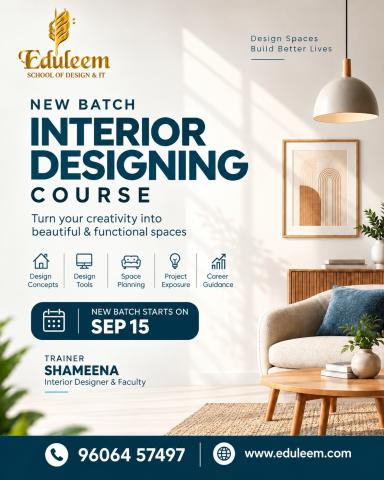
New Batch Starting Soon at Eduleem!
Ready to take
your first step towards a career in interior design? Connect with Eduleem to
learn more about the course, upcoming batches, practical training
opportunities, and admission details.
For more
details:
Call: 96064 57497
Website: https://www.eduleem.com
Take the first
step towards turning your interest in design into practical skills and future
career opportunities.