A Web3 development company helps businesses build decentralized applications, implement blockchain solutions, and create smart contracts that run on distributed networks. These specialized firms provide technical expertise in blockchain protocols, cryptocurrency integration, and decentralized architecture. Businesses partner with Web3 developers to create NFT marketplaces, DeFi platforms, decentralized exchanges, and blockchain-based business solutions that operate without central authorities.
Working with a Web3 development company differs from traditional software partnerships. The technology stack includes blockchain networks, cryptographic systems, and decentralized storage. Projects require specialized knowledge of smart contract languages, consensus mechanisms, and token economics. This guide explains what businesses need to know about Web3 development services, implementation strategies, and how to successfully execute blockchain projects.
What Web3 Development Services Include
Decentralized Application Development
Decentralized applications (dApps) run on blockchain networks instead of centralized servers. Web3 development companies build dApps for various business purposes including supply chain tracking, identity verification, digital asset management, and peer-to-peer marketplaces.
These applications connect frontend user interfaces with smart contracts deployed on blockchains. The architecture separates business logic stored on-chain from presentation layers that users interact with. This structure provides transparency since anyone can verify smart contract code and transaction history.
Development companies handle the complete dApp lifecycle from concept design through deployment and maintenance. They create user interfaces that simplify blockchain interactions, implement wallet connections for authentication, and build backend services that index blockchain data for efficient querying.
Smart Contract Creation and Deployment
Smart contracts are self-executing programs that automatically enforce agreements when predefined conditions are met. They eliminate intermediaries by encoding business rules directly into blockchain code that executes transparently and immutably.
Web3 development companies write smart contracts for various business functions such as automated payments, access control, token distribution, and multi-signature approvals. They select appropriate programming languages based on target blockchain platforms—Solidity for Ethereum, Rust for Solana, or Move for Aptos.
The development process includes writing contract code, conducting security audits, testing on test networks, and deploying to production blockchains. Companies implement gas optimization techniques to reduce transaction costs and design upgrade mechanisms when contract modifications may be needed.
Blockchain Integration Services
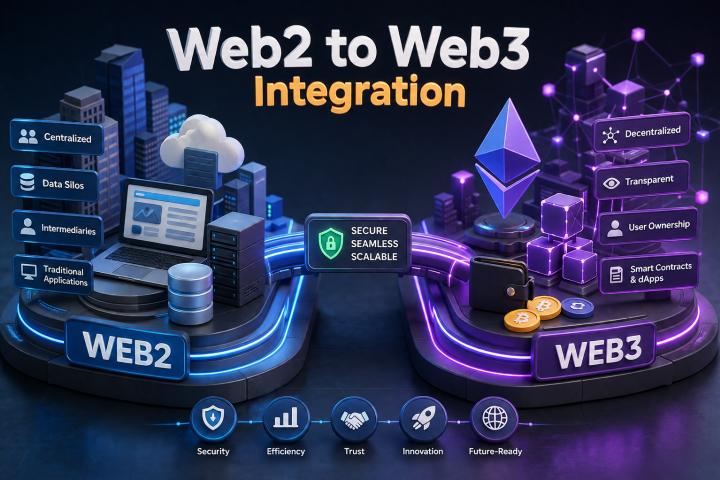
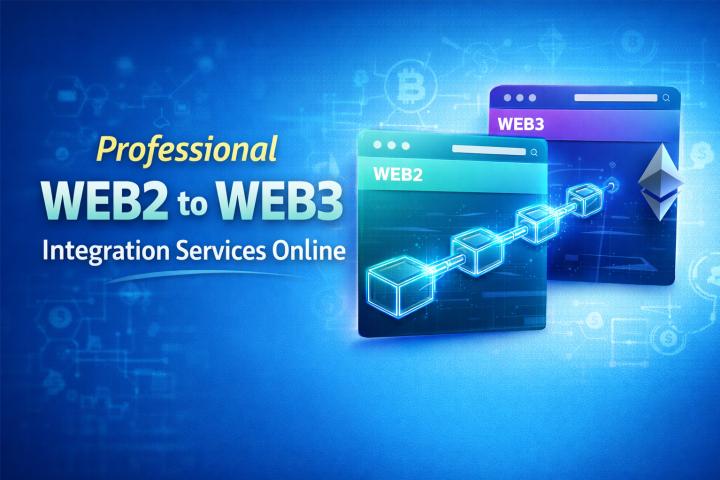
Many businesses want to add blockchain capabilities to existing systems rather than building entirely new applications. Web3 development companies provide integration services that connect traditional databases, APIs, and business systems with blockchain networks.
Integration projects might include adding cryptocurrency payment options to e-commerce platforms, recording supply chain events on blockchains, or creating blockchain-backed authentication systems. The development company builds middleware that translates between traditional system formats and blockchain transactions.
These integrations maintain existing user experiences while adding blockchain benefits like transparency, immutability, and decentralization. The development team handles technical challenges around transaction confirmation times, blockchain data retrieval, and synchronization between on-chain and off-chain systems.
Token Development and NFT Solutions
Tokens represent digital assets on blockchain networks. Web3 development companies create fungible tokens (cryptocurrencies) and non-fungible tokens (NFTs) for various business applications including loyalty programs, digital collectibles, access credentials, and asset tokenization.
Token development involves writing smart contracts that implement standard protocols like ERC-20 for fungible tokens or ERC-721 for NFTs. Companies design token economics including supply limits, distribution mechanisms, and utility functions within the business ecosystem.
NFT projects require additional infrastructure for metadata storage, media hosting, and marketplace integration. Development companies build minting platforms, create rarity systems, implement royalty mechanisms, and develop marketplaces where users can trade digital assets.
Business Benefits of Web3 Technology
Transparency and Trust Building
Blockchain technology creates transparent systems where all transactions are publicly recorded and verifiable. This transparency builds trust with customers, partners, and regulators who can independently verify business operations without relying on company claims.
Smart contracts execute exactly as programmed with no possibility of manipulation or selective enforcement. Business rules become visible to all participants, reducing disputes about contract terms or execution. This transparency particularly benefits industries where trust issues have historically limited efficiency.
Public blockchains allow anyone to audit transaction history, verify asset ownership, or check contract interactions. Businesses can prove their operations without requiring third-party auditors or intermediaries. This verification capability creates new business models based on provable honesty.
Reduced Operational Costs
Decentralized systems eliminate many intermediary costs that traditional businesses incur. Smart contracts automate processes that previously required manual verification, reducing administrative overhead and processing delays.
Payment processing fees decrease when using cryptocurrency transactions instead of traditional payment networks. International transfers happen directly between parties without correspondent banks. Settlement times drop from days to minutes, improving cash flow and reducing financing costs.
Blockchain-based systems reduce reconciliation expenses since all parties share the same transaction records. Disputes decrease when contract execution is automatic and transparent. These efficiency gains compound across supply chains and multi-party business relationships.
Enhanced Security Features
Blockchain networks use cryptographic security that makes unauthorized changes extremely difficult. Distributed storage across thousands of nodes means no single point of failure that attackers can exploit. The technology provides better security than centralized databases vulnerable to breaches.
Smart contracts eliminate certain fraud vectors since code execution is deterministic and transparent. Users control private keys that authorize transactions rather than trusting third parties with account access. This architecture shifts security responsibility but reduces risks from centralized vulnerabilities.
Immutability prevents tampering with historical records, creating reliable audit trails for compliance and dispute resolution. Businesses gain cryptographic proof of transactions that courts and regulators can independently verify.
New Revenue Opportunities
Web3 technology enables business models impossible with traditional infrastructure. Token economics allow businesses to create digital assets with programmed scarcity, automatic royalties, and built-in incentives that align participant interests.
NFTs create new revenue streams from digital goods, membership programs, and branded collectibles. DeFi protocols generate fees from automated financial services. Decentralized marketplaces reduce platform costs while maintaining transaction convenience.
Blockchain integration opens access to cryptocurrency markets and global user bases. Businesses can accept payments in digital currencies, participate in decentralized finance ecosystems, and create products for Web3-native customers.
Types of Web3 Projects for Different Industries
Financial Services and DeFi Applications
Decentralized finance (DeFi) recreates banking services like lending, borrowing, trading, and insurance using smart contracts instead of financial institutions. Web3 development companies build DeFi protocols that operate automatically without traditional intermediaries.
Lending platforms allow users to deposit cryptocurrencies to earn interest or borrow against collateral. Automated market makers enable token swapping without order books. Yield farming protocols provide returns on cryptocurrency deposits. These services run continuously without business hours or geographic restrictions.
Financial institutions adopt blockchain technology for settlements, cross-border payments, and tokenized securities. Development companies create private or consortium blockchains for institutional use while maintaining regulatory compliance and privacy requirements.
Supply Chain and Logistics Solutions
Supply chain businesses use blockchain to track products from manufacture through delivery. Web3 development companies build systems that record each supply chain step on immutable ledgers, creating transparent product histories.
Smart contracts automate supply chain processes like payment release upon delivery confirmation, quality certifications, and inventory management. All participants access shared transaction records that eliminate reconciliation disputes and reduce paperwork.
Blockchain-based supply chains combat counterfeiting by providing verifiable product authenticity. Consumers can scan product codes to view complete provenance information. Businesses gain insights from transparent supply chain data while protecting competitive information through selective disclosure.
Gaming and Entertainment Platforms
Web3 gaming introduces true digital ownership where players control in-game assets as NFTs. Development companies create games where items can be traded on open markets, carried between games, or sold to other players.
Play-to-earn models reward players with cryptocurrency tokens for gameplay achievements. These tokens can be traded or used within game economies. Blockchain-based games create player-owned economies rather than company-controlled ecosystems.
Entertainment platforms use NFTs for digital collectibles, fan engagement, and exclusive content access. Musicians sell limited edition releases as NFTs with built-in royalty payments. Development companies build marketplaces, auction platforms, and community features around digital entertainment assets.
Real Estate and Property Management
Real estate tokenization divides property ownership into digital shares tradable on blockchain platforms. Web3 development companies create systems for fractional property investment that increase liquidity in traditionally illiquid markets.
Smart contracts automate rental agreements, property transfers, and payment distributions. Blockchain records provide transparent property histories including ownership, liens, and transaction prices. This transparency reduces fraud and streamlines property transactions.
Property management systems use blockchain for tenant applications, lease agreements, and maintenance records. Tokenized real estate enables new investment structures and reduces barriers to property ownership.
Technical Components of Web3 Development
Blockchain Platform Selection
Choosing the right blockchain platform affects application performance, costs, and capabilities. Web3 development companies evaluate platforms based on transaction speed, security features, developer tools, and ecosystem maturity.
Ethereum offers the largest developer community and most established DeFi ecosystem but faces higher transaction costs. Solana provides fast transactions and low fees but uses different programming models. Polygon offers Ethereum compatibility with improved scalability.
Platform selection depends on project requirements around decentralization, throughput, finality time, and smart contract capabilities. Development companies often build multi-chain applications that operate across several blockchain networks to reach broader user bases.
Smart Contract Programming Languages
Different blockchains use different programming languages for smart contract development. Solidity dominates Ethereum and EVM-compatible chains with extensive libraries and developer resources. Rust powers Solana contracts with performance advantages and memory safety features.
Language choice affects development speed, security characteristics, and available tooling. Solidity's maturity means more existing code examples and security audit tools. Newer languages like Move provide better security guarantees but smaller developer communities.
Web3 development companies maintain expertise across multiple languages to serve projects on different platforms. They select languages based on blockchain platform, security requirements, and development timeline constraints.
Wallet Integration Methods
Cryptocurrency wallets serve as user authentication and transaction authorization systems in Web3 applications. Development companies integrate multiple wallet types to maximize user accessibility.
Browser extension wallets like MetaMask work with desktop applications. Mobile wallet apps provide smartphone access. Hardware wallets offer maximum security for high-value transactions. Each wallet type requires specific integration approaches.
Wallet connections must handle account switching, network changes, and signature requests smoothly. Applications should detect available wallets automatically and guide users through connection processes. Proper wallet integration significantly impacts user experience quality.
Decentralized Storage Solutions
Storing large files on blockchains is prohibitively expensive. Web3 applications use decentralized storage networks like IPFS, Arweave, or Filecoin for media files, documents, and application assets.
These systems distribute file storage across networks of nodes rather than centralized servers. Files are addressed by content hashes that guarantee data integrity. Decentralized storage provides censorship resistance and permanent data availability.
Development companies implement hybrid storage architectures where smart contracts store critical data on-chain while larger files reside on decentralized storage networks. Applications retrieve and verify off-chain content using cryptographic proofs.
Development Process and Project Phases
Discovery and Planning Stage
Web3 projects begin with detailed requirement gathering to understand business objectives, target users, and success criteria. Development companies work with stakeholders to define application scope, features, and technical architecture.
This phase includes competitive analysis of existing solutions, feasibility assessment of proposed features, and risk identification. Companies create technical specifications, user flow diagrams, and system architecture documents that guide development.
Planning defines the blockchain platform, smart contract structure, off-chain components, and integration points with existing systems. Clear requirements documentation prevents scope creep and aligns expectations between businesses and development teams.
Design and Prototyping
User interface design for Web3 applications balances blockchain functionality with familiar user experiences. Designers create interfaces that explain blockchain interactions without overwhelming non-technical users.
Prototypes demonstrate core functionality and user flows before full development begins. Interactive mockups allow stakeholders to experience the application and provide feedback early when changes cost less to implement.
Smart contract architecture design happens during this phase. Developers create contract diagrams showing relationships between contracts, data structures, and function interactions. This planning prevents costly redesigns after deployment.
Development and Testing Cycles
Web3 development follows iterative cycles where developers build features, test functionality, and refine code. Smart contract development requires particularly rigorous testing since deployed contracts are difficult to modify.
Developers write automated tests covering normal operations and edge cases. Security testing identifies vulnerabilities like reentrancy attacks, integer overflows, or access control issues. Gas optimization reduces transaction costs without sacrificing functionality.
Frontend development creates user interfaces that connect with smart contracts through Web3 libraries. Testing verifies that interfaces correctly display blockchain data, handle transaction signing, and manage error states.
Deployment and Launch
Smart contract deployment requires careful planning since contracts become permanent parts of blockchain history. Development companies deploy first to test networks for final validation before mainnet launch.
Deployment includes verifying contract source code on blockchain explorers, configuring initial parameters, and transferring ownership to appropriate addresses. Frontend applications are deployed to hosting services with proper configuration for mainnet contract addresses.
Launch strategies might include soft launches to limited user groups, progressive feature rollouts, or coordinated marketing campaigns. Development companies monitor applications closely after launch to identify and address unexpected issues.
Security Considerations for Web3 Projects
Smart Contract Audit Procedures
Security audits examine smart contract code for vulnerabilities that could result in financial losses. Independent auditors review code line-by-line searching for common vulnerability patterns and logic errors.
Audit processes include automated scanning tools that detect known vulnerability signatures, manual code review by security experts, and attack simulations to test contract resilience. Auditors produce reports detailing findings categorized by severity.
Businesses should require security audits before deploying contracts that handle significant value. Multiple audits from different firms provide better security assurance. Audit results inform code improvements that strengthen contract security.
Access Control Implementation
Smart contracts need proper access control to prevent unauthorized actions. Development companies implement role-based permissions that restrict sensitive functions to authorized addresses.
Multi-signature requirements protect high-value operations by requiring multiple parties to approve transactions. Time locks delay sensitive actions, providing opportunities to detect and prevent unauthorized changes.
Access control systems must balance security with usability. Overly restrictive controls frustrate legitimate users while insufficient controls create security vulnerabilities. Proper design requires understanding threat models and operational requirements.
Upgrade Mechanisms and Governance
Immutable smart contracts cannot be modified after deployment, creating challenges when bugs are discovered or requirements change. Development companies implement upgrade patterns that allow controlled contract modifications.
Proxy patterns separate contract logic from data storage, enabling logic updates without losing existing data. Governance systems allow token holders to vote on proposed upgrades. Time-locked upgrades provide security review periods.
Upgrade mechanisms introduce centralization risks that conflict with decentralization goals. Projects must balance update capabilities against trustlessness. Clear governance procedures and upgrade constraints maintain user confidence.
Ongoing Maintenance and Support Needs
Monitoring and Performance Tracking
Web3 applications require continuous monitoring to detect issues and optimize performance. Development companies implement monitoring systems tracking contract interactions, transaction success rates, and gas consumption patterns.
Blockchain monitoring differs from traditional application monitoring since contract code cannot be modified. Monitoring focuses on detecting anomalies, tracking user behavior, and identifying optimization opportunities in off-chain components.
Performance tracking includes analyzing transaction costs, measuring user experience metrics, and monitoring blockchain network health. This data informs decisions about gas optimization, network selection, and feature improvements.
Feature Updates and Enhancements
Business requirements evolve after initial launch as users provide feedback and market conditions change. Development companies add new features, improve user interfaces, and expand functionality based on usage patterns.
Frontend updates deploy easily without blockchain interactions. Smart contract enhancements require careful planning since existing contracts cannot be modified. Development teams build new contracts that integrate with existing systems when new functionality is needed.
Regular updates keep applications competitive and responsive to user needs. Development roadmaps balance new feature development against maintenance of existing functionality.
Community Management and Support
Web3 projects often develop communities of users, token holders, and contributors. Development companies provide technical support for users navigating blockchain interactions and troubleshooting issues.
Community channels like Discord, Telegram, or dedicated forums facilitate user discussions and provide support. Development teams participate in communities to gather feedback, explain technical decisions, and build relationships with users.
Active community management builds loyal user bases and provides valuable product feedback. Communities become advocates who promote applications and contribute to ecosystem growth.
Cost Factors in Web3 Development
Development Resource Requirements
Web3 projects require specialized developers with blockchain expertise. Development teams include smart contract developers, frontend engineers, blockchain architects, and security specialists. Team size varies with project scope and complexity.
Development timelines range from weeks for simple token contracts to months for complex DeFi protocols. Timeline estimates depend on feature requirements, integration complexity, and audit procedures.
Resource requirements affect project budgets. Simple projects need smaller teams for shorter periods. Complex applications require larger teams with diverse expertise working over extended timelines.
Infrastructure and Operational Expenses
Blockchain infrastructure costs include transaction fees for deploying and interacting with smart contracts. Gas fees vary significantly between blockchain platforms and fluctuate based on network congestion.
Hosting costs for frontend applications, backend services, and databases supplement blockchain expenses. Decentralized storage services charge for file hosting. API services for blockchain data retrieval add ongoing costs.
Operational budgets should account for smart contract interactions during normal operations. High-traffic applications incur substantial gas costs that must be managed through optimization or covered by business revenue.
Security and Audit Investments
Security audits represent significant expenses but protect against costly vulnerabilities. Audit costs scale with contract complexity and auditor reputation. Multiple audits provide better security coverage.
Bug bounty programs incentivize security researchers to identify vulnerabilities before attackers exploit them. These programs offer rewards for discovered bugs, creating ongoing security expenses.
Insurance protocols protect against smart contract failures and hacks. Premium costs vary based on contract risk profiles and coverage amounts. Security investments protect both businesses and users from potential losses.
Preparing Your Business for Web3 Adoption
Internal Team Training
Web3 technology requires education for business stakeholders, product managers, and technical staff. Training covers blockchain fundamentals, smart contract concepts, and decentralized application architecture.
Team members need to understand Web3 capabilities and limitations to make informed decisions about feature requirements and project scope. Technical staff require deeper training on development tools, security practices, and blockchain ecosystems.
Training investments improve communication between business stakeholders and development teams. Educated teams ask better questions, provide clearer requirements, and make decisions aligned with blockchain capabilities.
Legal and Regulatory Compliance
Blockchain projects face uncertain regulatory environments that vary by jurisdiction and application type. Businesses should consult legal experts familiar with cryptocurrency regulations, securities laws, and data privacy requirements.
Compliance considerations include token classification, KYC requirements, tax obligations, and consumer protection laws. Legal review should happen early in project planning to avoid costly redesigns or regulatory issues.
Development companies can implement compliance features like geographic restrictions, identity verification hooks, and transaction monitoring capabilities. Legal requirements inform technical architecture decisions.
User Education Strategies
Web3 applications introduce concepts unfamiliar to mainstream users. Businesses need educational content explaining wallet setup, transaction signing, gas fees, and blockchain interactions.
User education includes tutorial videos, help documentation, in-application guidance, and responsive support channels. Clear explanations reduce user frustration and increase adoption rates.
Education strategies should progressively introduce blockchain concepts as users need them rather than overwhelming newcomers with technical details. Simplified interfaces that hide blockchain complexity while maintaining transparency create better user experiences.
Conclusion
Web3 development companies provide specialized expertise that businesses need to build decentralized applications and implement blockchain solutions. These partnerships deliver technical capabilities in smart contract development, blockchain integration, and decentralized architecture design.
Successful Web3 projects require clear business objectives, appropriate technology selection, rigorous security practices, and ongoing maintenance. Businesses must understand blockchain capabilities and limitations to set realistic expectations and make informed decisions about feature requirements.
Web3 technology continues maturing with new platforms, tools, and best practices emerging regularly. Businesses that adopt blockchain solutions gain competitive advantages through transparency, automation, and access to decentralized markets. Partnership with experienced Web3 development companies accelerates adoption while reducing risks associated with emerging technology. Start Innovating Your Product, Begin Web3 Development!