
Online shopping has transformed how people buy products and interact with brands. Businesses now rely on eCommerce website development to create digital stores that operate 24/7 and reach customers worldwide.
A well-built online store is more than just a website. It combines design, technology, security, and user experience to make purchasing simple and reliable.
This guide explains the fundamentals of eCommerce development, including how online stores work, the core features they need, and the steps beginners should follow to build one successfully.
What is eCommerce Website Development?
eCommerce website development is the process of creating an online platform where businesses can display products, process orders, and accept payments from customers through the internet.
It involves both technical and creative work. Developers build the system that manages products, payments, and customer data, while designers focus on the user experience.
The goal is to create an online store that is easy to use, secure, and capable of handling transactions smoothly.
Frontend Development
Frontend development focuses on the parts of the website that customers see and interact with.
This includes the homepage, product pages, navigation menus, shopping cart, and checkout interface.
A strong frontend ensures users can browse products quickly and complete purchases without confusion.
Backend Development
Backend development manages the logic and data behind the store.
It handles tasks such as inventory tracking, order management, customer accounts, and payment processing.
The backend acts as the engine that keeps the online store running efficiently.
Why eCommerce Websites Are Important for Businesses
Digital commerce has expanded rapidly as customers prefer convenience and faster purchasing options. According to insights on global eCommerce market growth shared by Google, online shopping behavior has increased significantly in recent years.
A professional eCommerce website allows businesses to sell products globally without the limitations of physical stores.
Online stores also provide valuable insights through analytics and customer data.
Businesses can track buying behavior, optimize marketing campaigns, and improve product offerings based on real demand.
Key Features Every eCommerce Website Needs
A successful online store includes several essential features that improve both usability and conversion rates.
These features ensure customers can browse, purchase, and receive products without difficulty.
Product Catalog and Search
The product catalog organizes all items available in the store.
Customers should be able to search, filter, and sort products based on price, category, brand, or popularity.
This helps users quickly find what they are looking for.
Shopping Cart and Checkout
The shopping cart temporarily stores selected products before checkout.
A smooth checkout process reduces friction and improves the chances of completing a sale.
Key checkout elements include guest checkout, shipping options, and payment selection.
Secure Payment Integration
Payment gateways enable customers to pay using cards, digital wallets, or online banking.
Security protocols such as SSL encryption protect sensitive financial data during transactions.
Mobile Responsiveness
More than half of online shopping now happens on smartphones.
A mobile-friendly store ensures pages adjust automatically to different screen sizes and devices.
Types of eCommerce Websites
Different business models require different types of eCommerce platforms.
Understanding these models helps businesses choose the right structure for their online store.
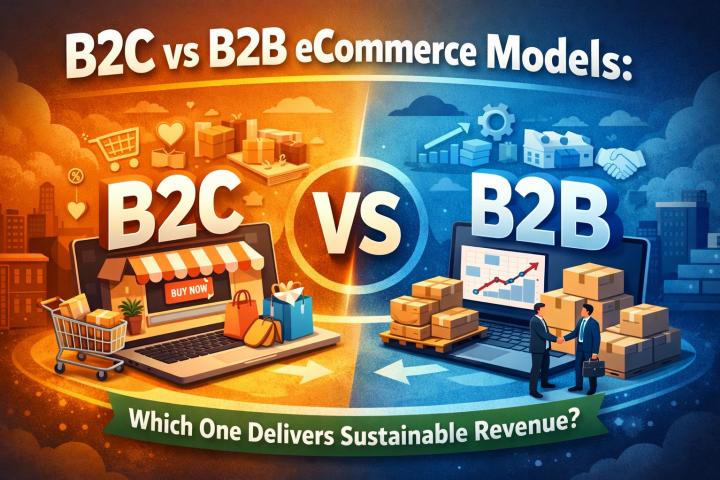
Business to Consumer (B2C)
B2C websites sell products directly to customers.
Popular examples include online fashion stores, electronics retailers, and life>
Business to Business (B2B)
B2B platforms sell products or services to other businesses.
These stores often include bulk pricing, wholesale accounts, and custom order features.
Consumer to Consumer (C2C)
C2C marketplaces allow individuals to sell products to other individuals.
Platforms like online marketplaces and resale apps follow this model.
Steps Involved in eCommerce Website Development
Building an online store involves several structured steps.
Each step ensures the website performs well and supports long-term growth.
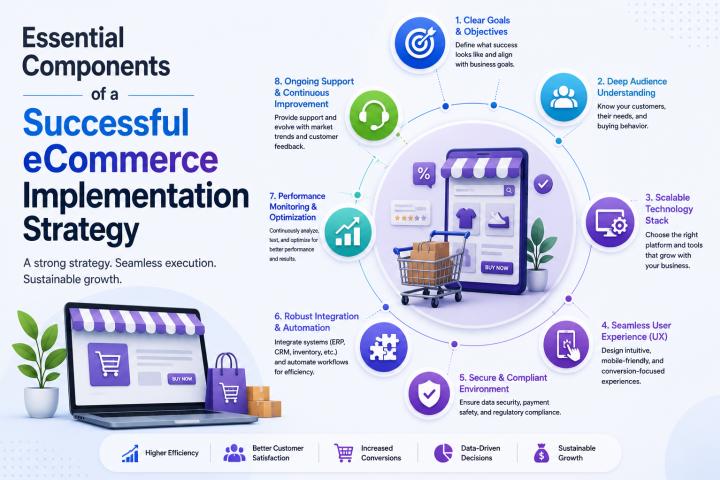
Step 1: Define Business Goals
Before development begins, businesses must clearly define their objectives.
This includes identifying target customers, product categories, and sales goals.
Clear goals guide the design and feature requirements of the website.
Step 2: Choose the Right Platform
Selecting the right platform is a major decision in eCommerce Website Development, and many agencies also provide custom eCommerce development packages that bundle design, development, and ongoing support services.
Some businesses choose ready-made platforms, while others prefer custom solutions for flexibility.
Common options include:
- Shopify
- WooCommerce
- Magento
- BigCommerce
Each platform offers different levels of customization, scalability, and cost.
Step 3: Design the User Experience
Website design focuses on how users interact with the store.
Navigation should be simple so visitors can move from product discovery to checkout quickly.
Wireframes and design mockups help visualize the layout before development begins.
Step 4: Develop the Website
During development, programmers build both frontend and backend systems.
This stage includes coding product pages, integrating payment gateways, and setting up the database.
Testing begins during development to ensure features function correctly.
Step 5: Test and Launch
Testing verifies that every component works smoothly.
Developers check payment processing, checkout flow, mobile responsiveness, and site performance.
Once testing is complete, the website is launched and becomes accessible to customers.
Popular Platforms for eCommerce Development
Choosing the right technology stack is crucial for long-term growth.
Several platforms simplify the process of building and managing an online store.
Shopify
Shopify is one of the most widely used hosted eCommerce platforms.
It offers ready-made templates, built-in payment systems, and an extensive app ecosystem.
WooCommerce
WooCommerce is a plugin for WordPress that converts a website into an online store.
It provides flexibility and customization options for businesses already using WordPress.
Magento (Adobe Commerce)
Magento is a powerful platform designed for larger businesses.
It supports advanced customization, multiple storefronts, and large product catalogs.
Best Practices for Building a Successful eCommerce Website
Successful stores focus on performance, usability, and trust.
Following best practices during eCommerce website development improves both user experience and search engine visibility.
Optimize Page Speed
Fast-loading pages keep users engaged and reduce bounce rates.
Image optimization, caching, and efficient coding help improve website performance.
Focus on User Experience
Navigation should be clear and intuitive.
Customers should reach the checkout page within a few clicks.
Implement Strong Security
Online stores must protect customer data and payment information.
Security practices include SSL certificates, secure payment gateways, and regular updates.
Use High-Quality Product Images
Clear product images help customers understand the product better.
Multiple images, zoom options, and videos improve purchase confidence.
Common Challenges in eCommerce Development
Even well-planned online stores face challenges during development and operation.
Understanding these challenges helps businesses prepare better solutions.
Performance Issues
Large product catalogs and heavy media files can slow down websites.
Regular performance optimization keeps the store running smoothly.
Security Threats
Cyberattacks and payment fraud are common concerns for online businesses.
Continuous monitoring and updates help prevent security vulnerabilities.
Cart Abandonment
Many customers add products to the cart but leave without completing the purchase.
Improving checkout design and offering clear pricing can reduce abandonment rates.
Future Trends in eCommerce Website Development
Technology continues to reshape the digital commerce landscape.
Businesses must adapt to these trends to remain competitive.
AI and Personalization
Artificial intelligence helps analyze user behavior and recommend products.
Personalized experiences increase engagement and sales.
Voice Commerce
Voice assistants are making online shopping more convenient.
Customers can search and purchase products using voice commands.
Headless Commerce
Headless architecture separates the frontend from the backend.
This allows businesses to deliver shopping experiences across websites, apps, and other digital channels.
Conclusion
eCommerce has become an essential part of modern business. A well-planned online store allows companies to reach customers globally and operate without geographical limitations.
Understanding the fundamentals of eCommerce website development helps beginners build digital stores that are secure, scalable, and user-friendly.
By focusing on the right platform, strong design, and smooth checkout experience, businesses can create online stores that drive consistent sales.
If you are planning to launch an online store, start by applying these principles and continuously optimize your website as your business grows.