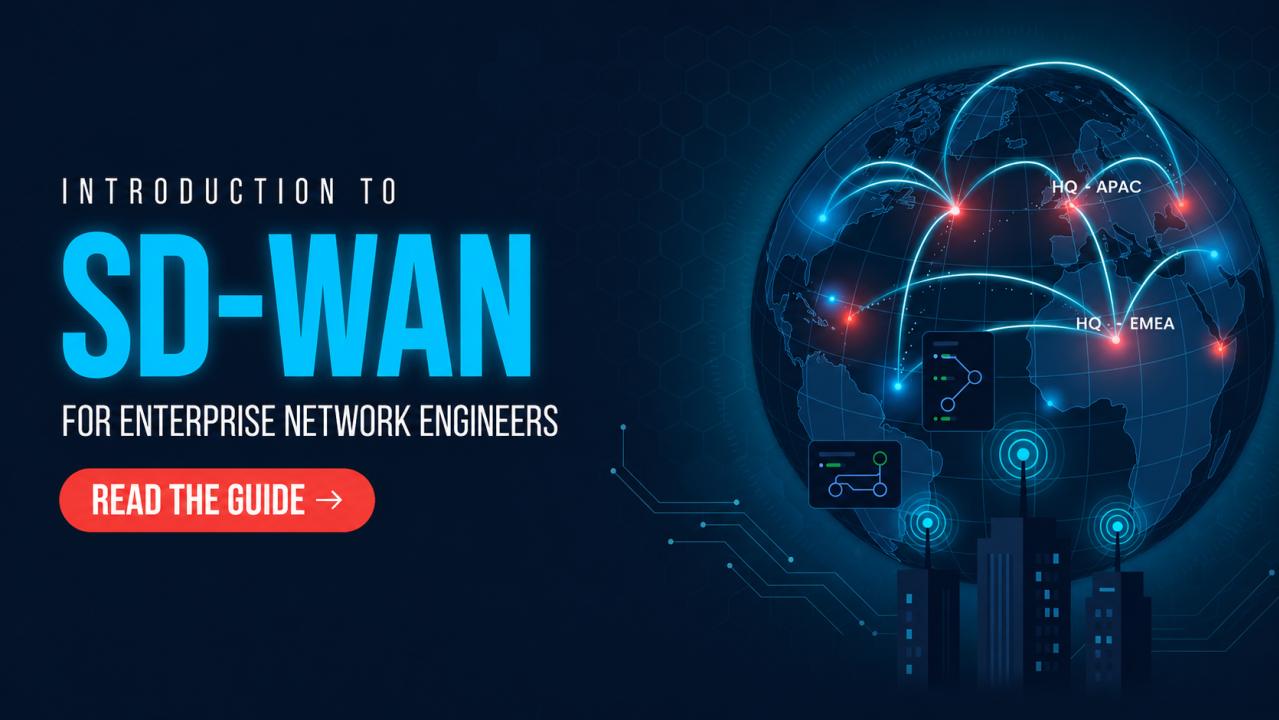
Modern enterprise networks are rapidly evolving to meet the demands of cloud applications, remote workforces, and distributed branch environments. As organizations adopt digital transformation strategies, many professionals explore SD-WAN Training to strengthen their understanding of software-defined networking and modern WAN architectures.
SD-WAN (Software-Defined Wide Area Network) has developed into a key solution for simplifying network management and improving security, performance, and flexibility in enterprise networks. For network engineers, understanding SD-WAN is essential for designing scalable and efficient WAN solutions.
Understanding SD-WAN Technology
SD-WAN is a software-defined approach to managing wide area networks that uses centralized control to optimize network traffic and connectivity.
What Makes SD-WAN Different
Traditional WAN architectures rely heavily on fixed hardware and complex configurations. SD-WAN introduces:
Centralized management
Application-aware routing
Dynamic path selection
Cloud-based orchestration
Importance in Modern Enterprises
SD-WAN helps organizations:
Improve application performance
Reduce operational costs
Enhance network visibility
Support cloud-first strategies
Key Components of SD-WAN Architecture
SD-WAN Edge Devices
Edge devices are deployed at branch locations and connect users to the SD-WAN network.
Functions of Edge Devices
Traffic forwarding
Policy enforcement
Secure connectivity
Performance monitoring
SD-WAN Controller
The controller manages the entire SD-WAN network from a centralized platform.
Key Responsibilities
Policy distribution
Network monitoring
Configuration management
Traffic optimization
Orchestrator Platform
The orchestrator simplifies deployment and lifecycle management.
Key Features
Automated provisioning
Centralized visibility
Cloud integration
Policy enforcement
How SD-WAN Works
SD-WAN intelligently directs traffic across multiple WAN links such as MPLS, broadband, and LTE.
Path Selection Mechanism
SD-WAN continuously evaluates network conditions and selects the best path based on:
Latency
Packet loss
Jitter
Application priority
Application-Aware Routing
Traffic is prioritized based on application requirements such as:
Video conferencing
Cloud applications
VoIP services
Business-critical applications
Benefits of SD-WAN for Enterprise Networks
Improved Network Performance
SD-WAN optimizes traffic flow to ensure better application performance.
Key Advantages
Reduced latency
Better bandwidth utilization
Faster failover
Cost Efficiency
Organizations can reduce reliance on expensive MPLS circuits.
Cost Benefits
Use of broadband internet
Reduced hardware dependency
Simplified operations
Enhanced Security
SD-WAN includes built-in security features.
Security Capabilities
End-to-end encryption
Secure tunneling
Integrated firewall policies
SD-WAN Deployment Models
On-Premises Deployment
SD-WAN components are deployed within the organization’s infrastructure.
Characteristics
Greater control
Higher maintenance requirements
Suitable for large enterprises
Cloud-Based Deployment
SD-WAN is managed through cloud platforms.
Advantages
Scalability
Remote management
Faster deployment
Hybrid Deployment
Combines both on-premises and cloud-based models.
Benefits
Flexibility
Improved resilience
Optimized performance
SD-WAN Use Cases in Enterprises
Branch Connectivity
SD-WAN simplifies connectivity between multiple branch offices.
Cloud Application Access
Improves performance for SaaS and cloud-hosted applications.
Remote Workforce Support
Enables secure access for remote employees.
Disaster Recovery
Provides automatic failover between WAN links.
SD-WAN and Traditional WAN Comparison
Architecture Differences
Traditional WAN relies on fixed circuits, while SD-WAN uses software-defined control.
Management Approach
SD-WAN offers centralized management compared to decentralized traditional WAN models.
Performance Optimization
SD-WAN dynamically selects optimal paths, unlike static routing in traditional WANs.
Key SD-WAN Features
Dynamic Path Selection
Automatically chooses the best available network path.
Centralized Policy Management
Enables consistent configuration across all locations.
Zero-Touch Provisioning
Simplifies deployment of new branch devices.
Integrated Security
Combines networking and security into a unified solution.
SD-WAN Security Fundamentals
Security is a core component of SD-WAN architecture.
Encryption Standards
IPsec tunnels
End-to-end encryption
Secure Access Control
Allows access only to approved users and devices.
Threat Protection
Includes built-in security features such as:
Firewall integration
Intrusion detection
Secure segmentation
Performance Optimization in SD-WAN
Traffic Prioritization
Critical applications are prioritized over non-essential traffic.
Link Quality Monitoring
Continuous monitoring ensures optimal path selection.
Load Balancing
Distributes traffic across multiple WAN links efficiently.
SD-WAN Troubleshooting Basics
Common Issues
Connectivity failures
Performance degradation
Misconfigured policies
Troubleshooting Approach
Step 1: Identify Symptoms
Understand the nature of the issue.
Step 2: Check Network Path
Analyze WAN link performance.
Step 3: Validate Policies
Ensure correct routing and application policies.
Step 4: Monitor Logs
Use SD-WAN dashboards for insights.
Role of SD-WAN in Modern Enterprises
SD-WAN plays a critical role in enabling digital transformation.
Cloud-First Strategy Support
Helps enterprises adopt cloud applications efficiently.
Business Continuity
Ensures network availability during outages.
Improved User Experience
Enhances application responsiveness and reliability.
Career Relevance for Network Engineers
Skills Required
Network engineers working with SD-WAN must understand:
Routing fundamentals
WAN optimization
Security integration
Cloud networking
Job Roles
SD-WAN Engineer
Network Architect
Infrastructure Engineer
Cloud Network Specialist
Future of SD-WAN Technology
Integration with SASE
Secure Access Service Edge (SASE) frameworks are increasingly incorporating SD-WAN.
AI-Driven Networking
AI will improve:
Traffic prediction
Automated troubleshooting
Network optimization
Increased Cloud Dependency
SD-WAN will continue to evolve with cloud-native architectures.
Conclusion
SD-WAN is transforming enterprise networking by simplifying WAN management, improving performance, and enhancing security across distributed environments. For enterprise network engineers, mastering SD-WAN concepts is essential to stay relevant in modern IT infrastructures. With structured learning and practical experience, professionals can significantly enhance their expertise in SD-WAN Training and build strong careers in next-generation networking.