Modern enterprises rely heavily on cloud applications, remote workforces, branch connectivity, and secure access to business resources. Traditional WAN architectures often struggle to deliver the flexibility, performance, and security required by today's organizations. This is where Fortinet SD-WAN has emerged as a powerful solution for enterprises seeking intelligent traffic management and integrated security.
Organizations pursuing Fortinet SD-WAN Training can gain practical knowledge of designing scalable WAN infrastructures that improve application performance and reduce operational complexity. Professionals preparing for Fortinet NSE 7 certification often study enterprise SD-WAN design principles to understand real-world deployment scenarios.
What Is Fortinet SD-WAN?
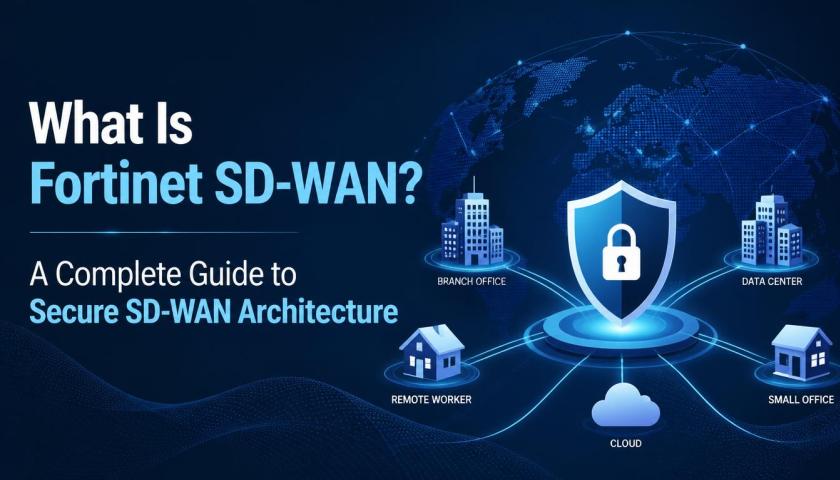
Fortinet SD-WAN is a software-defined wide area networking solution that enables organizations to intelligently route traffic across multiple WAN links while maintaining security, visibility, and application performance.
Unlike traditional WAN environments that rely on static routing decisions, Fortinet SD-WAN dynamically selects the best path based on network conditions, application requirements, and business policies.
Key Characteristics of Fortinet SD-WAN
Application-aware routing
Dynamic path selection
Centralized management
Integrated security
WAN optimization capabilities
Real-time performance monitoring
Multi-cloud connectivity
Why Enterprise Networks Need SD-WAN
Enterprise networks face several challenges as businesses continue to expand globally and adopt cloud-based applications.
Increasing Cloud Adoption
Applications such as Microsoft 365, Salesforce, AWS, and Azure require direct and optimized internet access from branch locations.
Remote Workforce Support
Organizations must provide secure and reliable connectivity for remote employees without compromising performance.
Rising Bandwidth Demands
Video conferencing, collaboration tools, and cloud services generate significant traffic that traditional WAN architectures may struggle to handle efficiently.
Security Requirements
Modern enterprises require integrated security controls that can protect users, applications, and data across distributed environments.
Core Components of a Fortinet SD-WAN Design
Understanding the building blocks of Fortinet SD-WAN is essential for designing an effective enterprise network.
FortiGate Devices
FortiGate firewalls act as SD-WAN edge devices and perform both networking and security functions.
Key functions include:
Traffic steering
VPN connectivity
Security inspection
Application identification
Path monitoring
WAN Links
Multiple transport technologies can be utilized.
Examples include:
MPLS
Broadband Internet
Fiber connections
LTE/5G networks
Satellite connectivity
SD-WAN Zones
SD-WAN zones simplify policy management by grouping multiple interfaces into a single logical entity.
Performance SLA Monitoring
Performance Service Level Agreements continuously monitor WAN paths based on:
Latency
Packet loss
Jitter
Availability
Enterprise SD-WAN Design Models
Different organizations require different deployment models depending on business requirements.
Hub-and-Spoke Design
This is one of the most commonly used SD-WAN architectures.
Advantages
Centralized control
Simplified management
Easier security enforcement
Best For
Medium-sized enterprises
Organizations with centralized data centers
Full Mesh Design
Every branch can communicate directly with every other branch.
Advantages
Reduced latency
Improved application performance
Better user experience
Best For
Large enterprises
Global organizations
Hybrid Design
A hybrid approach combines hub-and-spoke and direct branch connectivity.
Advantages
Flexible traffic routing
Improved scalability
Better resource utilization
WAN Connectivity Design Considerations
Proper WAN planning is critical for successful SD-WAN deployment.
Primary and Secondary Links
Organizations should deploy multiple WAN circuits for redundancy.
Example:
Site Type | Primary Link | Secondary Link |
Headquarters | MPLS | Fiber Internet |
Regional Office | Fiber Internet | LTE |
Branch Office | Broadband | LTE/5G |
Bandwidth Planning
Network architects should evaluate:
Current utilization
Future growth projections
Application requirements
Peak usage periods
Link Diversity
Using multiple service providers helps eliminate single points of failure.
Security Considerations in Fortinet SD-WAN
One major advantage of Fortinet SD-WAN is the integration of advanced security services.
Secure SD-WAN Architecture
Fortinet combines SD-WAN functionality with:
Next-Generation Firewall (NGFW)
Intrusion Prevention System (IPS)
Web Filtering
Antivirus Protection
Application Control
VPN Encryption
IPsec VPN tunnels secure communications between locations.
Benefits include:
Data confidentiality
Data integrity
Secure branch connectivity
Zero Trust Access
Organizations can implement Zero Trust principles to verify every user and device before granting access.
Application-Aware Routing Design
Application performance is a key reason enterprises adopt SD-WAN.
Business-Critical Applications
Applications such as:
Microsoft Teams
Zoom
SAP
Oracle
Salesforce
can receive priority routing treatment.
Dynamic Path Selection
Fortinet continuously evaluates network conditions and automatically selects the optimal path.
Benefits include:
Reduced latency
Better user experience
Faster application response times
SLA-Based Routing
Traffic can be redirected automatically when predefined performance thresholds are exceeded.
Multi-Cloud Connectivity Design
Modern enterprises frequently use multiple cloud providers.
Cloud Integration Benefits
Fortinet SD-WAN supports connectivity with:
AWS
Microsoft Azure
Google Cloud Platform
Oracle Cloud Infrastructure
Cloud On-Ramp Optimization
Direct cloud access improves:
Application performance
User experience
Resource efficiency
Secure Cloud Connectivity
Integrated security services protect traffic moving between branches and cloud environments.
High Availability and Redundancy Planning
Network availability remains a top priority for enterprise environments.
Device Redundancy
FortiGate appliances can be deployed in:
Active-Passive mode
Active-Active mode
WAN Redundancy
Multiple ISP connections ensure continuous service availability.
Automatic Failover
If a primary path fails, traffic is immediately redirected to healthy backup links.
Benefits include:
Reduced downtime
Improved business continuity
Better user experience
Centralized Management and Monitoring
Managing enterprise-wide SD-WAN deployments requires centralized visibility.
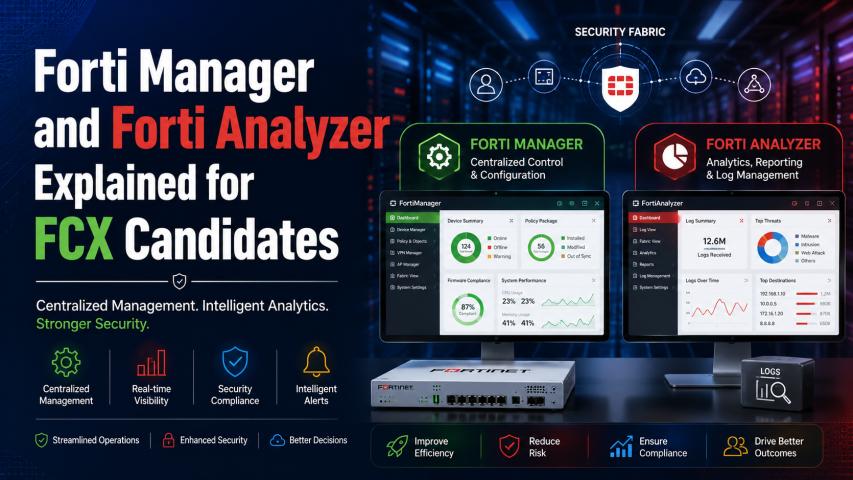
FortiManager
FortiManager enables:
Centralized configuration
Policy deployment
Device management
Change control
FortiAnalyzer
Provides detailed insights into:
Security events
Application usage
Traffic patterns
Compliance reporting
Operational Benefits
Organizations gain:
Faster troubleshooting
Reduced administrative overhead
Improved network visibility
Best Practices for Enterprise SD-WAN Design
Define Business Objectives First
Understand application requirements, user expectations, and business priorities before designing the architecture.
Implement Multiple WAN Links
Redundant connectivity improves availability and resilience.
Use Application-Based Policies
Prioritize business-critical applications over non-essential traffic.
Continuously Monitor Performance
Regular monitoring helps identify issues before they impact users.
Integrate Security from Day One
Security should be embedded into the design rather than added later.
Plan for Future Growth
Design the network to accommodate expansion, cloud adoption, and increasing bandwidth demands.
Common SD-WAN Design Mistakes to Avoid
Ignoring Application Requirements
Not all applications have the same performance needs.
Insufficient Redundancy
Single WAN links create unnecessary risk.
Poor Security Integration
SD-WAN deployments must include comprehensive security controls.
Lack of Monitoring
Without visibility, troubleshooting becomes significantly more difficult.
Underestimating Cloud Traffic
Cloud applications often generate more traffic than expected.
Conclusion
Fortinet SD-WAN Design Guide for Enterprise Networks demonstrates how organizations can build scalable, secure, and high-performing WAN infrastructures that support modern business requirements. By combining intelligent traffic steering, application awareness, cloud connectivity, and integrated security, enterprises can significantly improve network efficiency while reducing operational complexity.
Organizations investing in Fortinet SD-WAN Training and pursuing Fortinet NSE 7 certification can gain the expertise needed to design, deploy, and manage enterprise-grade SD-WAN environments effectively. A well-planned Fortinet SD-WAN architecture not only improves connectivity and application performance but also strengthens security and business continuity for future growth.