
Introduction to Digital Transformation in Modern Enterprises
Digital transformation has become a strategic priority for organizations across industries as they shift toward cloud-based applications, remote work models, and data-driven operations. Businesses are increasingly relying on agile and scalable network infrastructures to support these evolving demands.
In this context, SD-WAN plays a critical role in enabling organizations to modernize their network architecture and accelerate digital transformation initiatives effectively.
Understanding SD-WAN in Enterprise Networking
What Is SD-WAN?
Software-Defined Wide Area Networking (SD-WAN) is a modern networking technology that simplifies the management and operation of a wide area network by decoupling networking hardware from its control mechanism.
Key characteristics include:
Centralized network control
Application-aware routing
Cloud-first connectivity
Dynamic path selection
Improved network visibility
SD-WAN helps organizations move away from traditional WAN limitations.
Limitations of Traditional WAN Architectures
Traditional WAN architectures often struggle to meet the demands of modern digital enterprises due to:
High dependency on MPLS circuits
Limited scalability
Complex configuration management
Higher operational costs
Poor cloud application performance
These limitations make it difficult for organizations to support digital transformation goals effectively.
Role of SD-WAN in Digital Transformation
Enabling Cloud-First Strategies
One of the most important aspects of digital transformation is cloud adoption.
SD-WAN supports this by:
Directly connecting users to cloud applications
Optimizing cloud traffic performance
Reducing dependency on centralized data centers
Improving SaaS application access
This ensures seamless cloud integration for enterprises.
Improving Network Agility and Flexibility
Digital transformation calls for highly flexible networks that respond swiftly to business needs.
SD-WAN provides:
Rapid deployment of network services
Centralized configuration management
Easy scalability across locations
Flexible bandwidth utilization
This flexibility helps organizations adapt quickly to market changes.
Enhancing Application Performance with SD-WAN
Application-Aware Routing
SD-WAN optimizes traffic routing according to application requirements.
It ensures:
High-priority applications receive optimal bandwidth
Real-time traffic is prioritized
Non-critical traffic is routed efficiently
Reduced latency for key services
This improves overall application performance.
Optimizing Network Traffic
SD-WAN constantly evaluates network conditions to select the best available route for data transfer.
Benefits include:
Reduced packet loss
Lower latency
Improved bandwidth utilization
Enhanced user experience
This is essential for digital-first enterprises.
Supporting Remote and Hybrid Work Models
Secure Remote Access
With the rise of remote work, secure connectivity has become a priority.
SD-WAN enables:
Secure access to enterprise resources
Encrypted communication channels
Centralized security policies
Consistent user experience across locations
This supports distributed workforces effectively.
Consistent Connectivity Across Locations
Enterprises with multiple branches require consistent network performance.
SD-WAN provides:
Unified network policies
Seamless branch connectivity
Centralized monitoring and management
Reliable application access
This ensures operational consistency.
SD-WAN and Cloud Integration
Seamless Multi-Cloud Connectivity
Modern enterprises often use multiple cloud providers.
SD-WAN helps by:
Connecting to multiple cloud platforms
Managing traffic between cloud environments
Improving cloud application responsiveness
Simplifying cloud network architecture
Enhancing SaaS Application Performance
SaaS applications are critical to business operations.
SD-WAN improves performance by:
Direct routing to SaaS platforms
Reducing backhaul traffic
Enhancing application response times
Optimizing user experience
Security Enhancements in SD-WAN
Built-in Security Features
SD-WAN integrates security directly into the network architecture.
Key features include:
End-to-end encryption
Secure web gateways
Firewall integration
Intrusion prevention capabilities
This strengthens enterprise security posture.
Zero Trust Network Support
SD-WAN aligns with Zero Trust principles by:
Verifying user and device identity
Enforcing least-privilege access
Continuously monitoring traffic
Applying policy-based controls
This ensures secure digital transformation.
Cost Optimization Through SD-WAN
Reducing Network Infrastructure Costs
One of the major benefits of SD-WAN is cost efficiency.
Organizations can:
Reduce dependency on expensive MPLS circuits
Utilize broadband and internet links effectively
Optimize bandwidth usage
Lower operational expenses
This makes network management more cost-effective.
Simplifying Network Management
SD-WAN reduces operational complexity by:
Centralizing network control
Automating configurations
Reducing manual intervention
Simplifying troubleshooting processes
This improves IT efficiency.
Role of SD-WAN in Business Agility
Faster Deployment of Services
SD-WAN enables rapid deployment of network services across multiple locations.
Benefits include:
Quick branch office setup
Faster rollout of applications
Reduced provisioning time
Improved business responsiveness
Supporting Innovation Initiatives
Digital transformation often involves adopting new technologies.
SD-WAN supports innovation by:
Enabling IoT integration
Supporting edge computing
Facilitating hybrid cloud strategies
Improving network scalability
SD-WAN Architecture and Key Components
Centralized Management System
SD-WAN uses centralized controllers to manage network policies and configurations.
This allows:
Unified policy enforcement
Real-time network visibility
Simplified administration
Efficient resource management
Edge Devices and Connectivity
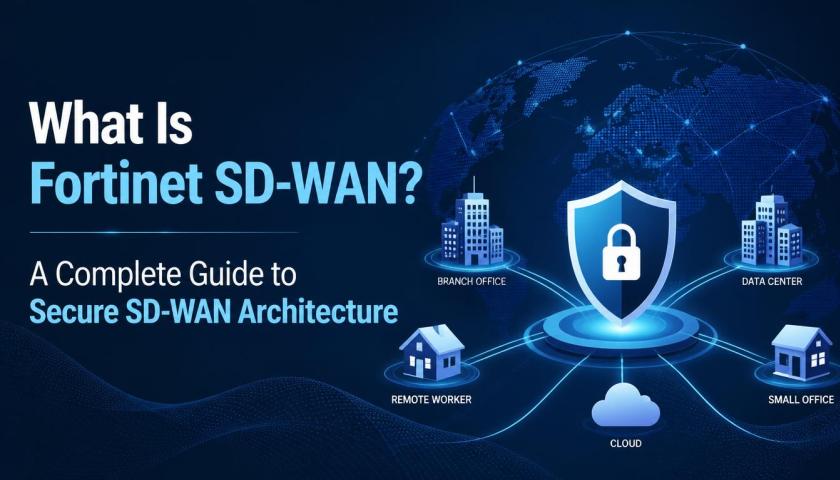
SD-WAN edge devices connect branch locations to the enterprise network.
They provide:
Secure data transmission
Application-aware routing
Local traffic optimization
High availability connectivity
Challenges in SD-WAN Implementation
Integration with Legacy Systems
Organizations may face challenges when integrating SD-WAN with existing infrastructure.
Issues include:
Compatibility with legacy devices
Migration complexity
Network redesign requirements
Training requirements for IT teams
Security Management Complexity
While SD-WAN enhances security, proper configuration is essential.
Challenges include:
Policy enforcement consistency
Threat detection across distributed networks
Managing encrypted traffic
Ensuring compliance
Future of SD-WAN in Digital Transformation
AI-Driven Network Optimization
Artificial intelligence will play a major role in SD-WAN evolution.
Future capabilities include:
Predictive network analytics
Automated traffic optimization
Self-healing network systems
Intelligent routing decisions
Integration with SASE Architecture
Secure Access Service Edge (SASE) is emerging as the next step in network evolution.
SD-WAN will integrate with SASE to provide:
Unified networking and security
Cloud-native architecture
Enhanced policy control
Simplified infrastructure management
Career Opportunities in SD-WAN Technologies
Growing Demand for SD-WAN Professionals
Organizations are actively seeking professionals skilled in SD-WAN technologies.
Common roles include:
Network Engineer
SD-WAN Architect
Cloud Network Specialist
Infrastructure Engineer
Industry Relevance
SD-WAN skills are in demand across:
IT services
Telecommunications
Banking and finance
Healthcare
Cloud service providers
Conclusion
Digital transformation is reshaping how organizations design and manage their network infrastructures. SD-WAN plays a crucial role in enabling this transformation by improving agility, security, performance, and cost efficiency across enterprise networks.
As businesses continue to adopt cloud-first and hybrid strategies, SD-WAN will remain a foundational technology supporting scalable, secure, and efficient digital transformation initiatives.