Recently, businesses have realized that having an attractive website does not bring in a long-term stream of organic website visitors. This is because aesthetics, while important to landing page visitors, will not attract them in the first place. Architectural structure is what determines the visibility of a website.
A visually appealing website could fail to show up in searches if its elements are not optimized. The internet's responsive functionality relies on well-thought-out designs and layouts. This is where SEO-Ready Website Architecture comes in. It is the design element of structure that balances Creative Design and Technical Crawling. This Architecture assists in making the data pathways on a website easy for users and also easy for search engine bots to index.
When a company uses web design services, having the correct structure of the logical web design is very important. Without this structure, all the efforts of designing and creating web content are for nothing, as no one will see it.
The Core Pillars of SEO Website Structure
Any well-planned website should allow visitors to find information similar to how visitors can find a book in a well-organized library.
Logical Website Hierarchy for SEO
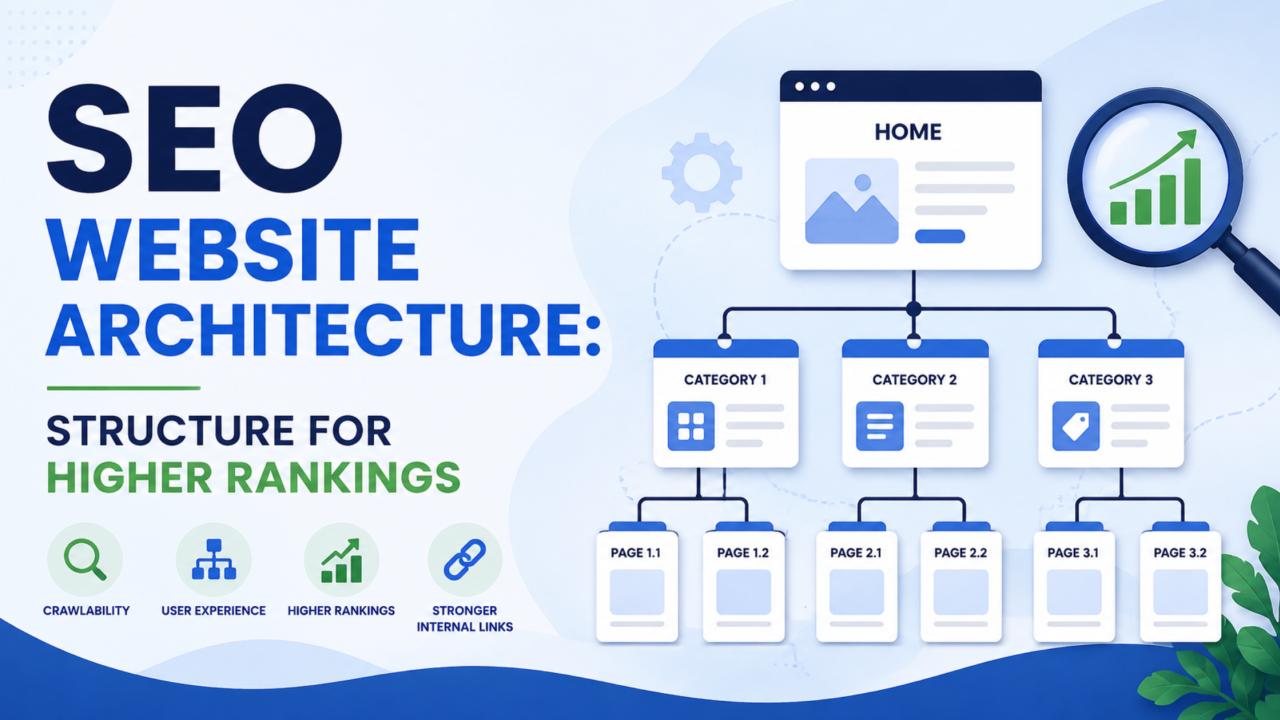
The clean structure of a website serves as the topmost layer of a pyramid with rows of data placed beneath it in a structured hierarchy. The data should flow in descending order of specificity from the
HomePage -> to the highest Level Category Pages -> to the Subcategory Pages -> to the Core Content Pages.
A website should be architected in a manner that allows sustainable growth of the website taxonomy. This organized taxonomy enables a search engine to discover what each section of the website means and prevents internal pages from competing with each other.
Crawlability and Indexability
Search engine spiders navigate your site by moving from link to link. If your structural framework is messy or fragmented, these automated spiders will abandon your site before crawling your most valuable content. Implementing a clean structure ensures that your critical business pages are never buried too deep within the site structure optimization. A rigid standard to maintain is the "3-click rule", which states that no user or search engine crawler should ever have to click more than three times from the homepage to reach any destination on your site.
To speed this process, a properly maintained XML sitemap optimization will ensure web crawlers do not miss any important updates to the site, which may provide an edge in ranking.
User Experience Meets Technical SEO Best Practices
The evolution of a search engine's algorithms has made website design and functionality a critical factor that can influence a website's rank on the results it generates. A site with optimal functionality and architecture serves both search bots and users.
SEO-Friendly Navigation
The original draft mentioned that several navigation features "break crawler pathways" due to their reliance on JavaScript and images. Advanced search engine crawlers, including Googlebot, can now render JavaScript. However, if JavaScript is the primary means of site navigation, a two-stage indexing process is required for the "render queue."
This can slow down how often new pages are indexed. For that reason, keeping a simple text-based HTML menu is still the best practice, as it avoids rendering lag while ensuring a rapid indexing process.
Intuitive, clean architecture, and a user-friendly design naturally lower bounce rates. When users find what they are looking for, search engines also find value in the engagement and increase the visibility of the site. Clean and structured website design makes users find what they are looking for, and makes search engines find value in the engagement.
The Power of an Internal Linking Strategy
One way to think of the data-driven internal linking structures of your website is like a web-based nervous system. Internal links spread site rank and value equity from more popular pages to less popular ones, helping search engine bots understand which pages hold value.
When designing customized layouts for regional target markets, it is critical to look at local business website design trends that actually work to ensure your navigational layout aligns naturally with regional consumer behavior and search habits.
Scalability and Content Organization
While an architecture designed for a website with twenty pages may function well for a small business, that same design may fail for a large business with hundreds of landing pages. Proper optimization of an architecture system should accommodate the future growth of a business.
SEO Content Organization
Platforms and systems that perform well have organized content. An effective method for retaining organized content is the use of topic clusters and content hubs. This method is also effective for SEO content organization. This method builds large site authority and conveys to search engines the brand/store/artist's level of expertise on a given topic, and positions them above the competition.
Designing a Scalable Website Architecture
Scalable website architecture should enable you to expand your website's content from an initial 50 pages to 5,000 pages, while still maintaining the integrity of your core navigation and high-level topical structure. The cost of flexibility is always much less than the cost of a redesign.
Including professional SEO services in the early stages of your design process will also help you avoid the technical debt that would most likely accumulate on your website. This will help your company avoid a lot of unnecessary expenses over time since your company will be able to add more products and services to your website and even expand your company regionally.
Driving ROI Through Smart Design
At its core, a clean, highly accessible digital framework is one of the most vital, foundational website ranking factors in modern search engine optimization. Beautiful visual elements may grab attention, but it is your underlying architectural setup that establishes long-term organic authority and business growth. If your site structure is broken, your content will fail to rank, regardless of your marketing budget or copy quality.
Building and expanding your technical architecture improves your website's ease of use and flexibility, optimizing your website to convert more sales while giving your company a competitive advantage in your market. High-traffic websites are usually a combination of excellent usability and high-quality design. If you partner with a quality full-service digital marketing agency, your website will have a technical and visually appealing website designed around usability that will improve your business's digital return on investment and will help dominate your market.