Every digital product begins with an idea, but transforming that idea into a successful product often takes far more than technical expertise. Teams frequently spend months debating features, refining requirements, and building solutions before discovering whether customers actually need them.
These delays increase development costs, slow innovation, and create unnecessary business risk.
A product design sprint offers a different approach. Instead of relying on assumptions, organizations rapidly explore ideas, validate solutions, and test concepts with real users before significant engineering investments begin.
Originally popularized within leading technology companies, design sprints have become an effective framework for startups, enterprises, and product teams looking to solve complex business problems while reducing uncertainty.
Rather than accelerating development alone, a product design sprint accelerates learning. It helps organizations answer critical questions about usability, customer value, technical feasibility, and market demand within days instead of months.
In an increasingly competitive digital landscape, faster learning often becomes a stronger competitive advantage than faster coding.
Product Design Sprints Reduce Product Risk Early
One of the biggest challenges in software development is investing heavily in ideas that haven't been validated.
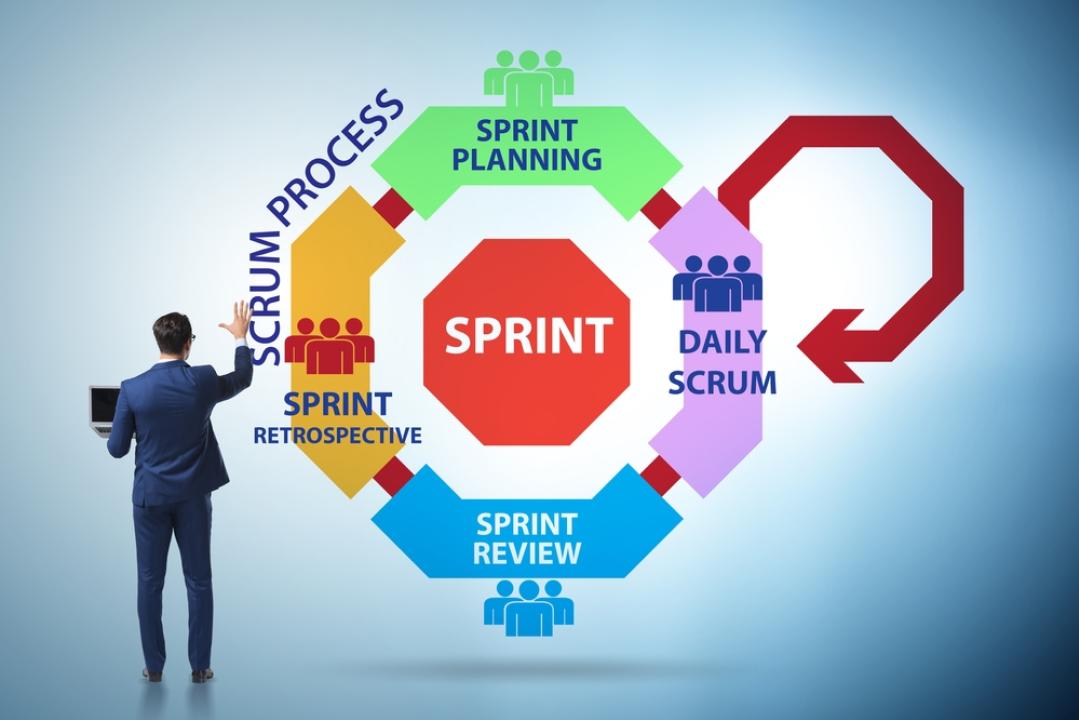
A product design sprint addresses this challenge by bringing together designers, product managers, engineers, and business stakeholders to solve a clearly defined problem through structured collaboration.
Product Design Sprint Services guide organizations through intensive workshops focused on understanding users, defining challenges, generating ideas, building realistic prototypes, and validating concepts through user feedback.
Instead of debating opinions, teams make decisions based on evidence collected during the sprint.
This structured approach reduces uncertainty while helping stakeholders align around a shared product vision before development begins.
Why Traditional Planning Often Slows Innovation
Conventional product planning frequently involves lengthy documentation, multiple approval cycles, and extended requirement discussions.
While planning remains essential, excessive analysis often delays progress without reducing uncertainty.
Teams may spend weeks refining feature lists only to discover later that customers prioritize entirely different capabilities.
A design sprint shifts the focus from theoretical planning to practical validation.
Rather than asking what should be built over the next year, organizations identify the most critical customer problem and rapidly test potential solutions.
This approach helps eliminate unnecessary development while improving confidence in future product decisions.
Aligning Business Goals With Customer Needs
Successful products solve meaningful customer problems while supporting broader business objectives.
Achieving this balance requires collaboration across multiple disciplines.
This is where Design Thinking Workshop, Product Discovery Services, and UX Strategy Consulting create significant value. Cross-functional teams combine customer research, business insights, technical expertise, and creative problem-solving to identify solutions that are both desirable and technically achievable.
For example, an organization planning a healthcare platform may initially focus on adding numerous patient management features. During a design sprint, user interviews could reveal that patients primarily struggle with appointment scheduling and communication rather than clinical workflows.
By identifying these insights early, the product roadmap becomes more focused, increasing the likelihood of user adoption after launch.
Rapid Prototyping Creates Faster Decision-Making
One of the defining characteristics of a design sprint is the use of realistic prototypes.
Rather than discussing concepts abstractly, teams create interactive experiences that simulate how the final product will function.
These prototypes allow users to interact with workflows, provide feedback, and identify usability challenges before software development begins.
Early validation often reveals issues that would otherwise remain hidden until much later in the development lifecycle.
Resolving these challenges during the design phase significantly reduces development rework while improving overall product quality.
More importantly, prototypes create alignment among stakeholders by providing a shared understanding of the proposed solution.
Collaboration Drives Better Outcomes
Complex digital products require input from diverse perspectives.
Business leaders understand strategic objectives.
Designers focus on user experience.
Engineers evaluate technical feasibility.
Marketing teams contribute market insights.
Customer support teams understand recurring pain points.
A product design sprint brings these perspectives together within a structured decision-making process.
Rather than allowing departments to work independently, cross-functional collaboration encourages faster consensus while reducing communication gaps that often delay software projects.
This alignment becomes particularly valuable for organizations managing enterprise-scale digital transformation initiatives.
AI Is Influencing Product Discovery
Artificial intelligence is changing how organizations approach product innovation.
AI-powered research tools, user behavior analysis, intelligent prototyping, and workflow automation can accelerate portions of the discovery process while providing deeper customer insights.
However, technology should support—not replace—human-centered design thinking.
Successful design sprints continue to prioritize direct customer feedback, collaborative problem-solving, and iterative validation.
AI becomes most valuable when it enhances decision-making rather than dictating product direction.
Organizations that combine human expertise with intelligent tools are better positioned to develop innovative yet practical digital solutions.
From Sprint to Product Development
A design sprint is not the final destination.
It provides the clarity needed to move confidently into product design, MVP development, engineering, and future product enhancements.
The insights collected during the sprint help establish prioritized backlogs, technical requirements, user journeys, design systems, and measurable product goals.
Development teams can begin execution with greater confidence because major assumptions have already been tested.
This reduces project risk while improving delivery efficiency throughout the product lifecycle.
Choosing the Right Product Design Sprint Partner
Facilitating an effective design sprint requires more than following a workshop agenda.
Experienced facilitators understand product strategy, customer research, business modeling, interaction design, and engineering constraints.
They know how to guide productive discussions, challenge assumptions, prioritize competing ideas, and transform complex business problems into actionable product strategies.
At Bytes Technolab, product design sprints combine design thinking, product discovery, rapid prototyping, UX strategy, and engineering expertise to help organizations validate ideas before committing to full-scale development. By connecting business objectives with real customer insights, teams gain the confidence to make informed product decisions while reducing development risk.
Ultimately, a successful product design sprint is not about generating more ideas. It is about identifying the right idea, validating it quickly, and creating a clear roadmap for building products that customers genuinely want to use.