Businesses depend on online data to monitor prices, understand competitors, study customer behavior, and identify new market opportunities. However, collecting reliable information from modern websites is becoming increasingly difficult. Web Scraping Challenges in 2026 are shaped by stronger security systems, dynamic technologies, rapidly changing page structures, and growing expectations for accurate, real-time data.
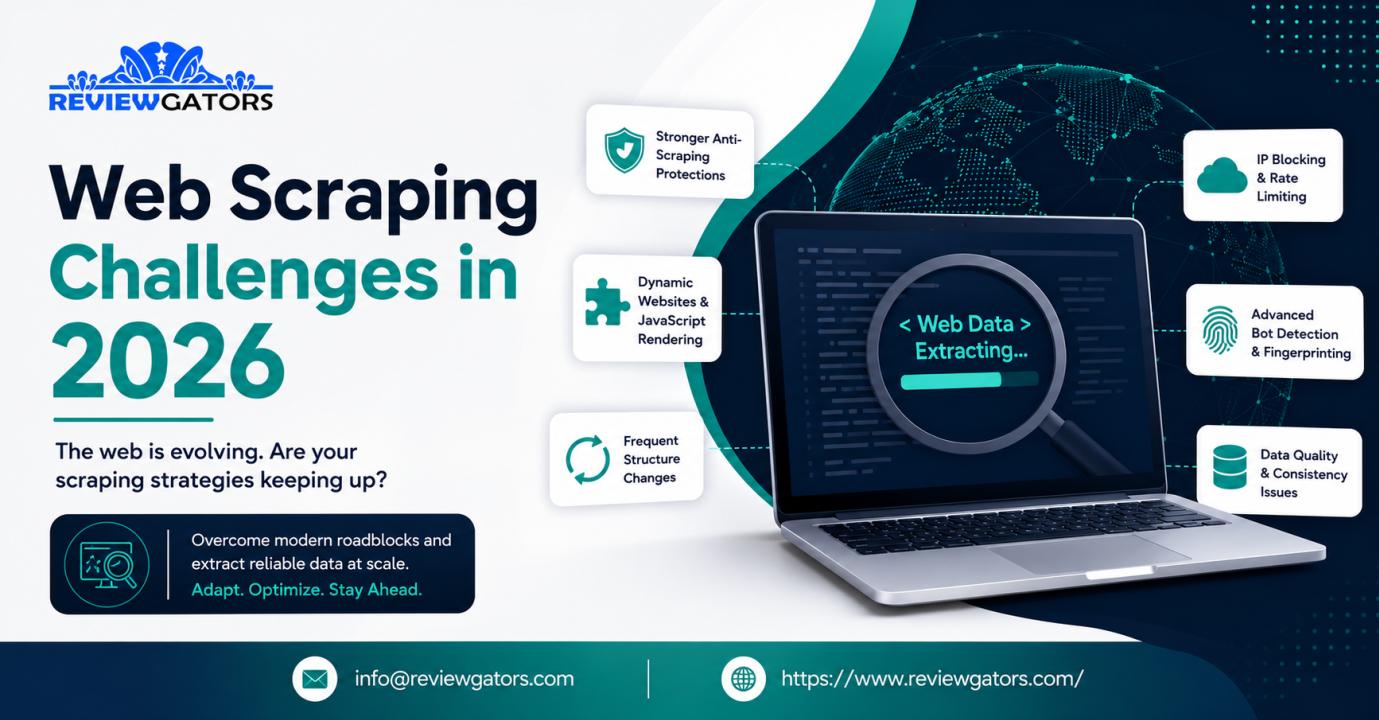
One of the biggest obstacles is advanced bot detection. Websites now use browser fingerprinting, behavioral analysis, device identification, and machine learning to detect automated traffic. These systems examine how visitors move through pages, how quickly they interact, and whether their browser activity appears natural. Basic scraping scripts often fail because they cannot reproduce realistic browsing behavior.
Dynamic content is another major issue. Many ecommerce, travel, real estate, and review platforms use JavaScript to load information after the initial page request. Prices, ratings, availability, and product details may appear only after scrolling, clicking, or waiting for an API response. Modern scraping systems must therefore support browser rendering and event-based extraction to capture complete datasets.
Frequent website changes also create ongoing maintenance problems. Even a small update to HTML tags, CSS selectors, page layouts, or navigation can break a crawler. One of the most demanding Web Scraping Challenges is keeping extraction workflows stable when target websites change without notice. Automated monitoring and adaptive parsing methods are essential for reducing downtime.
Data quality creates another layer of complexity. Collected information may include duplicate records, missing fields, inconsistent formats, or outdated values. Businesses cannot make reliable decisions from raw data without cleaning and validation. Structured pipelines are needed to normalize currencies, categories, dates, addresses, ratings, and product attributes before the data is used for reporting or analysis.
Scalability is equally important. Enterprises may need to collect millions of records from hundreds or thousands of sources. Managing large workloads requires distributed infrastructure, intelligent scheduling, error handling, and performance monitoring. Without the right architecture, scraping operations can become slow, unstable, and expensive.
IP restrictions and request limits continue to affect large-scale extraction. Websites often track request frequency, location, session behavior, and reputation signals. Responsible crawling practices, controlled request rates, and reliable infrastructure are necessary to maintain consistent access while avoiding unnecessary disruption.
Compliance should also remain a priority. Businesses must collect publicly available information while considering applicable laws, privacy requirements, and website policies. Ethical collection practices reduce risk and support sustainable long-term data operations.
AI is helping organizations overcome many Web Scraping Challenges by detecting structural changes, classifying page elements, identifying missing fields, and reducing manual crawler maintenance. Intelligent systems can also improve validation and alert teams when extraction quality drops.
Although Web Scraping Challenges are becoming more complex, web data remains highly valuable. Businesses that invest in scalable systems, automation, monitoring, and data quality processes can continue turning public online information into useful insights for pricing, research, operations, and competitive strategy.