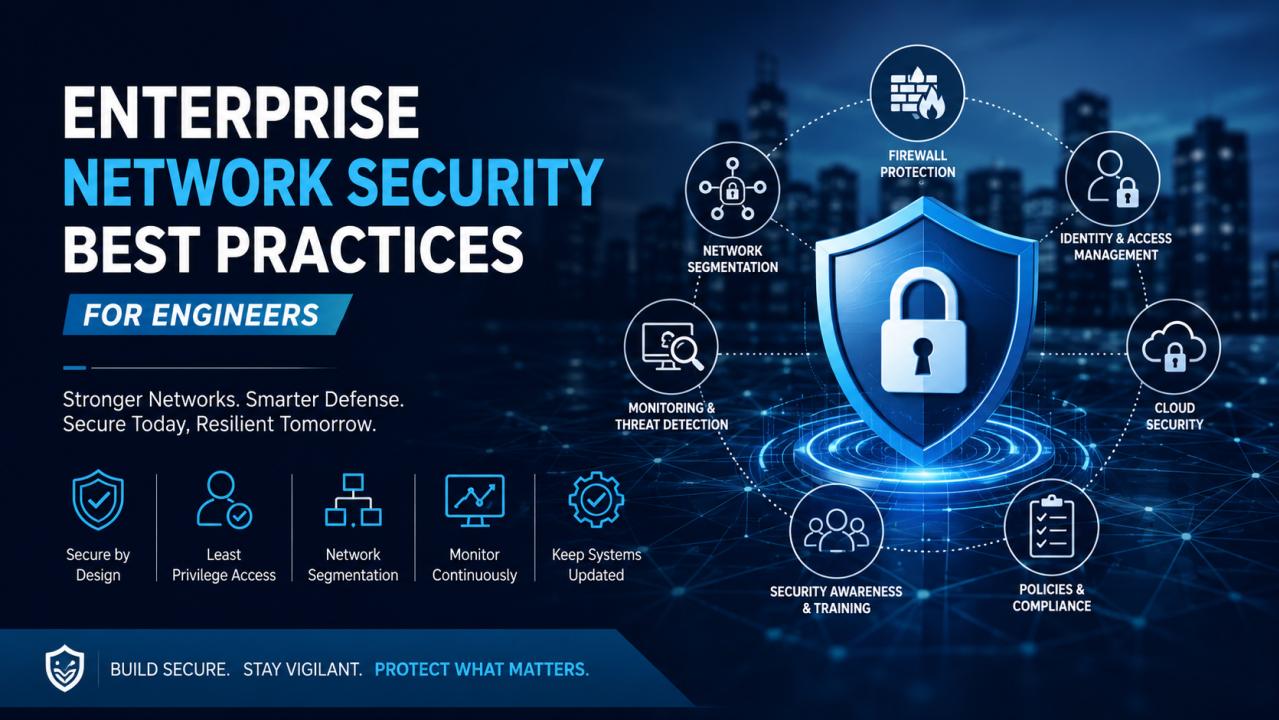
Enterprise environments today operate in highly dynamic and distributed ecosystems where applications, users, and data span across on-premises systems, cloud platforms, and remote locations. As a result, protecting network infrastructure has become a critical responsibility for engineers who design and maintain these systems.
To gain advanced skills in this field, many professionals enroll in structured CCIE Security Training to understand real-world enterprise security architectures and advanced defense techniques.
Evolving Nature of Enterprise Network Security
Modern enterprise networks are no longer confined to a single physical location. They are interconnected across multiple environments, making them more flexible but also more vulnerable.
Why Security Complexity Is Increasing
Several factors contribute to the growing complexity:
Rapid cloud adoption across industries
Expansion of remote and hybrid work models
Increasing sophistication of cyberattacks
Integration of third-party applications and APIs
Constantly changing compliance requirements
Because of these factors, engineers must adopt adaptive and resilient security strategies.
Foundational Elements of Strong Network Security
Before implementing advanced practices, engineers must understand the essential building blocks of secure network design.
Data Protection Principles
Enterprise security is built on three core principles:
Protecting sensitive information from unauthorized access
Ensuring data remains unchanged during transmission or storage
Keeping systems and services reliably accessible
Controlled Access Strategy
A secure network limits access so that users, devices, and applications receive only the permissions required for their specific roles.
Designing Secure Enterprise Network Architecture
A well-structured architecture significantly reduces exposure to threats and improves manageability.
Segmenting Network Environments
Breaking down large networks into smaller zones helps isolate traffic and reduce risk exposure.
Layered Defense Strategy
Instead of relying on a single security mechanism, multiple protective layers are deployed across the infrastructure.
Secure Device Communication
Network devices should authenticate each other before exchanging routing or configuration information.
Strengthening Access and Identity Controls
Identity-based security has become a central component of modern enterprise defense strategies.
Multi-Level Authentication Systems
Organizations increasingly rely on multiple verification methods to confirm user identity before granting access.
Role-Based Permission Models
Access rights are assigned based on job responsibilities rather than individual preferences.
Continuous Identity Validation
User behavior is continuously evaluated to detect abnormal access patterns or unauthorized activity.
Firewall and Perimeter Protection Strategies
Firewalls act as the first line of defense in enterprise environments.
Defining Strict Traffic Rules
Only required services and applications should be allowed through defined network boundaries.
Advanced Inspection Capabilities
Modern firewall systems can analyze application-level traffic and detect hidden threats.
Regular Policy Optimization
Firewall rules must be periodically reviewed and refined to adapt to evolving business needs.
Monitoring and Early Threat Detection
Continuous visibility into network activity is essential for maintaining security posture.
Centralized Log Analysis Systems
Security tools aggregate logs from multiple systems to detect unusual behavior patterns.
Real-Time Threat Identification
Advanced monitoring systems detect suspicious activity in real time instead of after the damage has already occurred.
Behavioral Pattern Analysis
Monitoring systems learn normal activity patterns and highlight deviations that may indicate threats.
Keeping Systems Updated and Secure
Attackers often target outdated systems as an easy way to gain access.
Importance of Timely Updates
Regular system updates close security gaps by patching known vulnerabilities in advance.
Automated Vulnerability Detection
Security tools continuously scan infrastructure to identify weak points.
System Hardening Practices
Unnecessary services and open ports should be disabled to minimize attack surfaces.
Securing Cloud and Hybrid Environments
As enterprises expand into cloud ecosystems, security models must evolve accordingly.
Managing Configuration Risks
Incorrect cloud settings can unintentionally expose sensitive resources.
Strengthening Identity Controls in Cloud
Access management becomes even more critical in distributed environments.
Continuous Cloud Visibility
Ongoing monitoring ensures that cloud resources remain secure and compliant.
Encryption and Data Protection Methods
Encryption plays a key role in safeguarding information across networks.
Securing Data in Transit
Encrypted communication protocols protect data as it moves across networks.
Protecting Stored Information
Sensitive data should also remain encrypted when stored in databases or storage systems.
Secure Remote Connectivity
Encrypted tunnels help secure communication between remote users and enterprise systems.
Responding to Security Incidents
Even strong security defenses cannot fully prevent incidents, so preparation and response planning are important.
Structured Response Approach
A clear response strategy includes detection, containment, recovery, and analysis stages.
Minimizing Operational Impact
Quick action helps reduce downtime and limit the spread of security incidents.
Post-Incident Improvements
Every incident should be analyzed to improve future defense mechanisms.
Automation in Network Security Operations
Automation is transforming how enterprise security is managed and maintained.
Reducing Manual Effort
Automated systems handle repetitive tasks, freeing engineers for strategic work.
Faster Security Response
Automated systems help detect and mitigate threats more quickly.
Consistent Policy Enforcement
Security rules are applied uniformly across all network segments without manual intervention.
Common Security Weaknesses Engineers Should Avoid
Even experienced engineers can overlook critical security gaps.
Inadequate Access Restrictions
Excessive permissions can lead to unnecessary exposure of sensitive systems.
Lack of Continuous Monitoring
Without proper monitoring, attacks may go unnoticed for extended periods.
Poor Network Design Choices
Flat network structures increase the risk of lateral movement by attackers.
Weak Credential Practices
Simple or reused credentials significantly increase security risks.
Importance of Security Awareness in Organizations
Technology alone cannot secure a network without informed users and administrators.
Employee Education Programs
Users must be trained to recognize phishing and social engineering attempts.
Strong Policy Enforcement
Clear and consistent security rules help maintain organizational discipline.
Continuous Skill Development
Security professionals must stay updated with evolving threats and technologies.
Future Direction of Enterprise Network Security
The future of network security will be shaped by intelligence, automation, and adaptability.
Increasing Use of Intelligent Systems
Advanced technologies will enable more proactive threat analysis and response.
Shift Toward Zero Trust Models
Trust will be continuously verified rather than assumed within networks.
Expansion of Automated Security Operations
More security processes will be handled without manual intervention.
Conclusion
Enterprise network security is no longer just about protecting infrastructure—it is about building intelligent, adaptive, and resilient systems that can respond to evolving threats. Engineers must combine strong architectural design, continuous monitoring, and automation-driven strategies to stay ahead of modern cyber risks.
Developing advanced expertise through programs like CCIE Security Training helps professionals understand complex enterprise environments and prepares them to design secure, scalable, and future-ready networks.