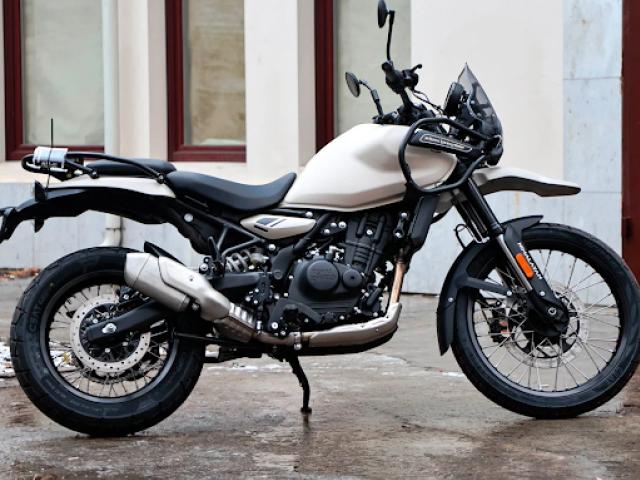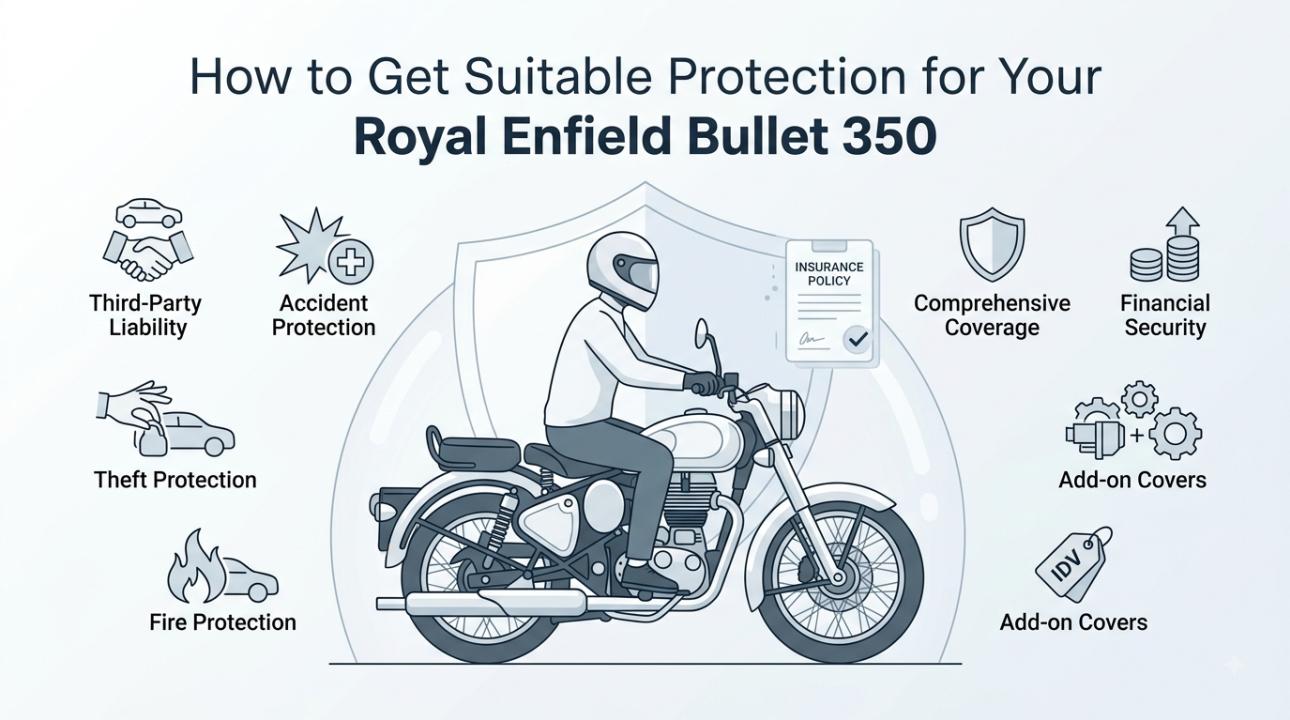
The Royal Enfield Bullet 350 is a
popular motorcycle known for its classic styling, comfortable riding experience
and strong road presence. Whether it is used for daily commuting, weekend rides
or longer journeys, protecting the motorcycle with suitable insurance is an
important part of responsible ownership.
A bike can face several unexpected risks,
including road accidents, theft, fire, natural calamities and third-party
liabilities. While third-party motor insurance is mandatory for vehicles used
on public roads in India, it generally does not cover damage to your own
motorcycle. This makes it important to understand the difference between basic
liability protection and broader bike insurance coverage.
Choosing suitable Royal Enfield Bullet 350 insurance
should not be based only on the lowest premium. Factors such as policy type,
coverage, IDV, deductibles, exclusions, add-ons, bike usage and claim services
should also be considered.
Why Does the Royal
Enfield Bullet 350 Need Insurance?
Insurance can provide financial protection
against covered risks and help motorcycle owners manage unexpected expenses.
Third-party insurance protects against
eligible legal liabilities arising from third-party injury, death or property
damage caused by the insured vehicle, subject to applicable terms and
regulations.
On the other hand, comprehensive bike
insurance generally combines third-party liability protection with own-damage
coverage against specified risks. Depending on the policy, it can provide
protection against events such as:
- Accidents
- Theft
- Fire
- Natural calamities
- Certain man-made
events
The exact protection depends on the policy
wording, exclusions, deductibles and other applicable conditions.
Understand the
Available Insurance Options
Before choosing insurance for your Bullet 350,
understand the main types of motor insurance available.
Third-Party Insurance
Third-party insurance provides mandatory
liability protection. It can cover eligible liabilities arising from injury,
death or property damage caused to a third party.
However, it generally does not cover damage to
your own Bullet 350.
Comprehensive
Insurance
Comprehensive insurance generally provides
third-party liability protection along with own-damage protection against
specified risks.
For owners who want broader protection for
their motorcycle, this may be a suitable option to consider.
Standalone Own-Damage
Insurance
A standalone own-damage policy is designed to
cover damage to the insured motorcycle against specified risks. It may be
available for eligible vehicles that already have separate third-party
coverage, subject to applicable conditions.
Understanding these options helps you select
coverage based on your actual needs.
1. Assess Your Bullet
350's Value and Age
The age and current value of your motorcycle
should influence your insurance decision.
For a newer Bullet 350, broader protection may
be worth considering because repair or replacement costs can be significant.
For an older motorcycle, evaluate whether
certain add-ons provide enough value compared with their additional premium.
Consider:
- Current age of the
motorcycle
- Approximate market
value
- Frequency of use
- Repair costs
- Parking location
- Theft exposure
- Daily riding distance
This assessment can help you avoid both
underinsurance and unnecessary expenses.
2. Choose an
Appropriate IDV
The Insured
Declared Value (IDV) is an important part of a bike insurance policy.
It generally represents the approximate insured value of the motorcycle for
certain claims, particularly theft or total loss, subject to policy terms.
As the motorcycle becomes older, its IDV
generally changes.
Avoid selecting an unusually low IDV just to
reduce your premium. A lower IDV can affect the amount available for certain
theft or total-loss claims.
At the same time, selecting an unnecessarily
high IDV may increase the premium. Review the available options and choose an
appropriate value.
3. Consider
Comprehensive Protection
If you want protection for your Bullet 350 as
well as third-party liabilities, comprehensive insurance may be worth considering.
Depending on the policy, it can provide
own-damage protection against specified risks such as:
- Accidental damage
- Theft
- Fire
- Natural calamities
- Certain external
events
Comprehensive insurance generally costs more
than third-party-only insurance because it provides wider protection.
However, broader coverage can be valuable if
repairing the motorcycle after a covered incident would place a significant
burden on your finances.
4. Review Suitable
Add-On Covers
Add-ons can enhance your bike insurance
coverage, although they generally increase the premium.
Depending on the insurer and eligibility,
available options may include:
Zero Depreciation
Cover
This add-on may reduce applicable depreciation
deductions on eligible parts during an admissible claim, subject to policy
terms.
It can be particularly useful for eligible
newer motorcycles.
Roadside Assistance
Roadside Assistance may provide help during
certain eligible roadside emergencies or breakdown situations.
It can be useful for riders who frequently
travel long distances.
Engine Protection
Cover
This add-on may cover certain engine-related
losses resulting from specified events, subject to conditions and exclusions.
Consumables Cover
Consumables Cover may provide protection for
eligible consumable items used during an insured repair.
Return to Invoice
Cover
Where available and applicable, this add-on
may provide additional protection in certain total-loss or theft situations.
Do not select every add-on simply because it
is available. Consider whether each cover is relevant to your Bullet 350 and
riding habits.
5. Compare Policies
Beyond the Premium
Online insurance services make it easier to
compare different policies. However, the lowest premium should not automatically
be considered the best option.
Compare:
- Coverage
- IDV
- Deductibles
- Add-ons
- Exclusions
- Claim process
- Policy duration
- Customer support
Make sure you compare policies offering
similar levels of protection. A lower premium may sometimes reflect lower
coverage or different policy conditions.
6. Understand
Deductibles
A deductible is the portion of an eligible
claim that the policyholder may have to bear.
Policies generally include a compulsory
deductible, while some may also offer a voluntary deductible.
A higher voluntary deductible can affect the
premium but increases your contribution during an eligible claim.
Choose a deductible that you can comfortably
manage rather than selecting a higher amount only to reduce the premium.
7. Read the Policy
Exclusions
Understanding exclusions is essential before
purchasing insurance.
Depending on the policy, exclusions may
include:
- Normal wear and tear
- Certain mechanical or
electrical breakdowns
- Damage caused by
excluded circumstances
- Riding without a
valid driving licence
- Unauthorised use
- Certain consequential
losses
- Other situations
specifically mentioned in the policy
Reading the exclusions can help you understand
what your insurance does and does not cover.
8. Consider Your
Riding Habits
The way you use your Bullet 350 should
influence your insurance decision.
If you use your motorcycle every day in heavy
traffic, accidental damage may be a significant concern. If you regularly go on
long rides, roadside assistance may be worth considering if available.
Similarly, if the bike is frequently parked in
public or unsecured areas, theft protection may be particularly important.
Your insurance should reflect your actual
usage and risk exposure.
9. Check the Claim
Process
A good insurance policy should be supported by
a clear and convenient claim process.
Before buying, understand:
- How to report an
accident
- How to notify the
insurer
- What documents may be
required
- How vehicle
inspection works
- How repairs are
handled
- How claim status can
be tracked
After an accident, report the incident
promptly and follow the applicable claim procedure.
10. Keep Your
Information Accurate
When buying or renewing Bullet 350 insurance
online, provide accurate information.
Verify details such as:
- Registration number
- Model and variant
- Registration
location
- Vehicle age
- Policyholder details
- Previous insurance
information
- Claim history
Incorrect information can create difficulties
during policy servicing or claims.
11. Renew Your
Insurance on Time
Insurance should be renewed before the
existing policy expires.
Timely renewal helps maintain continuous
coverage and gives you sufficient time to review your insurance requirements.
Before renewal, consider whether you still
need the same add-ons and coverage. Also check the IDV, NCB and policy
conditions.
Common Mistakes to
Avoid
Bullet 350 owners should avoid these common
insurance mistakes:
- Choosing only the
cheapest policy
- Ignoring exclusions
- Selecting an
unsuitable IDV
- Buying unnecessary
add-ons
- Providing incorrect
vehicle information
- Forgetting the
renewal date
- Not checking
deductibles
- Assuming
comprehensive insurance covers every possible loss
- Delaying claim
notification
A few minutes spent reviewing the policy can
help you make a more informed choice.
Tips to Manage Bullet
350 Insurance Online
Digital insurance services can simplify policy
management. Depending on the available services, you may be able to purchase,
renew and access policy information online.
Keep a digital copy of your insurance document
and note the expiry date. Set a reminder before renewal to avoid last-minute
decisions.
You should also review your coverage
periodically because your motorcycle's age, usage and insurance requirements
may change.
Conclusion
Getting suitable protection for your Royal Enfield Bullet 350 involves evaluating the
motorcycle's age, value, usage and risk exposure. Third-party insurance can
meet the mandatory liability requirement, while comprehensive insurance
generally provides broader protection for your own bike against specified
risks.
Before purchasing or renewing a policy,
compare coverage, IDV, deductibles, exclusions, add-ons and claim services
instead of focusing only on the premium. Selecting relevant protection can help
you manage unexpected financial risks more effectively.
Square
Insurance can help customers explore suitable insurance
options and manage their insurance requirements conveniently. By reviewing your
requirements and understanding the policy terms before making a purchase, you
can choose insurance that better suits your Royal Enfield Bullet 350.
FAQs
Q1. Is Royal
Enfield Bullet 350 insurance mandatory?
Yes. Third-party motor insurance is
mandatory for vehicles used on public roads in India. Bullet 350 owners should
maintain valid insurance as required under applicable regulations.
Q2. Which insurance
is suitable for a Royal Enfield Bullet 350?
It depends on your requirements. Third-party
insurance provides mandatory liability protection, while comprehensive
insurance generally offers broader protection that can include own-damage
coverage against specified risks.
Q3. Does
comprehensive Bullet 350 insurance cover theft?
Comprehensive insurance generally covers
theft of the insured motorcycle, subject to the policy's terms, exclusions and
applicable claim requirements.
Q4. What is IDV in
Bullet 350 insurance?
IDV stands for Insured Declared Value. It
generally represents the approximate insured value of the motorcycle for
certain claims, particularly theft or total loss, subject to the policy
conditions.
Q5. Are add-ons
necessary for Bullet 350 insurance?
Add-ons are not necessarily required for
every rider. Covers such as Zero Depreciation, Roadside Assistance and Engine
Protection may be considered based on your bike's age, usage and individual
requirements.
Q6. Can I buy Royal
Enfield Bullet 350 insurance online?
Yes. Insurance for a Royal Enfield Bullet
350 can generally be purchased online by providing the required vehicle and
policyholder details, selecting suitable coverage and completing the applicable
payment process.