You see a water stain on the bedroom ceiling.
Naturally, you assume the roof leak must be directly above it.
But when it comes to roofing, water doesn't always take the most obvious route.
A leak can begin several feet away from where moisture eventually becomes visible inside the home. Water may travel along roof decking, rafters, pipes, insulation, or other materials before finally reaching a ceiling or wall.
That's one reason finding the source of a roof leak can be more complicated than simply looking above the stain.
For homeowners in Cypress, TX, understanding how roof leaks behave can help explain why proper diagnosis matters before repairs begin.
The Ceiling Stain Is a Clue, Not the Answer
An interior water stain tells you something important:
Moisture has entered somewhere it shouldn't.
What it doesn't necessarily tell you is where the water entered the roofing system.
Imagine water getting underneath a roofing material near a vent.
Instead of immediately dripping straight down, it follows the underside of the roof deck until it reaches a framing member. It travels farther, eventually reaching insulation or drywall.
The stain you see could be several feet from the original problem.
That's why repairing the roofing material directly above an interior stain doesn't always solve the leak.
Common Places Roof Leaks Can Start
Roof leaks can originate from many different components.
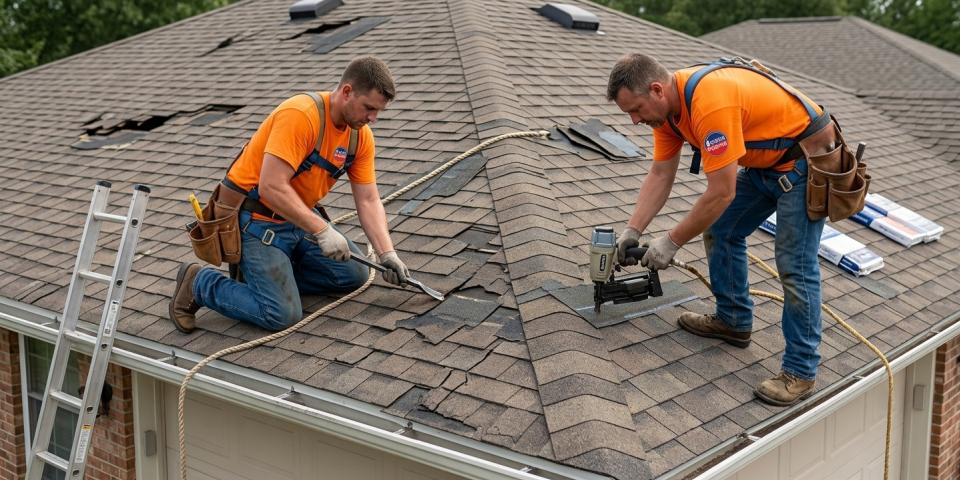
Damaged or Missing Shingles
Missing, cracked, lifted, or deteriorated shingles can expose the roofing layers beneath them to weather.
Storms can make these problems particularly noticeable, but damage isn't always dramatic.
A shingle can remain on the roof while still being compromised.
Flashing
Flashing helps direct water around areas where the roofing system meets another surface or component.
You'll commonly find it around:
- Chimneys
- Walls
- Valleys
- Roof penetrations
- Skylights
- Other transitions
If flashing becomes damaged, displaced, deteriorated, or incorrectly installed, water may find its way underneath the roofing materials.
Plumbing and Roof Vents
Every penetration through a roof creates an area that needs to remain watertight.
Boots, seals, flashing, and surrounding materials can deteriorate over time.
Sometimes the shingles themselves are perfectly serviceable while the problem exists around one small penetration.
Roof Valleys
Valleys carry runoff from adjoining roof slopes.
During heavy Texas rain, a significant amount of water can move through these areas.
Damage, debris, deterioration, or installation problems within a valley can create opportunities for water intrusion.
Roof-to-Wall Connections
Where a roof meets a vertical wall, flashing and drainage details become especially important.
Water needs to move down the roof and away from the building rather than behind the exterior materials.
Problems at these transitions can produce leaks that are difficult to identify from inside the house.
Why Some Leaks Only Appear During Heavy Rain
One of the most confusing situations for homeowners is an intermittent leak.
It rains one afternoon and everything stays dry.
Then a thunderstorm arrives a week later and the ceiling starts dripping.
How can that happen?
The answer may involve the amount and direction of the rain.
Wind-driven rain can push water toward roofing transitions differently from ordinary rainfall. Heavy rain also puts more water through valleys and drainage areas in a shorter period.
That means a vulnerable area might remain dry during one storm but leak during another.
A leak disappearing after the weather clears doesn't necessarily mean the problem disappeared with it.
Wind Can Complicate the Problem
Strong winds can affect roofing materials without completely removing them.
A shingle may lift and settle back into place.
A seal can become compromised.
Flashing can move.
Roof-edge components can sustain damage.
From the ground, the roof may still look relatively normal.
But the next wind-driven rain can reveal the vulnerability.
This is particularly relevant for Cypress homes because local roofing systems have to contend with heat, humidity, thunderstorms, wind, and severe weather. Achilles' Cypress roofing information specifically identifies high winds and severe storms among the conditions local roofs must handle.
Why Patching the Interior Doesn't Fix a Roof Leak
A water stain inside the home can create two separate projects.
The first is repairing the source of the water.
The second is repairing any interior damage caused by it.
Painting over a ceiling stain only addresses the visible symptom.
If water continues entering through the roof, the stain can return—and moisture may continue affecting materials you can't see.
The exterior problem needs to be identified and corrected first.
What a Roofer May Check
When investigating a suspected leak, a roofing contractor may need to examine more than the area directly above the interior damage.
Depending on the home and the symptoms, the evaluation could involve:
- Roofing material condition
- Flashing
- Valleys
- Vents and penetrations
- Roof edges
- Previous repairs
- Accessible attic areas
- Visible signs of moisture
- Decking condition
- Storm-related damage
The objective isn't simply to find something that can be patched.
It's to determine the most likely path the water is taking and address the actual entry point.
Does a Roof Leak Mean You Need a New Roof?
Not necessarily.
Many roof leaks originate from localized problems that can potentially be repaired.
A damaged flashing detail, isolated shingle problem, or issue around a penetration doesn't automatically justify replacing an otherwise serviceable roofing system.
Replacement becomes a different consideration when problems are widespread, deterioration affects much of the roof, or leaks repeatedly appear in different areas.
That's why diagnosis should come before the repair-versus-replacement decision.
Finding Roof Repair in Cypress
Achilles Roofing & Exterior provides roof inspections, leak detection, storm-related roofing work, repair, installation, and replacement throughout Cypress. Its Cypress operation also includes a supply yard and warehouse at 16310 Cypress Bend Drive, Cypress, TX 77429.
Homeowners dealing with ceiling stains, recurring leaks, damaged shingles, or storm-related problems can learn more about Roof Repair Cypress and the roofing services available locally.
Find the Source Before Fixing the Symptom
When water appears inside your home, the most obvious location isn't always where the problem began.
That's what makes roof leaks frustrating.
The stain is evidence.
Finding the path that water took—and where that path started—is the important part.
Once the actual source is identified, you can make a much better decision about what needs to be repaired and whether the rest of the roofing system needs attention.