As enterprise networks grow more complex with cloud computing, remote
workforces, and real-time digital services, traditional network management
methods are struggling to keep up. Manual monitoring, reactive troubleshooting,
and static performance baselines are no longer sufficient for modern
infrastructures. For professionals pursuing CCIE Enterprise Infrastructure training, understanding
the role of artificial intelligence in network operations has become essential.
This shift toward intelligent automation is also a core focus area of advanced “CCIE Enterprise Training,” as enterprises
increasingly rely on data-driven decision-making to maintain performance,
reliability, and security.
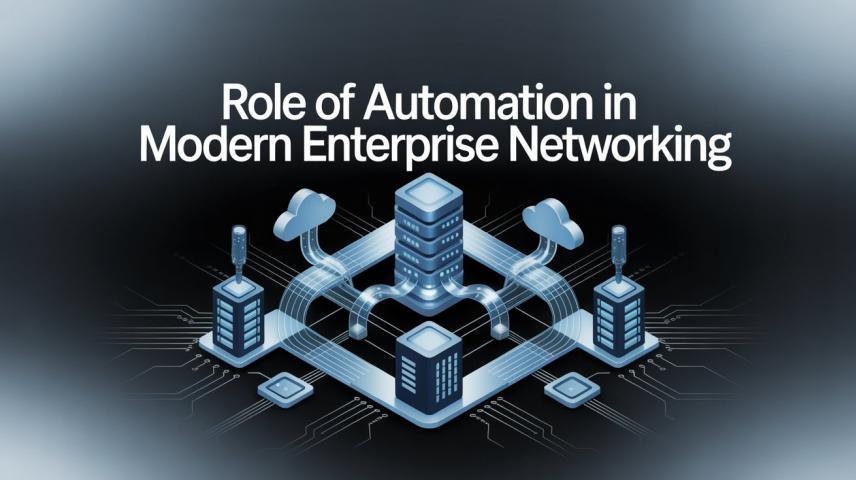
AI-Driven Network Operations, commonly known as
AIOps, is transforming how enterprises manage, monitor, and optimize their
networks. It brings automation, predictive analytics, and intelligent
remediation into everyday operations.
What Is AIOps in Enterprise Networking?
AIOps refers to the application of artificial
intelligence and machine learning to IT operations. In the context of
enterprise infrastructure, it involves collecting massive amounts of network
data and using AI models to analyze performance trends, detect anomalies, and
trigger automated actions.
Unlike traditional network monitoring tools
that rely on static thresholds and manual interpretation, AIOps platforms
continuously learn from network behavior. This allows them to identify issues
before users experience performance degradation or downtime.
Why AIOps Is Critical for Modern Enterprise
Infrastructure
Enterprise environments today consist of:
·
Multi-cloud and hybrid cloud architectures
·
Software-defined WANs
·
Virtualized data centers
·
Remote and mobile users
·
IoT and edge computing devices
Each of these elements generates large volumes
of telemetry data. Human operators simply cannot process this information at
the speed required for real-time decision-making. AIOps bridges this gap by
enabling:
·
Faster issue detection
·
Predictive fault management
·
Automated root cause analysis
·
Intelligent performance optimization
As digital transformation accelerates, AIOps
is quickly becoming a standard requirement rather than a future technology.
Key Capabilities of AIOps in Enterprise
Networks
1. Real-Time Network Visibility
AIOps platforms continuously collect data from
routers, switches, firewalls, wireless controllers, and cloud services. By
analyzing this data in real time, they provide deep visibility into:
·
Traffic patterns
·
Application performance
·
Latency and packet loss
·
User experience metrics
This unified visibility eliminates blind spots
that often exist in traditional monitoring setups.
2. Predictive Analytics and Proactive
Maintenance
One of the most powerful benefits of AIOps is
its ability to predict failures before they occur. By analyzing historical data
and current trends, AI models can forecast:
·
Link congestion
·
Device failures
·
Bandwidth saturation
·
Performance bottlenecks
This allows IT teams to take preventive action
instead of reacting after business services are already impacted.
3. Intelligent Fault Detection and Root Cause
Analysis
In large enterprise environments, a single
issue can trigger hundreds of alerts. AIOps systems reduce alert noise by
correlating related events and identifying the true root cause.
Instead of troubleshooting blindly across
multiple tools, network engineers receive:
·
Clear incident summaries
·
Probable root causes
·
Impact analysis
·
Recommended remediation actions
This significantly reduces mean time to repair
(MTTR).
4. Automated Remediation and Self-Healing
Networks
AIOps is not limited to visibility and
analytics. Many platforms now support automated remediation. When predefined
conditions are met, the system can:
·
Restart services
·
Reroute traffic
·
Apply configuration changes
·
Scale network resources dynamically
This concept of self-healing networks is
especially valuable for business-critical environments that demand continuous
uptime.
Role of AIOps in Enterprise Network Security
AIOps also plays a major role in enhancing
network security. By analyzing traffic behavior and user activity, AI models
can identify:
·
Abnormal access patterns
·
Suspicious lateral movement
·
DDoS attack indicators
·
Malware communication signatures
When integrated with security platforms, AIOps
enables faster threat detection and automated response, reducing the risk of
large-scale breaches.
AIOps and Cloud-Driven Enterprise
Infrastructure
As enterprises migrate workloads to cloud
platforms, network visibility becomes more fragmented. AIOps helps bridge the
gap between on-premises infrastructure and cloud environments by providing:
·
End-to-end visibility across hybrid networks
·
Unified performance analytics
·
Cloud traffic optimization
·
Secure workload connectivity insights
This unified approach is critical for
maintaining consistent service quality across distributed environments.
Business Benefits of AIOps for Enterprises
From a business perspective, AIOps delivers
measurable value:
·
Reduced downtime and service outages
·
Lower operational costs
·
Faster problem resolution
·
Improved user experience
·
Higher infrastructure ROI
·
Better capacity planning
Organizations adopting AIOps gain operational
efficiency while improving overall service delivery.
Why AIOps Is a Must-Have Skill for CCIE
Engineers
At the expert level, network engineers are no
longer just device administrators. They are expected to design and manage intelligent,
automation-ready infrastructures. AIOps knowledge is now critical for:
·
Designing scalable enterprise networks
·
Supporting automation and intent-based
networking
·
Managing hybrid cloud connectivity
·
Integrating security analytics into network
operations
·
Passing real-world enterprise architecture
challenges
Modern CCIE professionals must understand how
AI-driven systems interact with traditional networking technologies to deliver
business-aligned outcomes.
Conclusion
AI-Driven Network Operations is rapidly
redefining how enterprise infrastructures are designed, monitored, and
optimized. By combining real-time visibility, predictive analytics, automated
remediation, and intelligent security monitoring, AIOps enables enterprises to
move from reactive network management to proactive, self-healing operations. As
networks continue to grow in scale and complexity, AI-driven automation will
become a foundational requirement rather than an advanced feature.
For professionals aiming to stay relevant in
this evolving landscape and build future-ready enterprise design skills,
investing in the right CCIE Enterprise Training is an essential step toward long-term success.