
Preparing for the CCIE Security exam is a long-term commitment that demands technical depth, consistency, and a well-structured plan. For professionals exploring CCIE Security Training in Delhi, having a clear preparation strategy is just as important as choosing the right institute. With increasing competition and evolving exam patterns, a focused and realistic approach can significantly improve success rates.
Delhi has emerged as a major hub for advanced networking
education, offering aspirants access to expert mentors, modern lab
infrastructure, and flexible learning options. However, without a defined
strategy, even the best resources may not deliver results.
Understanding the CCIE Security Exam Structure
The CCIE Security certification evaluates a candidate’s
ability to design, deploy, operate, and troubleshoot complex security networks.
The exam emphasizes real-world scenarios rather than theoretical knowledge
alone.
Key characteristics of the exam include:
- Multi-technology
integration
- Time-bound
problem-solving
- Heavy
focus on troubleshooting
- Configuration
accuracy under pressure
An effective preparation strategy must address all these
aspects equally.
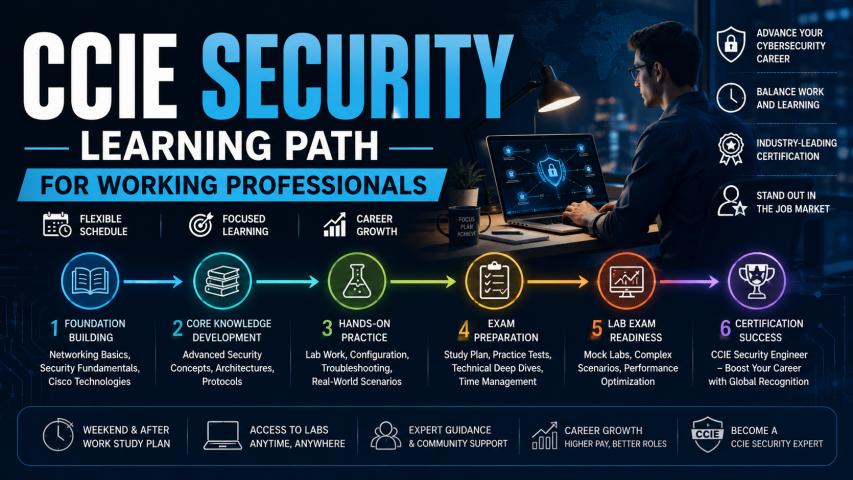
Step 1: Build a Strong Foundation
Before diving into advanced lab practice, candidates should
ensure their fundamentals are strong. This includes routing, switching, TCP/IP,
and basic security concepts. Skipping this step often leads to confusion during
complex configurations later.
Candidates enrolled in CCIE Security Training in Delhi
should spend the initial phase revising core networking and security principles
before moving to advanced topics.
Step 2: Follow a Structured Study Plan
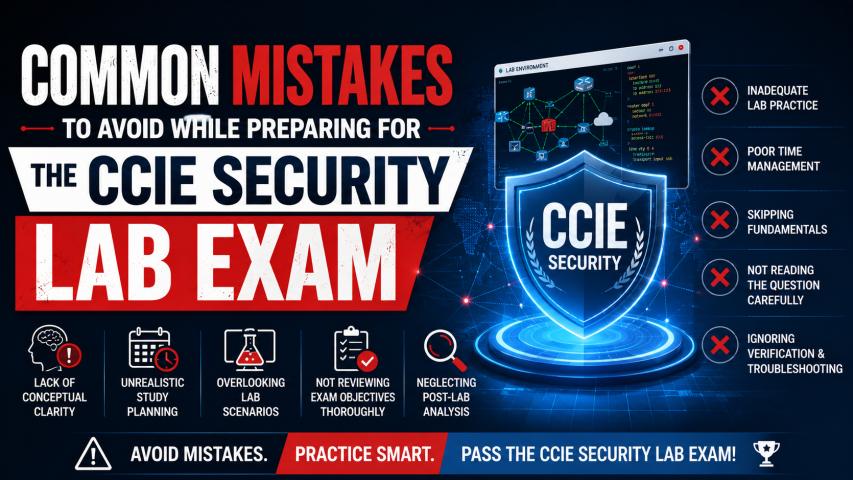
One of the most common mistakes aspirants make is studying
topics randomly. A structured roadmap aligned with the CCIE Security blueprint
is essential.
A good study plan should:
- Break
topics into manageable phases
- Allocate
time for both theory and labs
- Include
revision and mock testing
- Allow
flexibility for weak areas
Consistency matters more than long study hours. Daily
focused sessions deliver better outcomes than irregular intensive efforts.
Step 3: Prioritize Hands-On Lab Practice
Lab practice is the backbone of CCIE Security preparation.
Candidates should aim to spend a significant portion of their preparation time
working on labs that simulate real exam conditions.
Effective lab practice includes:
- Repeating
core technologies multiple times
- Practicing
full-length mock labs
- Performing
configurations without reference notes
- Focusing
equally on troubleshooting tasks
Using updated and exam-aligned lab environments is critical
for realistic preparation.
Step 4: Develop Time Management Skills
The CCIE Security lab exam is as much a test of time
management as it is of technical skill. Many well-prepared candidates fail due
to inefficient use of time.
To improve time management:
- Practice
labs with strict time limits
- Learn
to prioritize tasks
- Avoid
spending excessive time on a single issue
- Develop
a methodical troubleshooting approach
Regular timed practice builds speed and confidence.
Step 5: Leverage Mentorship and Feedback
Guidance from experienced CCIE-certified instructors can
drastically reduce trial-and-error learning. Mentors help aspirants identify
mistakes, optimize configurations, and adopt best practices.
Candidates should actively seek:
- Lab
performance reviews
- Strategy
discussions
- Feedback
on weak areas
- Exam-oriented
tips and techniques
This guidance is especially valuable during the final stages
of preparation.
Step 6: Take Mock Exams Seriously
Mock labs are not just practice tools—they are performance
indicators. Aspirants should treat them like the actual exam by following
strict rules and analyzing results honestly.
After each mock:
- Identify
recurring mistakes
- Refine
troubleshooting methods
- Adjust
study plans accordingly
Mock exams help bridge the gap between preparation and real
exam expectations.
Step 7: Maintain Discipline and Consistency
CCIE preparation is a marathon, not a sprint. Burnout,
inconsistency, and loss of motivation are common challenges. Setting realistic
milestones and maintaining a balanced routine helps sustain momentum.
Short breaks, regular revisions, and measurable progress
tracking can keep aspirants focused throughout the journey.
Conclusion
A successful CCIE Security exam preparation strategy
combines strong fundamentals, structured learning, intensive lab practice, and
expert guidance. Delhi candidates have access to excellent resources, but
results depend on how effectively those resources are used.
By following a disciplined and exam-focused approach,
aspirants can significantly improve their chances of success. In conclusion,
choosing the right preparation path through CCIE Security Bootcamp Delhi,
CCIE Security Certification Delhi programs can provide the structure,
mentorship, and lab exposure needed to achieve this prestigious certification.