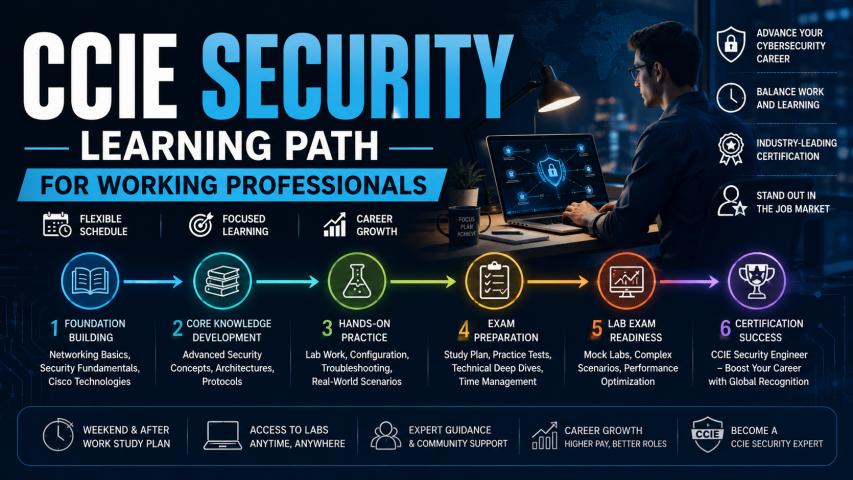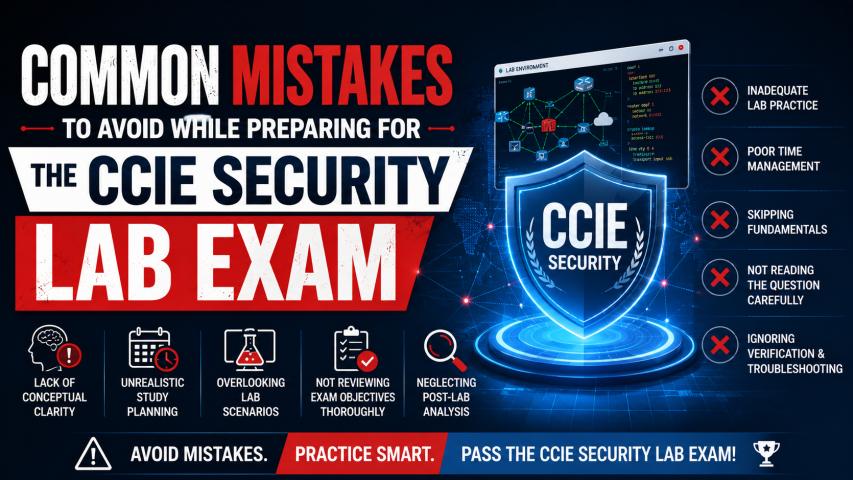

Preparing for the CCIE Security lab exam is a demanding process that requires discipline, strategy, and extensive hands-on practice. For candidates pursuing CCIE Security Training in Delhi, lab practice often becomes the most decisive factor between success and repeated attempts. Despite access to modern infrastructure and expert trainers, many aspirants unknowingly make mistakes that slow down their progress.
With the growing popularity of CCIE Security Bootcamp Delhi programs and flexible learning paths, understanding common lab
practice errors can help aspirants avoid wasted effort and prepare more
effectively.
Why Lab Practice Is Critical for CCIE Security
The CCIE Security exam is designed to test real-world
problem-solving skills under time pressure. Unlike theory-based certifications,
it focuses heavily on configuration accuracy, integration of multiple
technologies, and troubleshooting complex security scenarios.
Lab practice is not just about repetition—it is about
practicing the right way. Unfortunately, many aspirants in Delhi fall
into habits that limit their growth despite spending long hours in the lab.
Most Common Lab Practice Mistakes
1. Practicing Without a Clear Plan
One of the biggest mistakes is jumping into labs without a
structured approach. Random configurations without mapping them to exam
objectives often lead to confusion and shallow understanding. Aspirants should
always align lab sessions with specific CCIE Security blueprint topics.
2. Over-Reliance on Predefined Solutions
Many candidates follow step-by-step lab guides or copied
configurations without understanding the logic behind them. While this may help
complete tasks quickly, it weakens troubleshooting skills—an essential part of
the CCIE Security exam.
3. Ignoring Troubleshooting Scenarios
Some aspirants focus only on configuration-based labs and
avoid troubleshooting exercises. This is a critical mistake. The exam heavily
emphasizes fault isolation, misconfiguration detection, and rapid correction
under pressure.
4. Limited Repetition of Core Technologies
Another common issue is practicing a wide range of topics
once instead of repeating core technologies multiple times. VPNs, firewall
policies, and secure routing require repeated hands-on exposure to build speed
and accuracy.
5. Poor Time Management During Labs
Many aspirants practice without timing themselves. As a
result, they struggle during mock labs or the actual exam. Practicing under
time constraints helps develop efficiency and decision-making speed.
Infrastructure-Related Mistakes
6. Underutilizing Lab Access
Some candidates have 24/7 lab access but fail to use it
consistently due to poor scheduling or lack of discipline. Regular, shorter lab
sessions are often more effective than irregular, long sessions.
7. Practicing on Outdated Lab Setups
Using outdated device images or lab topologies that do not
align with current exam patterns can be harmful. Aspirants should ensure their
lab environment reflects the latest CCIE Security requirements.
Mentorship and Feedback Gaps
8. Not Seeking Instructor Feedback
Many aspirants practice independently but rarely review
their work with instructors. Feedback helps identify recurring mistakes,
inefficient methods, and conceptual gaps that self-study may miss.
9. Avoiding Peer Discussions
Lab practice becomes more effective when combined with peer
learning. Discussing different approaches to the same problem often leads to
deeper understanding and alternative solutions.
Psychological and Behavioral Mistakes
10. Focusing on Quantity Over Quality
Spending long hours in the lab does not guarantee
improvement. Quality practice—where configurations are reviewed, errors are
analyzed, and concepts are reinforced—is far more effective.
11. Losing Consistency
Burnout and inconsistency are common among CCIE aspirants.
Skipping labs for extended periods can lead to loss of momentum and confidence.
How Aspirants Can Improve Lab Practice
To avoid these mistakes, CCIE Security aspirants in Delhi
should:
- Follow
a structured lab roadmap
- Combine
configuration and troubleshooting equally
- Practice
under exam-like time conditions
- Regularly
review work with mentors
- Use
updated and exam-aligned lab environments
These habits significantly improve readiness and reduce the
risk of failure.
Conclusion
Lab practice is the backbone of CCIE Security success, but
only when done correctly. By avoiding common mistakes such as unstructured
practice, over-reliance on solutions, and poor time management, aspirants can
maximize the value of their preparation.
For those investing in CCIE Security Bootcamp Delhi, CCIE Security Certification Delhi, disciplined lab strategies and the right
guidance can turn months of practice into a confident exam performance.
Ultimately, smart lab practice—not just hard work—is what separates successful
CCIE Security candidates from the rest.