In today’s digital-first business environment, enterprise networks are under
constant pressure to deliver consistent performance, scalability, and
reliability. As organizations expand operations across cloud platforms, data
centers, remote offices, and global users, network capacity planning becomes a
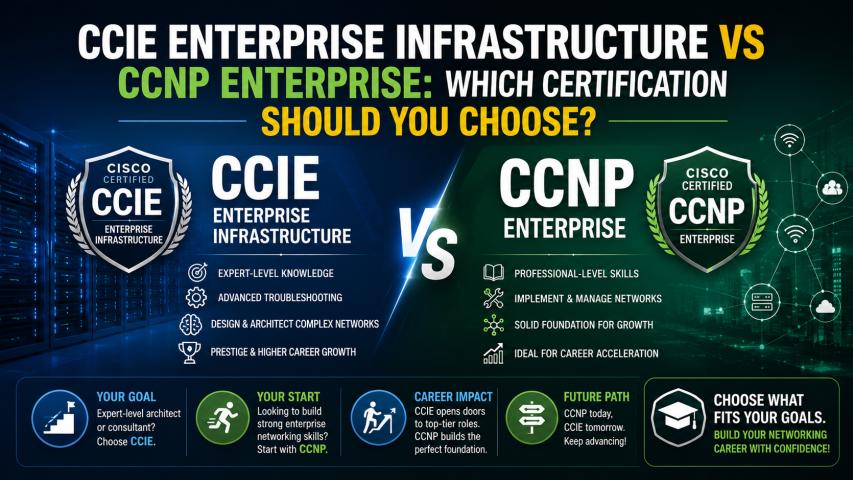
critical strategic function. For professionals pursuing CCIE Enterprise Infrastructure training, understanding large-scale capacity planning
is a core architectural skill. In fact, modern “CCIE Enterprise
Training,” places strong emphasis on designing networks that can scale
predictably while maintaining performance and cost efficiency.
Network capacity planning is not just about adding more bandwidth. It is a
data-driven process that ensures the enterprise network can support current
demands while remaining flexible for future growth.
What Is Network Capacity Planning?
Network capacity planning is the practice of forecasting future network
requirements and ensuring that adequate resources are available to handle
expected traffic loads. It involves analyzing current usage, identifying
performance trends, predicting growth patterns, and aligning infrastructure
investments with business objectives.
In large-scale enterprises, capacity planning covers:
·
Campus networks
·
Data center infrastructure
·
Wide Area Networks (WAN)
·
Cloud connectivity
·
Remote user access
Without structured capacity planning, organizations risk congestion, service
degradation, and costly emergency upgrades.
Why Capacity Planning Is Critical for Large Enterprises
Large enterprise environments support thousands of users, applications, and
interconnected services. Even small performance issues can quickly escalate
into business-wide disruptions. Effective capacity planning delivers multiple
benefits:
·
Consistent application performance
·
Reduced risk of network congestion
·
Optimized infrastructure costs
·
Improved user experience
·
Higher uptime and reliability
·
Better support for digital transformation
initiatives
By contrast, poor capacity planning leads to bottlenecks, unpredictable
outages, and inefficient capital spending.
Key Factors That Drive Enterprise Network Capacity
1. Application Growth and Traffic Patterns
Modern enterprises rely heavily on bandwidth-intensive applications such as
video conferencing, cloud-based collaboration tools, ERP systems, and real-time
analytics platforms. Each application has unique performance characteristics
that must be accounted for during planning.
Traffic modeling is essential to understand:
·
Peak usage periods
·
Application prioritization needs
·
Latency sensitivity
·
Burst traffic behavior
2. User Expansion and Device Proliferation
Enterprises now support not only employees but also contractors, partners,
BYOD devices, and IoT systems. Every new endpoint increases network load and
requires additional capacity for secure access, telemetry, and management
traffic.
3. Cloud and Hybrid Deployments
As workloads shift to public and hybrid cloud environments, traffic patterns
become more distributed. Capacity planning must include:
·
Cloud on-ramp bandwidth
·
Inter-region connectivity
·
SaaS application access
·
Secure tunneling overhead
Cloud adoption significantly alters the traditional north–south and
east–west traffic models inside enterprise networks.
Core Steps in Enterprise Network Capacity Planning
1. Baseline Current Network Performance
The first step in any capacity planning strategy is understanding the
current state of the network. This includes:
·
Link utilization
·
Bandwidth consumption
·
Latency and packet loss
·
Application response times
·
Device resource usage
Accurate baselining provides a foundation for reliable forecasting.
2. Analyze Traffic Trends and Patterns
Rather than relying on short-term snapshots, enterprises must analyze
long-term trends. This includes daily, weekly, monthly, and seasonal traffic
variations. Trend analysis helps identify:
·
Gradual bandwidth growth
·
Sudden usage spikes
·
New application impact
·
Infrastructure stress points
3. Forecast Future Network Demand
Forecasting combines historical data with business growth projections. Key
elements include:
·
Planned branch expansions
·
New digital services
·
Remote workforce growth
·
Data center migrations
·
Mergers and acquisitions
This forward-looking approach ensures the network can support business
objectives without disruption.
4. Design Scalable Network Architecture
Capacity planning must align with scalable design principles. Large
enterprises often use:
·
Modular network architecture
·
Spine–leaf data center designs
·
High-speed core aggregation layers
·
Redundant WAN paths
·
Virtualized network overlays
Scalable designs allow capacity to grow incrementally without requiring
full-scale redesigns.
5. Optimize Traffic Using QoS and Traffic Engineering
Not all network traffic is equal. Capacity planning also involves
prioritizing business-critical applications using:
·
Quality of Service (QoS) policies
·
Traffic shaping
·
Load balancing
·
Path selection mechanisms
This ensures that essential services receive guaranteed performance even
during peak usage periods.
Role of Automation and AIOps in Capacity Planning
Traditional manual capacity planning can no longer keep pace with dynamic
enterprise environments. Automation and AI-driven analytics now play a major
role by enabling:
·
Real-time telemetry collection
·
Predictive capacity forecasting
·
Automated bandwidth adjustments
·
Proactive congestion alerts
·
Data-driven infrastructure decisions
These technologies allow enterprises to move from reactive upgrades to
proactive network optimization.
Capacity Planning for WAN and Branch Networks
In large enterprises, branch and WAN connectivity often becomes the first
bottleneck. Capacity planning at the WAN level must consider:
·
Internet bandwidth growth
·
SD-WAN overlays
·
Cloud application access
·
Redundant carrier design
·
Regional traffic optimization
Well-planned WAN capacity ensures consistent performance across
geographically distributed locations.
Capacity Planning in Data Center and Cloud Environments
Data center and cloud capacity planning must account for:
·
East–west traffic growth
·
Virtual machine density
·
Storage replication traffic
·
Backup and disaster recovery bandwidth
·
Inter-data center connectivity
As enterprises adopt hybrid and multi-cloud strategies, end-to-end capacity
visibility becomes essential for maintaining application performance.
Why Capacity Planning Is a Core Skill for CCIE Professionals
At the expert level, network engineers are expected to think beyond device
configuration and operate as infrastructure architects. Capacity planning
skills are essential for:
·
Designing future-ready enterprise networks
·
Supporting large-scale digital transformation
initiatives
·
Preventing costly network outages
·
Optimizing capital and operational expenditures
·
Delivering consistent service quality
These capabilities are also frequently tested in advanced enterprise design
scenarios and real-world architectural challenges.
Conclusion
Network capacity planning is a strategic discipline that ensures large-scale
enterprise networks remain scalable, resilient, and performance-optimized in
the face of continuous growth. By combining traffic analysis, forecasting,
scalable design, QoS optimization, and automation, enterprises can avoid
bottlenecks while maximizing infrastructure ROI. As business dependency on
digital services continues to rise, effective capacity planning becomes a
non-negotiable requirement for long-term success.
For professionals aiming to develop expert-level enterprise design and
forecasting skills, mastering these concepts through the right CCIE Enterprise Training is a practical step toward future-proofing their
networking career.