The
demand for skilled data center professionals has never been higher. As
organizations increasingly adopt automation, cloud technologies, and
software-defined architectures, experts capable of designing, operating, and
securing complex data center infrastructures are in great demand. Many aspiring
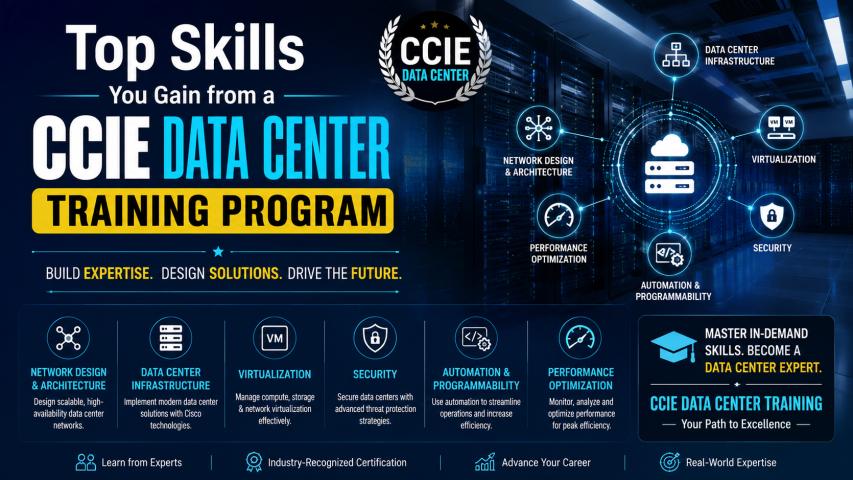
engineers choose CCIE Data Center training to build deep technical
expertise and prepare for advanced roles that require mastery over Cisco Nexus,
ACI, UCS, virtualization, storage networking, and automation frameworks.
Earning a
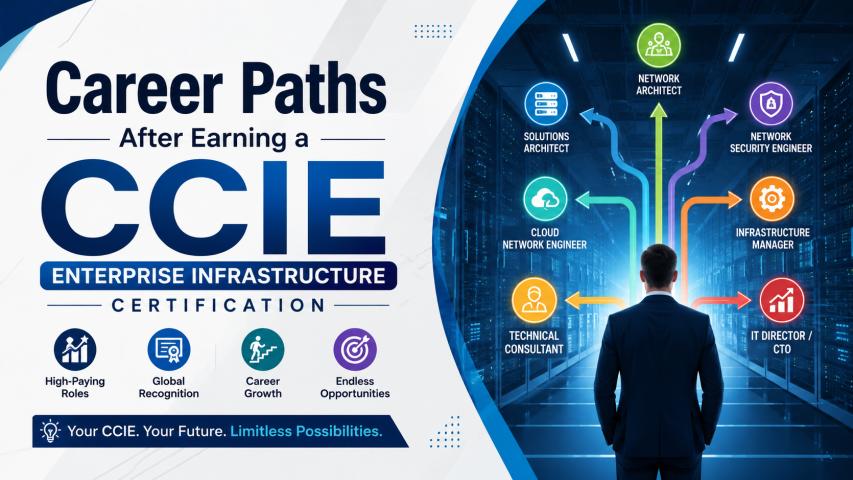
CCIE Data Center certification opens the door to multiple high-value career
opportunities across enterprise, cloud, and service provider environments.
1. Data Center Network Engineer
One of
the most common and high-impact roles for CCIE Data Center professionals is
working as a Data Center Network Engineer. Responsibilities include:
- Designing spine-leaf
architectures
- Managing VXLAN EVPN overlays
- Configuring and optimizing
Nexus switching platforms
- Implementing
high-availability and disaster recovery solutions
With
companies shifting toward scalable and automated fabrics, CCIE Data Center
professionals play a critical role in building resilient network foundations.
2. Cisco ACI Specialist / SDN Engineer
Cisco
Application Centric Infrastructure (ACI) is now a dominant SDN platform in
modern data centers. Certified engineers can work as:
- ACI Implementation
Specialists
- SDN Automation Engineers
- ACI Multi-Site Architects
Professionals
in this role design policy-driven networks, automate application profiles,
manage segmentation, and integrate ACI with public cloud environments. Given
the rapid adoption of SDN, this specialization offers excellent long-term
career growth.
3. Data Center Architect
CCIE Data
Center holders often progress to strategy-focused roles such as Data Center
Architect. This position requires expertise in:
- Designing end-to-end data
center architectures
- Integrating compute,
network, and storage platforms
- Aligning business needs with
technical solutions
- Advising enterprises on
infrastructure modernization
Architect
roles offer higher compensation and leadership responsibilities, making them a
top aspiration for CCIE-level professionals.
4. Cloud Network Engineer / Hybrid Cloud Specialist
As
organizations increasingly rely on AWS, Azure, and Google Cloud Platform,
hybrid cloud networking skills have become essential. CCIE professionals can
transition into roles such as:
- Cloud Infrastructure
Engineer
- Hybrid Cloud Connectivity
Specialist
- Multi-Cloud Network
Architect
These
roles involve designing secure connectivity, managing cloud routing,
integrating ACI with cloud platforms, and automating multi-cloud workflows.
5. Data Center Automation Engineer
Automation
is now central to every modern data center. Engineers with CCIE-level knowledge
and strong scripting or automation skills (Python, Ansible, Terraform, REST
APIs) are suited for:
- Network Automation Engineer
roles
- NetDevOps positions
- Infrastructure-as-Code
deployment management
These
professionals help organizations reduce operational errors, accelerate
deployments, and streamline day-to-day operations.
6. UCS & Compute Infrastructure Engineer
Cisco UCS
remains a widely used compute platform in enterprise environments. A CCIE Data
Center certification equips engineers to specialize in:
- Blade and rack server
operations
- UCS service profile
automation
- Firmware lifecycle
management
- Compute virtualization and
integration
This role
is valuable in industries with heavy virtualization and compute requirements,
such as healthcare, finance, and media.
7. Storage Network Engineer (SAN/NAS Specialist)
The CCIE
Data Center curriculum includes strong SAN knowledge—making certified engineers
ideal for roles involving:
- Fibre Channel and FCoE
technologies
- MDS director switches
- Storage zoning, LUN
provisioning, and fabric management
- Integrating storage with
virtualization platforms
As data
volumes grow, skilled SAN experts remain essential for maintaining performance
and reliability.
8. Data Center Consultant / Technical Solutions
Expert
Consulting
roles are ideal for CCIE professionals who enjoy solving complex challenges
across multiple clients. Responsibilities may include:
- Designing large-scale data
center migrations
- Conducting infrastructure
audits
- Advising on upgrades and
capacity planning
- Supporting digital
transformation initiatives
Consultants
often work with global enterprises or IT service providers and enjoy
flexibility, high compensation, and exposure to diverse technologies.
9. Network Security Engineer (Data Center Security
Focus)
Modern
data centers depend heavily on segmentation, policy enforcement, zero-trust
models, and microsegmentation. CCIE Data Center certification strengthens a
candidate’s ability to work with:
- Firewalls and security
appliances
- ACI-based microsegmentation
- TrustSec policies
- Encryption and secure data
paths
As cyber
threats evolve, data center security roles continue to expand.
10. SRE / Infrastructure Reliability Engineer
Many
organizations—especially cloud-native and DevOps-driven companies—hire CCIE
engineers for reliability-focused roles. Tasks may include:
- Monitoring data center
health
- Automating disaster recovery
- Improving system
availability
- Implementing observability
and telemetry systems
This role
blends networking, automation, and operations—ideal for engineers seeking
modern, cross-functional positions.
Final Thoughts
The CCIE
Data Center certification is one of the most respected credentials in the IT
industry. It opens the door to high-value technical and strategic roles across
global enterprises, cloud providers, financial institutions, and technology
companies. Whether an engineer wants to focus on architecture, automation, SDN,
hybrid cloud, or consulting, there is a strong career path available. With the
right CCIE Data Center training, professionals can build the expertise
needed to excel in today’s evolving, automation-driven infrastructure
landscape. As data centers continue to modernize, the long-term relevance and
career benefits of CCIE Data Center remain stronger than ever.