Plastic films perform well under laboratory conditions, but failures can still occur during high-speed production—often due to a failure to properly assess the material’s mechanical properties. When issues such as film breakage, heat-seal leaks, and packaging failures arise, manufacturers face production downtime, material waste, customer complaints, and product recalls—all of which can damage brand reputation and erode customer trust.
Manufacturers need to have a precise understanding of the material’s properties to ensure it performs as intended throughout its entire lifecycle.
Why Do Flexible Packaging Films Break During Production?
There are many factors that can lead to film failure. Let’s take a closer look.
Insufficient Tensile Strength of Packaging Film
If a film lacks sufficient tensile strength, weak areas—particularly the edges, lamination interfaces, and seal areas—are highly susceptible to tearing when subjected to stress. These issues are difficult to detect with the naked eye, and it’s impossible to assess how the film will perform under stress. Therefore, manufacturers must test material performance before mass production to avoid adverse consequences.
Poor Film Ductility
Many flexible packaging applications require materials with a certain degree of stretchability and the ability to absorb deformation. If a material’s tensile properties are poor, it is likely to crack rather than deform when subjected to stress. Using a tensile testing machine to evaluate a material’s elongation at break allows for an accurate assessment of whether its performance meets the flexibility requirements of production.
Inconsistent Film Thickness and Material Quality
Inconsistencies in film thickness and material quality can easily create weak points, leading to failure. Conducting regular tensile tests enables manufacturers to compare different production batches and make timely adjustments.
Why Do Flexible Packaging Heat Seals Leak?
Incorrect Heat-Sealing Parameters
Heat-seal leaks are typically caused by the following factors:
- Sealing temperature
- Sealing pressure
- Dwell time
If the temperature is too low, the sealing layers will not bond completely. If the temperature is too high, the film structure will be damaged. Improper pressure or sealing time can also weaken the seal area, leading to packaging seal failure.
Contamination in the Sealing Area
Residues such as dust or grease in the sealing area can impair adhesion and create microscopic channels, preventing effective barrier against air or moisture.
Insufficient Heat-Seal Strength
If the seal lacks sufficient strength, it is highly likely to leak when subjected to forces during transportation and handling.
How Tensile Testing Helps Prevent Film Breakage and Packaging Failures?
Tensile Strength
This indicates the maximum stress a material can withstand before breaking. This property allows manufacturers to determine whether the material can withstand the forces encountered during actual use.
Elongation at Break
This indicates the extent to which a material can stretch before breaking. A higher elongation value indicates better flexibility of the material.
Young’s Modulus and Material Stiffness
Young’s modulus reflects how easily a material deforms under stress. A higher modulus indicates a stiffer material; conversely, a lower modulus indicates greater flexibility. This helps prevent film stretching on high-speed packaging equipment.
Improve Packaging Reliability with Tensile Property Testing
It is difficult to identify defective materials with the naked eye. By evaluating material performance through tensile testing, manufacturers can select more suitable materials, optimize production processes, and improve product quality and production efficiency.
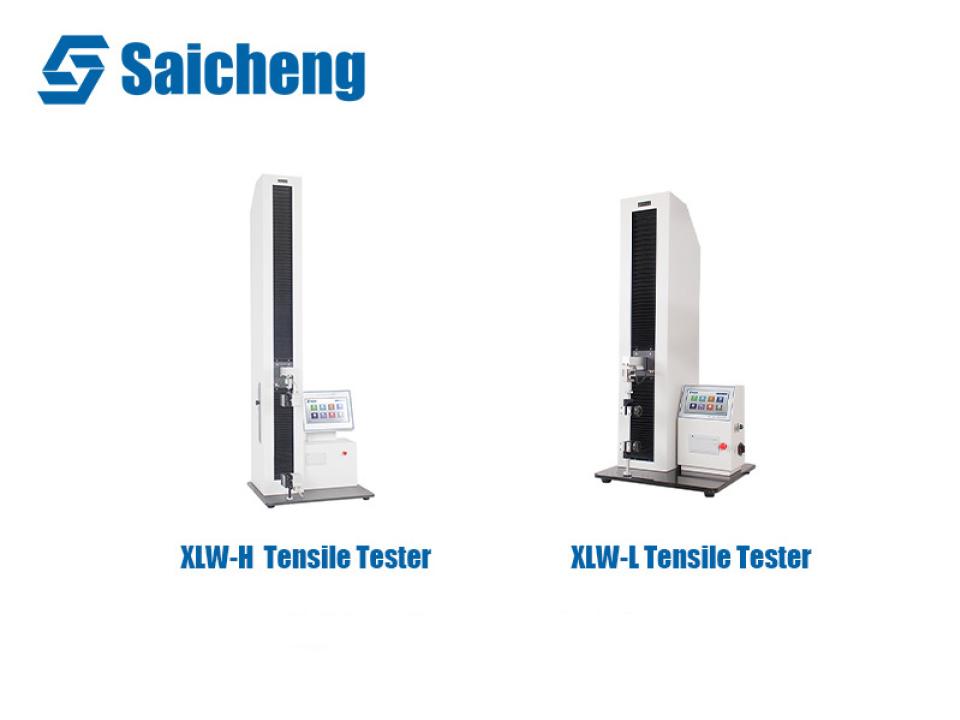
Tensile testers can evaluate critical mechanical properties—such as tensile strength, elongation, and material durability—under controlled conditions. Learn more about how tensile testers work and why they are essential for evaluating packaging materials:
What Is a Tensile Tester and Why Manufacturers Need It
Conclusion
Understanding how materials respond to different forces through tensile testing and gaining a precise understanding of their properties helps manufacturers improve material selection, optimize manufacturing processes, and ensure that materials perform as expected throughout their lifecycle. If you’d like to learn more, visit our website: saichenginstrument.com ; or if you have questions about tensile testers, please request a quote .