In today’s digitally connected business environment, organizations require powerful, scalable, and secure digital platforms to remain competitive. Technology is no longer just a supporting function for businesses; it has become the foundation for growth, customer engagement, operational efficiency, and strategic decision-making. Enterprises across industries are investing in advanced web solutions to manage large volumes of data, support thousands of users, streamline workflows, and deliver seamless digital experiences.
Unlike small business websites or basic web applications, enterprise-level platforms must handle complex business operations, integrate with multiple systems, maintain high security standards, and support continuous growth. This is where enterprise web development becomes essential. A professionally built enterprise platform helps organizations automate processes, improve collaboration, strengthen customer relationships, and build a strong digital infrastructure for long-term success.
Understanding Enterprise Web Development
Enterprise web development is the process of designing, building, and maintaining large-scale web applications and digital platforms specifically tailored for medium to large organizations. These platforms are designed to support complex workflows, large user bases, extensive data processing, and integration with multiple internal and external systems.
Enterprise applications often include employee portals, customer management systems, supply chain platforms, internal communication tools, analytics dashboards, document management systems, and business automation solutions. Unlike standard websites, enterprise applications focus heavily on scalability, reliability, security, and performance.
The goal of enterprise development is not simply to create a website, but to build a digital ecosystem that supports core business operations and long-term organizational growth.
Why Modern Enterprises Need Advanced Web Solutions
As businesses grow, their operational requirements become increasingly complex. Managing departments, customers, employees, vendors, financial data, and operational workflows manually can create inefficiencies and limit growth opportunities.
Enterprise web solutions help organizations centralize information, automate repetitive tasks, improve communication, and provide real-time access to critical business data. Decision-makers can monitor performance, track progress, and identify opportunities through integrated dashboards and reporting tools.
Advanced web solutions also enable companies to respond quickly to market changes, customer expectations, and operational challenges. This flexibility becomes a significant competitive advantage in rapidly evolving industries.
Key Features of Enterprise Web Platforms
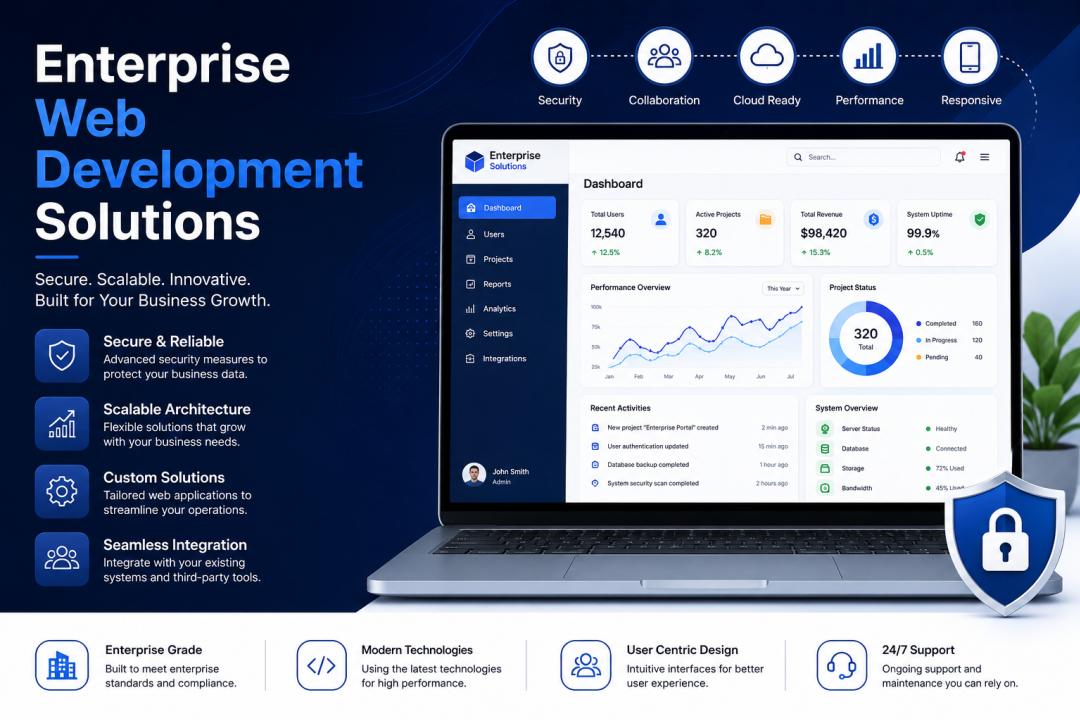
Enterprise applications require robust functionality to support business-critical operations. Modern enterprise platforms typically include secure authentication systems, role-based user access, workflow automation, analytics dashboards, document management, communication tools, API integrations, cloud connectivity, and centralized databases.
Role-based access ensures that users only access the information relevant to their responsibilities. Real-time dashboards provide valuable business insights, while automated workflows reduce manual work and improve operational consistency.
Integration with customer management systems, accounting software, supply chain platforms, and communication tools ensures seamless collaboration across departments.
Security as a Core Business Requirement
Security is one of the most critical components of enterprise technology. Organizations handle confidential business data, customer records, financial information, operational reports, and intellectual property that must remain protected.
A secure enterprise platform includes encrypted communication, secure user authentication, multi-factor verification, session monitoring, firewall protection, secure APIs, vulnerability assessments, and regular security updates.
Compliance with global data protection standards is also essential for organizations operating across different regions and industries. Strong security measures not only protect business assets but also build trust among customers, employees, and stakeholders.
Scalability for Long-Term Growth
Enterprise platforms must support continuous growth without sacrificing performance. As organizations expand into new markets, add employees, onboard customers, or launch new services, their digital infrastructure must adapt seamlessly.
Scalable architecture ensures that applications can handle increasing traffic, larger databases, additional integrations, and higher transaction volumes. Cloud computing, distributed systems, caching technologies, and optimized databases help maintain performance even under heavy workloads.
Scalability allows businesses to innovate confidently without worrying about technology limitations.
Operational Efficiency Through Automation
One of the biggest advantages of enterprise web platforms is automation. Many organizations spend valuable time on repetitive administrative tasks such as approvals, reporting, notifications, document sharing, and data entry.
Automation streamlines these workflows, reduces human error, and improves productivity across departments. Employees can focus on strategic initiatives instead of manual operational tasks.
Automated systems also improve consistency, compliance, and response times, leading to better overall business performance.
Integration with Enterprise Systems
Modern enterprises rely on multiple software platforms to manage operations. Customer relationship management systems, enterprise resource planning software, accounting tools, communication platforms, and analytics systems all generate valuable business data.
A well-designed enterprise platform integrates these systems into one centralized ecosystem. This improves data accuracy, eliminates duplication, and provides a unified view of business operations.
At this stage of digital transformation, organizations are increasingly investing in Enterprise Web Development to create secure, scalable, and integrated digital platforms that support operational excellence and sustainable growth.
User Experience in Enterprise Applications
While enterprise platforms focus heavily on functionality, user experience remains equally important. Employees, customers, vendors, and stakeholders expect intuitive interfaces that allow them to complete tasks efficiently.
A well-designed interface reduces training time, improves adoption rates, and minimizes operational mistakes. Clear navigation, personalized dashboards, responsive layouts, and accessible design all contribute to a better user experience.
Mobile accessibility has also become essential, allowing users to access enterprise systems from smartphones, tablets, and remote work environments.
Cloud-Based Enterprise Solutions
Cloud technology has transformed enterprise web development by providing flexibility, scalability, and reliability. Cloud-hosted applications allow organizations to access systems from anywhere while reducing infrastructure costs.
Cloud environments offer automatic backups, disaster recovery, load balancing, and high availability. Businesses can scale resources dynamically based on demand without investing heavily in physical infrastructure.
Cloud adoption also supports remote work, global collaboration, and faster deployment of new features.
Emerging Technologies in Enterprise Development
New technologies are reshaping enterprise digital solutions. Artificial intelligence, machine learning, predictive analytics, blockchain, and Internet of Things integration are creating smarter and more efficient business systems.
AI-powered analytics help organizations identify trends, predict customer behavior, and optimize operations. Machine learning automates decision-making processes, while blockchain enhances data security and transparency.
These innovations enable enterprises to remain competitive in increasingly digital markets.
Development Process
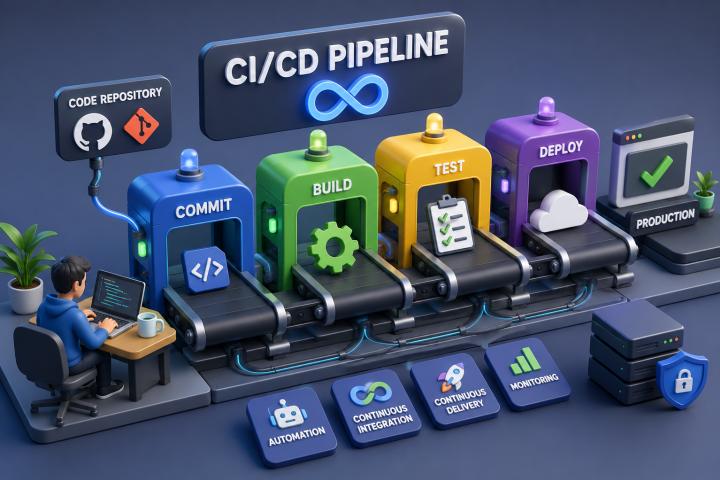
Building an enterprise platform requires a structured and strategic approach. The development process begins with business analysis, requirement gathering, and workflow mapping.
Design teams create user-centric interfaces that align with business goals. Developers then build secure backend architecture, implement integrations, and optimize databases. Quality assurance teams perform extensive testing to ensure reliability, security, and performance.
After deployment, continuous monitoring, maintenance, updates, and feature enhancements ensure long-term platform success.
Choosing the Right Development Partner
Selecting an experienced development partner is crucial for enterprise success. A reliable team understands complex business requirements, security standards, scalability challenges, and emerging technologies.
Businesses should choose partners with proven expertise, strong technical capabilities, transparent communication, and long-term support services. The right partner helps transform digital strategies into high-performing enterprise solutions.
Future of Enterprise Web Development
The future of enterprise technology will focus on automation, intelligence, personalization, and real-time decision-making. Businesses will continue adopting AI-driven systems, cloud-native architectures, predictive analytics, and advanced cybersecurity frameworks.
Organizations that invest in modern enterprise platforms today will be better positioned to adapt to future market changes and technological advancements.
Conclusion
Enterprise success increasingly depends on secure, scalable, and intelligent digital infrastructure. A professionally developed enterprise platform enables organizations to improve efficiency, enhance collaboration, protect sensitive information, and support long-term growth.
By investing in modern enterprise web solutions, companies can build powerful digital ecosystems that drive innovation, operational excellence, and sustainable business success.